Why an Infant Life Jacket That Doesn't Ride Up Matters
Water safety for babies is not something you can compromise on. An infant life jacket that rides up — sliding toward the face or neck when your child is in the water — is not just uncomfortable. It is a serious safety hazard. When a life jacket shifts upward, it can obstruct breathing, reduce visibility, and fail to keep your baby's head above water in the way it was designed to.
Unlike adult life jackets, infant flotation devices must account for a baby's unique body proportions: a large head relative to the body, short torso, and limited neck strength. This is why a dedicated infant life jacket — not a child or adult vest — is essential. And within the category of infant life jackets, fit is the single most important factor in preventing ride-up.
If you are also preparing for other water-related baby gear, our guide to an infant bathing suit with built-in life jacket can help you understand integrated flotation options, while our overview of the infant flotation device Coast Guard approved standards explains the certification you should always look for.
Key takeaway: A life jacket that rides up is a life jacket that does not fit. The right infant life jacket stays in place through a combination of snug sizing, adjustable straps, and — most importantly — a secure crotch strap that prevents upward movement.
What Causes an Infant Life Jacket to Ride Up?
Understanding the root causes of ride-up helps you evaluate any jacket before you buy. In practice, ride-up almost always comes down to one or more of the following issues:
- Sizing that is too large. A jacket designed for a 30-pound toddler will not fit a 15-pound infant securely, no matter how tight you pull the straps. Always match the jacket to your baby's weight and chest size.
- Missing or improperly adjusted crotch strap. The crotch strap is the single most effective anti-ride-up feature on an infant life jacket. It anchors the vest to the lower body and prevents the jacket from sliding up over the head.
- Loose or poorly designed shoulder straps. Straps that cannot be tightened sufficiently, or that slip during use, allow the jacket to shift upward in the water.
- Buoyancy distribution. Jackets with flotation concentrated at the back can push the wearer forward and upward. A well-designed infant jacket distributes buoyancy to support the head and keep the body in a safe, stable position.
- Wearing the jacket incorrectly. Even a well-fitted jacket can ride up if it is not fastened according to the manufacturer's instructions. Always double-check every buckle and strap before entering the water.
For a broader look at flotation devices across age ranges, you may also find our infant life jacket overview helpful as a companion reference.
Essential Features of an Infant Life Jacket That Stays in Place
When you are comparing options, look for these specific design elements. Each one plays a role in keeping the jacket securely positioned on your baby's body:
1. A Secure Crotch Strap
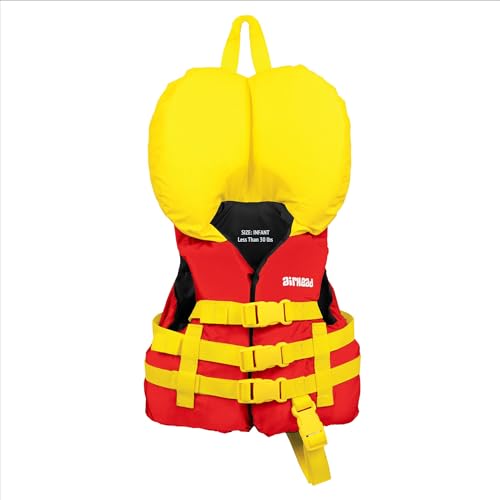
This is non-negotiable for infants. The crotch strap runs between the legs and connects the front and back of the jacket, preventing it from sliding up. A well-designed crotch strap is adjustable and padded to avoid chafing. If a jacket lacks a crotch strap, it is not suitable for an infant.
2. Adjustable Shoulder and Chest Straps
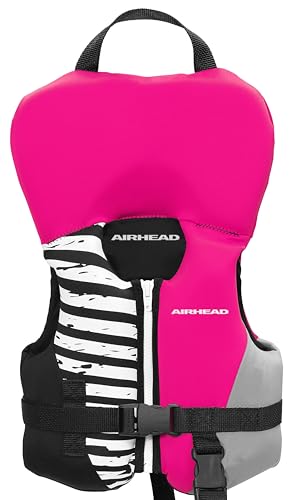
Look for straps that can be tightened evenly and that stay tight. Side-release buckles are convenient, but ensure they lock securely. Some premium jackets use dual adjustment points for a more precise fit.
3. Head and Neck Support
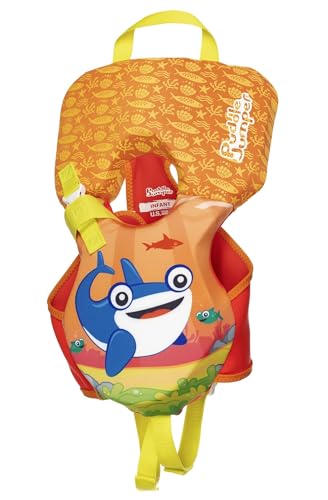
An infant life jacket should have a raised collar or head support panel that helps keep the baby's head above water. This feature also contributes to overall stability and reduces the tendency to ride up.
4. A Grab Handle
A sturdy grab handle on the back or collar allows you to lift your baby out of the water quickly and safely. It is also useful for holding the jacket steady while adjusting straps.
5. Bright, High-Visibility Colors
Bright orange, yellow, or neon colors make your baby easier to spot in the water — an important safety feature in pools, lakes, and open water.
6. Coast Guard Approval
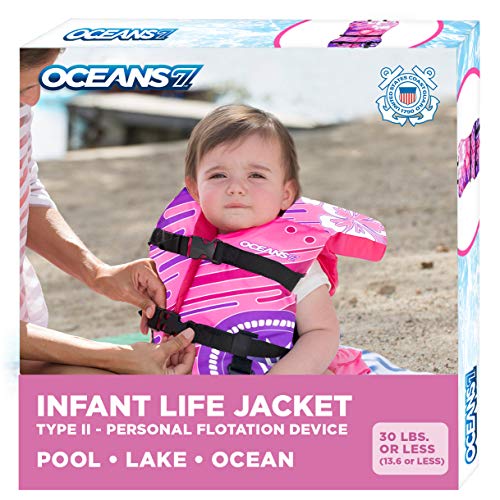
Always verify that the jacket is US Coast Guard approved for infant use. The approval label indicates that the device has been tested to meet specific flotation and performance standards. For more details on certification, see our guide to infant flotation device Coast Guard approved options.
How to Test the Fit: A Step-by-Step Checklist
Even the best-designed jacket will only work if it fits correctly. Use this checklist every time you put the jacket on your baby:
- Check the weight range. Confirm that your baby's weight falls within the range specified on the jacket label. Do not size up to "grow into" an infant life jacket — a loose fit is a safety risk.
- Fasten all straps and buckles. Tighten the shoulder straps, chest strap, and crotch strap in that order. The jacket should feel snug but should not restrict breathing or movement.
- Lift test. Gently lift the jacket by the shoulders. The jacket should not slide up past your baby's chin or ears. If it does, tighten the straps or consider a smaller size.
- Check the crotch strap. Ensure it is snug and positioned comfortably. It should not be twisted or loose.
- Water test. Before any deeper water activity, test the jacket in shallow water while holding your baby. Observe whether the jacket stays in place and whether your baby's head remains supported above the waterline.
Pro tip: Re-check the fit every time you use the jacket. Babies grow quickly, and a jacket that fit perfectly last month may already be too small — or the straps may need readjustment after washing or storage.
Comparing Infant Life Jacket Tiers
Infant life jackets are available across a range of quality tiers. The table below summarizes what you can generally expect at each tier, using universal quality descriptors rather than specific figures. This helps you set expectations and choose the tier that matches your family's needs.
| Tier | Typical Characteristics | Best For |
|---|---|---|
| Entry-Level | Basic Coast Guard approved design; essential crotch strap and adjustable straps; simpler materials; fewer comfort features. | Occasional pool or calm-water use; families seeking a reliable backup jacket. |
| Mid-Range | Improved strap adjustment systems; softer, more breathable materials; better head support; enhanced crotch strap design for secure fit. | Regular water activities; families who want a balance of comfort, durability, and secure fit. |
| Premium | Superior materials and construction; precision adjustment systems; advanced buoyancy distribution; ergonomic design for extended comfort and maximum anti-ride-up performance. | Frequent water use, travel, or families who prioritize top-tier safety and comfort features. |
Common Mistakes to Avoid
Even well-intentioned parents can inadvertently compromise water safety. Here are the most common pitfalls to watch for:
- Using an adult or child jacket for an infant. Adult and child jackets are not designed for infant body proportions and will almost certainly ride up.
- Buying a jacket that is too large. A loose jacket will not keep your baby's head above water, and it will shift in the water. Always follow the weight range on the label.
- Skipping the crotch strap. Some parents find the crotch strap inconvenient, but it is essential for preventing ride-up. Never use an infant jacket without it properly fastened.
- Not testing in water. A jacket that feels secure on land can behave differently in the water. Always test in shallow water first.
- Relying on flotation toys or swim aids. Water wings, floaties, and inflatable rings are not safety devices. Only a Coast Guard approved life jacket provides reliable flotation.
Additional Water Safety Tips for Infants
A life jacket is one layer of protection — not a substitute for active supervision. Keep these practices in mind whenever your baby is near water:
- Always keep your baby within arm's reach when in or near water.
- Use the jacket for pool, lake, and boat time, even if your baby is only playing at the water's edge.
- Check the jacket for wear and tear before each use, including frayed straps, broken buckles, or damaged flotation material.
- Store the jacket properly — rinse with fresh water after use and hang to dry in a shaded area.
- Consider pairing your water safety routine with other baby care essentials. For example, our guide to an infant bath thermometer can help you maintain safe water temperatures at home, and an infant bath tub with stand can make bath time safer and more comfortable.
Frequently Asked Questions
How do I know if an infant life jacket fits properly?
A properly fitted infant life jacket should be snug but not restrictive. When you lift the jacket by the shoulders, it should not slide up past your baby's chin or ears. Check all straps and buckles for a secure fit, and test the jacket in shallow water before deeper use.
Why do some infant life jackets ride up?
Life jackets ride up when they are too large for the wearer or when the crotch strap is not properly adjusted. Infants have different body proportions than adults, so a dedicated infant life jacket with a snug fit and a secure crotch strap is essential to prevent ride-up.
Are Coast Guard approved life jackets required for infants?
Yes, always choose a life jacket that is US Coast Guard approved for infants. These jackets meet specific safety standards for flotation, design, and performance in water. Look for the approval label inside the jacket.
What features should I look for in an infant life jacket?
Key features include a secure crotch strap, adjustable straps, a grab handle, head support, bright colors for visibility, and a snug fit. A jacket that doesn't ride up will have all these elements working together to keep your baby safe and comfortable.
Can my baby wear a life jacket in a pool?
Yes, an infant life jacket can be used in a pool, but it is important to choose one designed for pool and calm-water use. Always supervise your baby closely and ensure the jacket is properly fitted. Pool use is also a good opportunity to test the fit in shallow water before venturing into lakes or open water.
Final Thoughts: Choosing the Right Infant Life Jacket
An infant life jacket that doesn't ride up is not a luxury — it is a fundamental safety requirement. By focusing on proper sizing, a secure crotch strap, adjustable straps, head support, and Coast Guard approval, you can confidently choose a jacket that keeps your baby safe and comfortable in the water.
Take the time to test the fit thoroughly, both on land and in shallow water, and re-check the jacket every time you use it. With the right gear and active supervision, water time with your baby can be a joyful and safe experience for the whole family.
Ready to Find the Right Life Jacket?
Explore our recommended infant life jackets and find the secure, comfortable fit your baby deserves.
VIEW RECOMMENDED OPTIONS