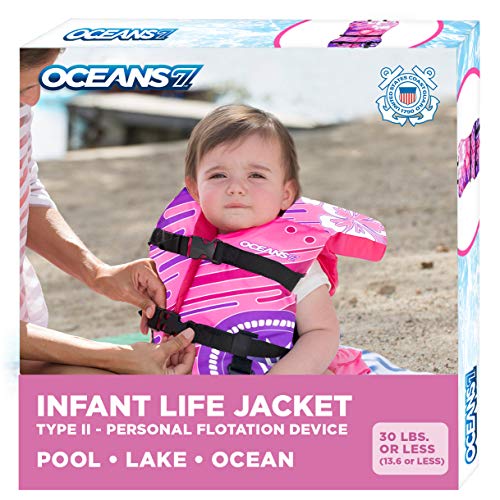
Infant Flotation Device Coast Guard Approved: A Complete Buyer's Guide
Understand USCG approval types, fit requirements, and safety features so you can choose a life jacket that genuinely protects your baby on and near the water.
What "Coast Guard Approved" Actually Means
When you see infant flotation device coast guard approved labeling, it means the product has been evaluated against U.S. Coast Guard performance standards. Those standards test buoyancy, flotation stability, and the ability of the device to keep a wearer's head above water in the conditions it is rated for.
Approved devices carry a permanent USCG approval label sewn into the vest. That label lists the device type (Type I, II, or III), the weight range it is designed for, and sometimes the intended water conditions. If a vest has no such label, it is not an approved safety device — regardless of how it is marketed.
For infants specifically, approval matters because a baby cannot self-rescue. The device must be able to hold the head clear of the water even if the baby is relaxed, fussy, or leaning to one side. That is precisely what the USCG testing protocol is designed to evaluate.
USCG Device Types Compared for Infants
Infant life jackets are commonly offered in Type II and Type III configurations, with Type I designs available for open-water use. The table below summarizes how each type performs in practice.
| Type | Buoyancy Profile | Best For | Trade-Offs |
|---|---|---|---|
| Type I | Highest buoyancy; designed to turn most unconscious wearers face-up | Open water, rough conditions, offshore boating | Bulkiest and least comfortable for a small baby |
| Type II | Good buoyancy with a collar that helps right the wearer | Calm inland lakes, ponds, near-shore boating | Less comfortable than Type III for extended wear |
| Type III | Moderate buoyancy; keeps wearer afloat but requires upright posture | Calm, inland water; active play near the shoreline | Will not right a face-down wearer automatically |
For most families boating on calm inland water, a well-fitted infant life jacket in Type II or Type III is the practical choice. If you plan to spend time on open water, consider a Type I design and accept the added bulk.
Fit Is the Safety Feature
Even an approved device only works if it stays in place. A vest that rides up over the chin or slips off the shoulders provides no protection. The following fit checks are the ones that matter most:
- Lift the baby gently by the shoulders of the vest. The vest should not slide up past the chin or ears.
- All buckles and straps should be fully fastened, with no more than a hand's width of slack at the chest.
- A crotch strap must be present and fastened — it is the primary defense against the vest riding up.
- The collar should support the head without pressing on the neck or restricting breathing.
- The weight range on the approval label must include your baby's current weight.
Test the fit in shallow water, with an adult holding the baby, before any outing. A vest that fits perfectly on land can shift once it is wet and buoyant. For babies who are still very small, look for models with a head support collar and a full wrap-around crotch strap.
If you are also planning time in the pool, a bathing suit with a built-in life jacket can be a convenient option, but verify that it carries its own USCG approval label — some swimwear-style designs do not.
Key Features to Look For
Within the approved category, design details separate a vest that is easy to live with from one that fights you every time you put it on. Prioritize these features:
- Front zipper plus buckle closures. A zipper alone can work loose; a secondary buckle or strap secures the closure.
- Adjustable side straps. These let the vest follow the baby's growth and accommodate different layers of clothing.
- Grab handle or lifting loop. Useful for lifting a baby out of the water and for quick retrieval.
- Head support collar. Important for infants who cannot yet hold their head up independently.
- Bright, high-visibility color. Improves visibility in water and makes the baby easier to spot.
- Quick-drying, low-absorbency shell. Keeps the vest from becoming heavy and uncomfortable.
For a deeper look at models designed to stay put, see our guide to an infant life jacket that doesn't ride up.
How to Verify a Device Before Buying
Because approval is the whole point of the purchase, verify it directly rather than trusting product photography. Follow this sequence:
- Check the label. The USCG approval label should be sewn into the vest, not printed on a hangtag or packaging alone. It should state the device type and the weight range.
- Match the weight range to your baby. If your baby is at the edge of the range, size up or choose a model with a wider range.
- Confirm the intended water conditions. A Type III vest is not rated for open or rough water.
- Inspect the closures. Zippers, buckles, and straps should be heavy-duty and free of loose stitching.
- Check for recalls. A quick search of the manufacturer and model against recall databases takes only a minute.
If you are shopping for the broader category, our infant life jacket overview covers sizing and seasonal considerations alongside approval requirements.
What Not to Rely On
Several products are marketed in ways that suggest they are flotation safety devices when they are not. Avoid relying on any of the following as a substitute for an approved vest:
- Inflatable armbands and water wings
- Float rings and pool noodles
- Swim vests without a USCG approval label
- Adult life jackets "adjusted" for a child
These items are toys. They can deflate, slip off, or fail to keep a baby's face clear of the water. The only device that should be counted on for safety is one with a genuine USCG approval label and a secure, tested fit.
Building a Safe Water Routine
Approval and fit are the foundation, but they work best inside a consistent routine. Put the vest on before approaching the water, not after. Keep a hand on the baby at all times, even in shallow water, because a vest keeps a baby afloat but does not steer or right them in all conditions. After each use, rinse the vest in fresh water and hang it to dry fully before storing it.
Families who spend time around pools and shorelines often pair a life jacket with other water-safety gear. Our guide to an infant swimsuit with a built-in diaper covers practical swimwear choices for pool days.
Frequently Asked Questions
What does Coast Guard approved mean for an infant flotation device?
Coast Guard approval means the device has passed testing against U.S. Coast Guard performance standards for buoyancy, flotation stability, and secure fit. Approved devices carry a USCG approval label with the device type and weight range, confirming it is designed to keep an infant's head above water in calm conditions.
What is the difference between Type I, Type II, and Type III infant life jackets?
Type I offers the highest buoyancy and turns most unconscious wearers face-up, making it suited to open or rough water. Type II is a near-shore vest with good buoyancy and a collar that helps right the wearer. Type III is a comfortable, flexible vest designed for calm, inland water and active wear, but it requires the wearer to be upright to keep the face clear of water.
How should an infant flotation device fit?
It should be snug enough that it does not ride up over the chin or ears when lifted by the shoulders. All straps and buckles should be fully fastened, with no more than a hand's width of slack at the chest. A crotch strap is essential to prevent the vest from sliding upward. Always test the fit in shallow water before heading out.
Can a newborn wear a standard infant life jacket?
Most USCG-approved infant life jackets are designed for babies from around 8 to 30 pounds, but very small newborns may not fit securely. Check the weight range on the approval label and test the fit carefully. For very young infants, some vests include a head support collar and a full crotch strap to keep the device in place.
Are inflatable armbands a safe substitute for a Coast Guard approved life jacket?
No. Inflatable armbands, water wings, and float rings are toys, not safety devices. They are not tested to USCG standards, can deflate or slip off, and do not keep an infant's head above water. Only a properly fitted Coast Guard approved flotation device should be relied on for water safety.