Infant Heart Rate and Oxygen Monitor: A Complete Parent Guide
Wearable vital monitors let you keep an eye on your baby's pulse and blood oxygen levels overnight. Here is what to know before choosing one.
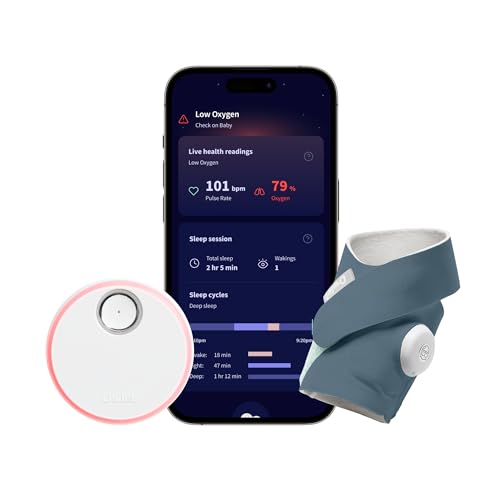
Start the GuideQuick summary: An infant heart rate and oxygen monitor tracks two core vital signs — pulse rate and blood oxygen saturation — through a small sensor worn on the baby's foot. Most parents use these devices for overnight peace of mind. This guide explains how the technology works, which features matter, and how to decide whether one belongs in your nursery.
New parents quickly discover that a nursery has two kinds of gear: the items you clearly need, and the items that promise reassurance. Infant heart rate and oxygen monitors fall into the second group. They are not a standard baby registry essential in the way a infant car seat or a crib mattress is, but they have become popular for families who want more visibility into their baby's wellbeing during sleep.
Understanding what these monitors can and cannot do is the first step. They measure pulse and oxygen saturation the way a hospital pulse oximeter does, but in a consumer-friendly wearable form. That distinction matters: a monitor is a wellness tool, not a diagnostic device. It cannot replace a pediatrician, and it should never be the reason you delay medical care.
How Infant Vital Monitors Work
Most devices use a technique called reflectance pulse oximetry. A soft sensor wraps around the baby's foot or ankle and shines light through the skin. Oxygen-rich and oxygen-poor blood absorb light differently, and the sensor uses that difference to estimate blood oxygen saturation. A separate optical component detects the pulsing of blood vessels to calculate heart rate.
Readings are transmitted wirelessly to a parent unit, a smartphone app, or both. When a reading falls outside the range set by the manufacturer — or by the parent — the device triggers an alert. Alerts may be audible, visual, vibration-based, or delivered as a push notification. Some models store historical data so you can review trends over a night or a week.
Key Features to Compare
Sensor Fit and Comfort
A snug, well-designed foot sensor produces more consistent readings. Look for soft materials and adjustable sizing that stays put through kicking.
Alert Types
Audible alarms, vibration, app push alerts, and visual indicators all matter. Overnight use calls for loud, hard-to-miss alerts on the parent unit.
Battery Life
Overnight tracking needs a battery that comfortably outlasts a full sleep session. Check whether the parent unit and the sensor charge separately.
App Reliability
A stable connection and a clear dashboard make data useful. Frequent disconnects or laggy apps undermine the reassurance the device is meant to provide.
Data History
Stored readings let you spot patterns and share concrete information with a pediatrician. More history is generally more helpful than a single night's snapshot.
Ease of Setup
Simple pairing, clear instructions, and a quick-start guide reduce frustration during those first sleep-deprived nights.
Market Tiers at a Glance
Monitors vary widely in capability. The table below groups products by market position so you can compare features without getting lost in specifications.
| Tier | Best For | Typical Strengths |
|---|---|---|
| Entry-level | Parents testing the category | Basic pulse and oxygen tracking, simple app, shorter battery life, fewer alert options |
| Mid-range | Overnight monitoring | More reliable sensor fit, louder alerts, better app stability, solid data history |
| Premium | Frequent overnight use | Refined sensor comfort, dual parent units, advanced alert logic, robust app ecosystem |
| Professional-grade | Clinical-adjacent needs | Higher-spec sensors, detailed reporting, stronger build quality, often recommended by clinicians |
In general, a mid-range model offers noticeably smoother sensor performance than an entry-level unit, while premium and professional-grade options add refinement rather than entirely new capabilities. For most families, the mid-range and premium tiers strike the best balance between capability and simplicity.
Safety and Medical Considerations
Important: Consumer infant vital monitors are not medical devices and are not intended to diagnose, treat, or prevent any condition. They should never replace pediatric care. If your baby shows signs of breathing difficulty, unusual lethargy, or any health concern, contact your pediatrician or emergency services immediately — do not wait for a monitor reading.
Several professional organizations have cautioned that home vital monitors may increase parental anxiety or lead to unnecessary interventions when readings fluctuate. Normal infant vital signs naturally vary during sleep, and a single out-of-range number is not automatically a problem. Use the device as a supplementary source of information, not as a substitute for clinical judgment.
If your pediatrician has recommended monitoring for a specific reason, ask which device features matter for your situation. That conversation should drive your choice more than marketing claims.
How to Choose the Right Monitor
- Match the device to your use case. Occasional overnight checks call for different features than nightly, long-term monitoring.
- Check sensor sizing. Confirm the sensor fits your baby's foot comfortably and stays in place through movement.
- Test the alert system. Make sure alarms are loud enough for you to hear from another room and that app notifications arrive promptly.
- Review the app before buying. Look for recent user feedback on connectivity and stability, not just feature lists.
- Confirm the return policy. Fit and comfort are personal; a flexible return window lets you try the device with less risk.
- Consider long-term support. A brand that maintains its app and offers responsive customer service is a safer long-term choice.
Setting Up a Monitor in the Nursery
Placement and routine matter as much as the hardware. Keep the parent unit within earshot, and position the sensor according to the manufacturer's instructions — usually on the foot with a snug but not tight fit. Charge devices before bedtime so a low battery does not interrupt overnight tracking. Establish a simple routine: sensor on, app open, parent unit nearby. Consistency improves both reading quality and your ability to interpret alerts calmly.
If you are also building out a sleep space, our guide to the infant crib mattress covers firmness and fit considerations that pair well with a safe sleep setup. For daytime monitoring, a forehead thermometer is a useful companion for checking temperature quickly without disturbing a sleeping baby.
Frequently Asked Questions
What is an infant heart rate and oxygen monitor?
Are baby oxygen monitors medically necessary?
How accurate are wearable infant vital monitors?
What features should I compare before choosing a monitor?
Ready to Compare Options?
Review the recommended monitors below to see which tier and feature set fits your family's needs.
Explore Monitors