Infant Forehead Thermometer: Complete Buying Guide for New Parents
When your baby feels warm, every second counts. Discover how a quality infant forehead thermometer delivers fast, reliable, and gentle readings — so you can respond with confidence and peace of mind.
Explore Key FeaturesWhy this guide matters: Fever is one of the most common reasons parents seek medical advice for infants. A dependable forehead thermometer helps you track your baby's temperature quickly and comfortably — without the fuss, squirming, or distress that often comes with other types of thermometers. This guide walks you through everything you need to know before choosing one.
What Is an Infant Forehead Thermometer?
An infant forehead thermometer is a non-invasive digital device that measures body temperature by scanning the infrared heat emitted from the skin over the temporal artery on the forehead. Unlike rectal, oral, or ear thermometers, it requires no physical contact with mucous membranes and can often be used from a short distance — making it one of the most baby-friendly temperature tools available.
These devices are particularly valued by parents because they deliver readings in as little as one second, allow for nighttime checks without disturbing a sleeping baby, and reduce the risk of cross-contamination when multiple family members are unwell. Many models also store a history of readings, which is invaluable when you need to report patterns to your pediatrician.
Key Features to Look For
Not all forehead thermometers are created equal. The features below separate a reliable, clinical-grade instrument from a basic gadget. Understanding them will help you evaluate any model on the market.
Accuracy & Sensor Technology
Look for models with a pre-warmed probe tip and dual-sensor infrared technology. These reduce the effect of ambient temperature and deliver readings that closely mirror core body temperature.
Reading Speed
A one-second reading is the gold standard for infants. Faster readings mean less time holding a fussy baby still and more reliable results because the baby is less likely to move mid-measurement.
Non-Contact Operation
Non-contact designs allow you to take a reading from 1–2 inches away. This is especially useful for checking a sleeping infant or for use in a household where illness is present.
Fever Alert & Color Display
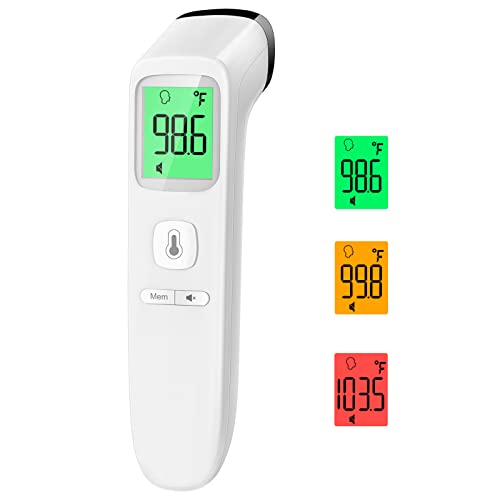
Many quality models display a green, yellow, or red backlight to instantly signal whether the temperature falls within a normal, elevated, or fever range — a huge help during stressful moments.
Memory & Recall
A memory function that stores the last 10–30 readings lets you track your baby's temperature over hours or days and share accurate patterns with your healthcare provider.
Silent Mode & Ergonomics
A silent mode prevents beeps from waking a sleeping infant. A comfortable grip, backlit screen, and lightweight body make nighttime checks easier and less disruptive.
Age-Specific Calibration
Some advanced thermometers offer modes calibrated for different age groups (0–3 months, 3–36 months, and older children). This improves relevance for newborns in particular.
Build Quality & Warranty
A solid build, a clear display, and a manufacturer warranty of at least one year indicate a device designed for long-term use in a busy household.
How to Use a Forehead Thermometer Correctly
Even the most advanced thermometer can give misleading results if used incorrectly. Follow these steps for the most reliable readings:
- Ensure the forehead is dry and unobstructed. Wipe away sweat or moisture, and brush aside hair or hats from the area above the eyebrows.
- Position the device correctly. Hold the thermometer perpendicular to the forehead, about 1–2 inches away (or lightly touching, depending on the model). Aim at the center of the forehead, just above the eyebrows.
- Stay still and wait for the tone. Keep the baby's head steady and wait for the confirmation beep or signal before moving the device away.
- Take multiple readings if uncertain. If the first reading seems unusually high or low, wait a minute and take two more. Use the average for a more reliable picture.
- Account for environmental factors. A baby who has just been outdoors in cold weather, bundled in blankets, or has been crying may show skewed readings. Wait 10–15 minutes and recheck.
Important: A forehead thermometer is a screening tool, not a diagnostic instrument. If your infant is under 3 months old and has a temperature of 100.4°F (38°C) or higher, seek medical attention immediately regardless of how the reading was taken. Always follow your pediatrician's guidance for fever management.
Forehead Thermometer Types Compared
Forehead thermometers occupy a specific place in the broader thermometer landscape. The table below compares the main options so you can decide whether a forehead model is the right fit for your family's needs.
| Tier | Type | Best For | Key Strength |
|---|---|---|---|
| Starter Tier | Basic Contact Forehead | Occasional home checks | Simple operation, lightweight |
| Essential Tier | Non-Contact Infrared Forehead | Sleeping infants, quick checks | Hygienic, one-second readings |
| Balanced Tier | Forehead + Ear Hybrid | Families wanting versatility | Two measurement modes in one device |
| Top-Tier | Clinical-Grade Dual-Sensor | Frequent monitoring, illness tracking | Age-specific modes, high accuracy, memory |
For most families, an essential tier non-contact infrared forehead thermometer offers the best balance of hygiene, speed, and ease of use. If you frequently need to check multiple children or want to track fever patterns over time, a top-tier clinical-grade model with memory and age-specific calibration is a worthwhile long-term investment.
Why Parents Choose Forehead Thermometers
The popularity of infant forehead thermometers comes down to several practical advantages that matter most to new parents:
- Gentle and stress-free: No undressing, no rectal insertion, no ear canal probing. The experience is quick and calm for both baby and parent.
- Safe for sleeping babies: The non-contact design allows temperature checks without waking an infant, preserving precious sleep for the whole household.
- Hygienic: Because there is no mucosal contact, the risk of spreading germs between family members is greatly reduced. Many models also include a sanitizing or wipe-clean surface.
- Fast results: One-second readings mean less time wrestling a wriggling baby and more reliable data.
- Easy to read: Large backlit displays with color-coded fever alerts make interpretation simple, even at 3 a.m.
- Versatile for the whole family: Most forehead thermometers can be used on adults and older children too, making them a practical addition to any medicine cabinet.
If you are also building out your baby's health and wellness toolkit, you may find our guide to an infant heart rate and oxygen monitor useful for understanding how different monitoring devices work together. And for bath-time safety checks, an infant bath thermometer helps you keep water at a comfortable, safe temperature.
What to Expect at Each Tier
Starter Tier
Entry-level forehead thermometers typically offer a single measurement mode, a basic display, and one-second to three-second reading times. They are a solid choice for occasional home use and parents who want a straightforward, no-frills device.
Essential Tier
Mid-range models introduce non-contact operation, fever alert color coding, and a modest memory function. This tier is where most families find the best balance — the devices are feature-rich for their class while remaining easy to operate with one hand.
Balanced Tier
Hybrid devices that combine forehead and ear measurement modes appeal to families who want flexibility as their child grows. The ear mode can be useful for older children who tolerate it well, while the forehead mode remains the go-to for infants.
Top-Tier
Clinical-grade forehead thermometers feature dual-sensor technology, age-specific calibration modes, extended memory, silent operation, and often a multi-year warranty. These are the models chosen by parents who want the highest level of confidence and plan to use the device for years across multiple children.
Care and Maintenance Tips
To keep your thermometer accurate and hygienic over time, follow these simple habits:
- Clean the sensor area with a soft cloth and 70% isopropyl alcohol after each use, especially during illness. Let it dry completely before storing.
- Store the device in a dry, room-temperature place. Avoid leaving it in direct sunlight, in a hot car, or in a humid bathroom.
- Replace batteries promptly when the low-battery indicator appears — weak batteries can affect reading accuracy.
- Periodically verify the reading against a known reference (such as a second thermometer) to catch any drift.
- Keep the device out of reach of older children who might drop or tamper with it.
Ready to Choose Your Infant Forehead Thermometer?
Browse our curated selection of recommended models below. Each one has been evaluated on the features that matter most: accuracy, speed, ease of use, and long-term reliability.
See Recommended Models