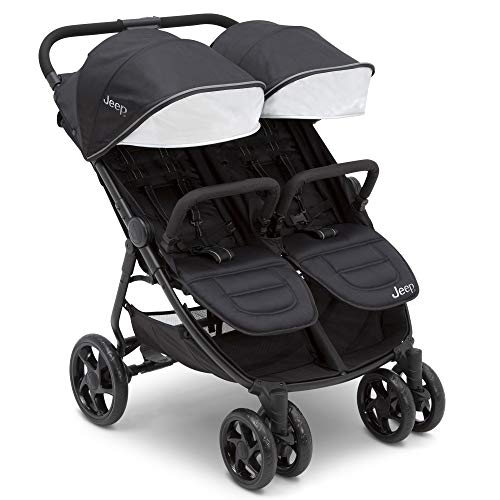
What Is a Single to Double Side by Side Stroller?
A single to double side by side stroller is a modular pushchair built on a single frame that can be configured for one child or expanded to seat two children next to each other. Unlike a dedicated double stroller purchased outright, a convertible model lets you start with a single seat and add a second seat kit, bassinet, or car seat adapter later — usually when a second child arrives or when your first child still needs stroller support alongside a newborn.
The appeal is straightforward: you avoid buying two separate strollers within a short window, and you keep one familiar push experience as your family grows. The trade-off is that convertible frames are often slightly heavier and bulkier than dedicated single strollers, because the chassis has to support the second-seat configuration from day one.
If your priority is a stroller that adapts to a newborn and a toddler at the same time, you may also want to compare this format against a double stroller designed specifically for a newborn and infant pairing, which can offer different reclining and bassinet options.
Side by Side vs Tandem: Which Layout Fits Your Life?
The most consequential decision in this category is layout. Side by side strollers place both children at the same height and forward-facing position, while tandem strollers stack one seat behind the other. Each has real advantages and real compromises.
| Factor | Side by Side | Tandem (Front & Back) |
|---|---|---|
| Weight distribution | Even across the frame; balanced push | Front-heavy when one seat is occupied |
| Width | Wider; check doorways and aisles | Narrower; fits tighter spaces |
| Turning radius | Typically tighter and more intuitive | Longer wheelbase; wider turns |
| Child interaction | Both children see each other and the same view | Rear child often looks at the back of the front seat |
| Folded footprint | Usually wider but shorter | Usually narrower but longer |
| Best for | Twins, siblings close in age, open sidewalks | Narrow doorways, public transit, tight shops |
Side by side models tend to win on maneuverability and sibling interaction. Tandem models win on width. If you regularly navigate narrow store aisles or older buildings with tight doorways, measure before committing. If your routes are mostly sidewalks, parks, and wide retail spaces, a side by side layout is often the more pleasant push.
Parents who want the side by side format but need a tighter footprint sometimes look at the narrowest side by side double stroller options or the smallest double stroller on the market to see how compact this category can actually get.
How the Single-to-Double Conversion Actually Works
Conversion mechanisms vary by brand, but most single to double side by side strollers follow one of three approaches:
- Add-on second seat kit. The frame has a pre-wired attachment point on the second side. You buy the seat kit separately and click it into place. This is the most common approach and usually preserves the stroller's folding behavior.
- Reversible or removable second seat. Some frames ship with a second seat that can be removed entirely when only one child is riding, reducing width and weight for single-child days.
- Bassinet and car seat expansion. Instead of a second toddler seat, the second position accepts a bassinet or a car seat adapter. This is useful when the second child is a newborn who is not yet ready for a toddler seat.
Before buying, confirm three things: the minimum age and weight for each configuration, whether the second seat reclines flat enough for a newborn, and whether the stroller can fold with the second seat attached. Some convertible models require you to remove the second seat before folding, which adds a step to every trip.
If you want the flexibility of car seat compatibility from the start, compare this format with a side by side double stroller with car seat attachment, which is built around infant carrier integration rather than a toddler-seat-first design.
Seating Configurations to Look For
A well-designed convertible side by side stroller should support more than one seating mode. The configurations worth verifying on any model you shortlist:
- Single mode: one seat, narrower footprint, lighter push — ideal before the second child arrives.
- Double toddler mode: two forward-facing seats, both with independent recline.
- Newborn plus toddler: one bassinet or fully reclined seat next to an upright toddler seat.
- Two newborns: two bassinets or two car seats side by side — less common but available on some premium frames.
- Parent-facing option: at least one seat that reverses to face the parent, which is valuable during the newborn stage.
Independent canopies and independent recline are not luxuries in this category — they are practical necessities. A toddler who wants to sit up and look around should not force a sleeping newborn into the same angle.
Frame, Wheels, and Maneuverability
Side by side strollers carry weight across a wider chassis, so frame rigidity matters more than it does on a single. Look for a solid build with reinforced joints rather than a frame that flexes when you lift one side. A heavy-duty aluminum frame is the standard in mid-range and premium models; entry-level frames sometimes use thinner tubing that flexes under load.
Wheel configuration shapes the push more than any other spec:
- Four-wheel models with lockable front swivels are the most versatile for urban use — stable on uneven pavement, still maneuverable in shops.
- Three-wheel or jogger-style frames with larger air-filled tires handle gravel, grass, and park trails better, but are wider and heavier to lift.
- Foam-filled or solid tires never go flat and need less maintenance, while air-filled tires absorb bumps more effectively.
If you plan to jog or handle rough terrain, a double jogging stroller with handbrake is a different category worth comparing separately — jogging frames prioritize stability at speed over everyday compactness.
Safety Standards and Age Guidance
Convertible strollers are subject to the same juvenile product safety standards as dedicated doubles, but the conversion itself introduces variables. Check the following before use:
- Per-configuration weight limits. The total weight limit is not the same as the per-seat limit. A frame rated for two children may have a lower limit when one seat is a bassinet.
- Newborn flatness. A newborn should lie fully flat or in a bassinet approved for overnight sleep if used for extended periods. Not every reclining seat meets this bar.
- Brake system. A linked or one-touch brake that locks both rear wheels is essential on a wider, heavier frame.
- Five-point harness on every seat. Confirm both seats have a five-point harness, not a three-point lap belt.
- Recall registration. Register the stroller and any add-on seat kit with the manufacturer so you receive recall notices for both components.
Always follow the manufacturer's stated minimum age for each seat and configuration. If a seat is not approved for newborns, do not use it for a newborn regardless of how flat it reclines.
Folding, Storage, and Transport
The folded footprint of a side by side convertible is usually wider but shorter than a tandem's. That matters in three places: your vehicle trunk, your hallway, and any destination with a coat check or stroller parking area.
Measure your trunk opening and depth before buying. A stroller that folds flat but is 30 inches wide will not fit through a narrow trunk aperture even if the depth is fine. Also check whether the stroller stands on its own when folded — a self-standing fold is a genuine convenience in restaurants and waiting rooms.
If air travel is part of your routine, confirm the folded dimensions against carry-on and gate-check expectations. A stroller that fits under an airplane seat is a different class of product, but the measurement discipline is the same.
Who Should Choose a Single to Double Side by Side Stroller?
This format suits families who expect a second child within roughly two to three years of the first, who mostly travel on sidewalks and wide retail spaces, and who value even weight distribution and sibling interaction over the narrowest possible footprint. It also suits parents who want one push experience to learn rather than switching between a single and a double stroller.
It is less suitable for families who frequently navigate narrow doorways, crowded public transit, or very small vehicles, and for parents who need a stroller that folds one-handed while holding a toddler. In those cases, a tandem or a compact dedicated double may be the better fit.
If you are still comparing formats, the top-rated side by side double stroller roundup is a useful next step, and the double stroller with car seat compatibility guide covers infant-carrier-first setups.
Checklist Before You Buy
- Measure your doorways, trunk opening, and elevator width.
- Confirm the minimum age and weight for every configuration you plan to use.
- Verify independent recline and independent canopies on both seats.
- Check whether the stroller folds with the second seat attached.
- Confirm five-point harnesses on both seats and a linked brake.
- Check the folded weight — you will lift it in and out of a vehicle regularly.
- Register both the frame and any add-on seat kit for recall alerts.
Ready to compare specific models?
Explore Top-Rated Side by Side Options