Diaper Trash Can That Uses Regular Trash Bags: The Complete Buying Guide
Learn how a diaper pail designed around standard trash bags works, what features matter, and how to choose one that keeps your nursery fresh without proprietary refills.
If you are researching diaper disposal options, you have likely noticed that many dedicated diaper pails require proprietary refill rings or cartridges. Those refills are convenient, but they add an ongoing dependency on a specific brand. A diaper trash can that uses regular trash bags takes a different approach: it is engineered so that ordinary household trash bags fit securely while still controlling odor. For parents who prefer flexibility, sustainability, and fewer specialized purchases, this category deserves close attention.
This guide walks through how these cans work, the design features that separate a well-built model from a mediocre one, and the practical trade-offs you should understand before deciding. By the end, you will have a clear framework for choosing a diaper disposal system that fits your nursery routine.
How a Diaper Trash Can That Uses Regular Trash Bags Works
The core idea is simple: instead of a proprietary refill cartridge, the can is designed with a bag-retention system that accepts standard trash bags. This usually means a bag ring, tension clips, or a fitted liner channel that holds a conventional bag in place. The lid then seals tightly to contain odor.
Because the bag is a standard size, you are not locked into one refill format. You can choose the bag thickness and size that suit your household. The trade-off is that odor control depends more heavily on the can's seal quality and the bag's closure, so the design of the lid and the bag-retention mechanism matters a great deal.
Key Design Elements
- Bag retention system: A ring, clips, or channel that keeps a regular trash bag from slipping into the can.
- Sealing lid: A gasket or stepped lid that traps odor when closed.
- Hands-free or step pedal: Lets you open the can without touching the lid, which matters during diaper changes.
- Odor-control insert: Some models include a carbon filter or baking-soda compartment that works alongside the bag.
- Compact footprint: Narrow profiles fit beside a changing table in a small space.
Why Parents Choose Regular-Bag Diaper Cans
The appeal goes beyond convenience. A diaper can that accepts standard bags gives you control over the bag you use, which can matter for households that prefer thicker bags, scented or unscented options, or bags made from recycled materials. It also means you are never stuck if a particular refill is out of stock.
From a long-term perspective, these systems are often described as a long-term investment because the ongoing bag supply is easy to restock anywhere. Many parents pair a regular-bag diaper can with a well-organized diaper caddy and a diaper changing station with drawers to keep the whole changing area efficient.
What to Compare Before You Choose
Not all regular-bag diaper cans are built the same. The table below compares the main features to evaluate. Descriptors use a consistent tier system rather than numeric figures, so the comparison stays useful over time.
| Feature | Entry-Level Tier | Mid-Range Tier | Premium Tier |
|---|---|---|---|
| Bag retention | Simple ring or clips | Reinforced ring with tension | Engineered channel with locking ring |
| Odor seal | Snap lid | Gasketed lid | Double-seal with carbon filter |
| Opening mechanism | Manual lift | Step pedal | Hands-free pedal with soft-close |
| Build quality | Standard plastic | Durable construction | Heavy-duty, reinforced frame |
| Best for | Occasional use | Everyday nursery use | High-frequency, long-term use |
Regular-Bag Cans vs. Proprietary Refill Pails
Both approaches have a place. Proprietary refill pails are often designed as a closed system, which can simplify odor control. Regular-bag cans prioritize flexibility and reduce dependence on a single refill format. If you value the ability to use standard bags and want a system that is easy to maintain, a regular-bag can is the more adaptable option. If you prefer a fully guided refill routine, a proprietary pail may suit you better.
Some parents keep both: a regular-bag can in the nursery and a smaller diaper pail in another room. If cloth diapering is part of your routine, see our guide to diaper pails for cloth diapers for a different set of considerations.
Placement and Nursery Integration
Where you place the can affects how well it works in daily use. Keep it within arm's reach of the changing area but out of the direct path of crawling babies. A can with a step pedal is easier to operate one-handed. If floor space is tight, look for a slim profile that fits beside a comfortable nursery chair or near a storage solution.
For a cohesive nursery, coordinate the can with other neutral pieces. Our guide to gender-neutral nursery themes and boho nursery styling can help you integrate practical items without disrupting the design.
Maintenance and Odor-Control Habits
- Empty the can regularly; a full bag is harder to seal and more likely to release odor.
- Tie the bag securely before removing it, and wipe the rim after each change.
- Replace carbon filters or odor inserts according to the manufacturer's guidance.
- Keep a small supply of bags stored nearby so you never skip a liner change.
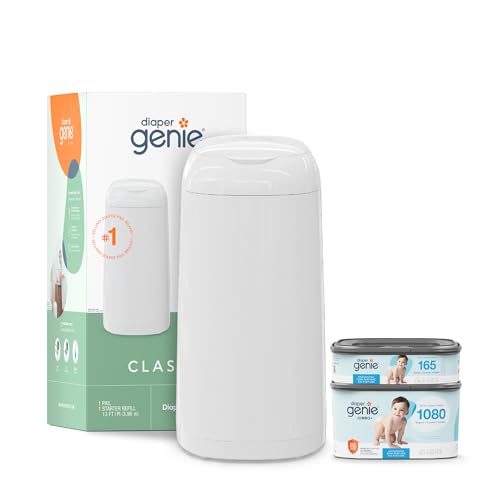
- Consider a diaper genie that uses regular trash bags if you want a familiar twist-and-seal style with standard bag compatibility.
Frequently Asked Questions
Do regular trash bags fit all diaper cans?
No. Only cans specifically designed with a standard-bag retention system will hold regular trash bags securely. Always confirm the can is described as compatible with standard bags before buying.
Is odor control as good as with proprietary refills?
A well-built regular-bag can with a gasketed lid and a snug bag fit controls odor effectively. The result depends more on the seal quality and bag closure than on the bag type itself.
Can I use scented or thicker bags?
Yes, in most cases. Because the can accepts standard bags, you can choose the thickness and scent that suit your household. Check the manufacturer's guidance for maximum bag size.
Is a regular-bag diaper can a long-term choice?
For many families, yes. It reduces dependence on a single refill format and is easy to maintain over time. Look for durable construction and a reliable seal for the best long-term experience.
Where should I place it in the nursery?
Place it within arm's reach of the changing area but out of the baby's crawling path. A step-pedal model is easier to use one-handed during changes.
Ready to Compare Options?
Explore our recommended diaper disposal products and find the system that fits your nursery routine.
View Recommended ProductsPairing a regular-bag diaper can with the right changing setup makes the whole routine smoother. If you are still building your nursery checklist, our baby storage and toy storage organizer with bookshelf guides can help you plan a space that stays organized as your baby grows.