Developmentally Appropriate Toys for 1 Year Olds
A comprehensive guide to choosing toys that support your toddler's motor skills, cognitive growth, and sensory development at this critical stage.
Why Toy Selection Matters at 12 Months: Your one-year-old is transitioning from infancy to toddlerhood, and the toys you choose can significantly impact their development. At this stage, children are mastering gross motor skills like walking and climbing, refining fine motor control through grasping and releasing, and beginning to understand cause-and-effect relationships. The right toys provide age-appropriate challenges that build confidence and foster curiosity, while toys that are too advanced or too simple can lead to frustration or disengagement.
Why Developmentally Appropriate Toys Matter
Developmentally appropriate toys are designed to match a child's current skills and abilities while gently encouraging the next stage of growth. For one-year-olds, this means toys that promote active exploration, support emerging language and social skills, and provide safe opportunities for independent play. Research in early childhood development consistently shows that children learn best through play that is both engaging and appropriately challenging. Choosing toys that align with your child's developmental milestones ensures that playtime becomes a powerful vehicle for learning.
🧠 Cognitive Development
Toys that encourage problem-solving, object permanence, and cause-and-effect understanding help build foundational cognitive skills that support later learning in math, science, and language.
🏃 Gross Motor Skills
Push toys, ride-on toys, and climbing structures encourage walking, balancing, and coordination—key milestones for one-year-olds who are becoming increasingly mobile.
✋ Fine Motor Skills
Stacking blocks, shape sorters, and grasping toys help refine the pincer grasp, hand-eye coordination, and dexterity that will later support writing and self-care skills.
💬 Language & Social Skills
Board books, puppets, and simple pretend-play toys encourage babbling, word recognition, and early social interaction that lay the groundwork for communication.
Key Categories of Toys for One-Year-Olds
When selecting toys for your one-year-old, it helps to think in terms of developmental categories rather than simply choosing by appearance. Each category serves a specific purpose in your child's growth journey. The following categories represent the most beneficial types of toys for this age group, with tier descriptors indicating the quality and positioning of typical options within each category.
Stacking & Nesting Toys
Stacking cups, rings, and nesting blocks teach size relationships, sequencing, and fine motor control. These toys are among the most versatile for one-year-olds, offering open-ended play that grows with your child. Entry-level options are typically made of durable plastic, while mid-range and premium options often feature wooden construction with non-toxic finishes. A classic wooden stacker is a long-term investment that remains relevant well into the toddler years.
Push & Pull Toys
Push toys with handles and pull toys on strings encourage walking and coordination. For new walkers, push toys with stable bases provide confidence and support. Mid-range options often include adjustable resistance wheels that grow with your child's abilities. These toys are particularly valuable for children who are transitioning from crawling to walking and benefit from additional stability.
Shape Sorters & Puzzles
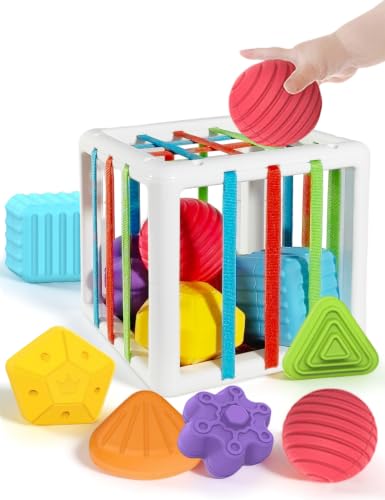
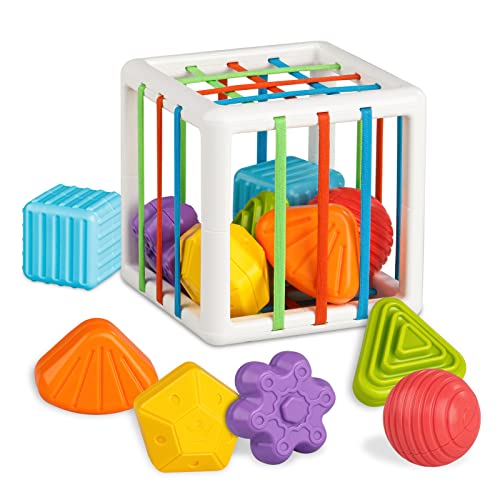
Simple shape sorters with large, easy-to-grasp pieces introduce problem-solving and spatial reasoning. Look for sorters with rounded edges and non-toxic paints. Entry-level models typically feature basic geometric shapes, while top-tier options incorporate multiple difficulty levels and textured pieces for sensory exploration.
Board Books & First Books
Board books with high-contrast images and simple text support language development and early literacy. One-year-olds benefit from books with interactive elements like lift-the-flaps and touch-and-feel textures. These are foundational tools for building vocabulary and fostering a lifelong love of reading.
Musical & Sound Toys
Simple musical instruments like drums, xylophones, and shakers introduce rhythm and cause-and-effect learning. Avoid overly loud electronic toys in favor of acoustic instruments that allow children to control the volume. Mid-tier options often feature child-safe materials and thoughtful design that produces pleasant, not jarring, sounds.
Sensory & Textured Toys
Balls with different textures, soft blocks, and sensory bins provide tactile stimulation that supports brain development. One-year-olds learn through touch, and toys that offer varied sensory experiences—smooth, bumpy, soft, firm—help refine their tactile discrimination. Look for toys made from food-grade silicone or organic fabrics.
Toy Category Comparison by Developmental Focus
Use the following comparison to identify which toy categories best support your child's current developmental priorities. The tier classification reflects the typical positioning of products within each category, helping you make informed decisions based on your child's needs and your family's preferences.
| Toy Category | Primary Developmental Focus | Typical Tier | Best For |
|---|---|---|---|
| Stacking & Nesting Toys | Fine motor, sequencing, spatial awareness | Essential to Premium | Children who enjoy focused, independent play |
| Push & Pull Toys | Gross motor, balance, coordination | Balanced to High-End | New walkers and active explorers |
| Shape Sorters & Puzzles | Cognitive, problem-solving, fine motor | Essential to Top-Tier | Children who demonstrate early problem-solving interest |
| Board Books | Language, early literacy, visual discrimination | Starter to Mid-Range | All children—foundational for language development |
| Musical Instruments | Sensory, cause-and-effect, rhythm | Mid-Tier to Premium | Children who respond strongly to sound and music |
| Sensory & Textured Toys | Tactile development, brain stimulation | Essential to Balanced | Children who explore primarily through touch |
| Ride-On Toys | Gross motor, balance, coordination | Mid-Range to Luxury | Confident walkers ready for seated mobility |
What to Look For When Choosing Toys for a One-Year-Old
Selecting the right toys requires balancing developmental appropriateness, safety, and durability. One-year-olds explore the world primarily through their mouths and hands, so safety must always be the first consideration. Beyond safety, look for toys that offer open-ended play possibilities—toys that can be used in multiple ways will remain engaging for longer and support creativity.
- Safety first: Ensure toys have no small parts that could become choking hazards. Check for non-toxic, BPA-free materials and smooth, rounded edges. Avoid toys with long strings or cords longer than 12 inches.
- Age-appropriate challenge: Choose toys that are slightly beyond your child's current ability but not so advanced that they cause frustration. The best toys grow with your child.
- Durability: One-year-olds are not gentle with their possessions. Look for toys with solid construction, reinforced seams, and high-grade materials that can withstand repeated use.
- Open-ended play value: Simple toys like blocks, balls, and stacking cups offer more long-term engagement than toys with a single predetermined function.
- Sensory variety: Toys that engage multiple senses—sight, sound, touch—provide richer learning experiences.
- Ease of cleaning: Choose toys with surfaces that can be easily wiped down or washed, especially those that will be mouthed.
💡 Pro Tip: Rotate your child's toys every two to three weeks. Keeping only 8–10 toys accessible at a time prevents overwhelm, increases engagement, and makes each toy feel new again when it returns to rotation. This approach also helps you identify which toys truly capture your child's interest.
How Many Toys Does a One-Year-Old Need?
More toys do not equal better development. In fact, research suggests that children play more deeply and creatively when they have fewer toys available at once. A collection of 10 to 15 well-chosen toys that cover different developmental categories is more beneficial than a room filled with dozens of items. Focus on quality over quantity, and prioritize toys that encourage active exploration rather than passive entertainment.
As your child approaches 18 months, you may consider introducing more complex toys like simple wooden stackers with varied shapes or early STEM-inspired toys that introduce basic concepts of balance and construction. For children showing interest in music, musical toys for infants can be a gentle introduction to rhythm and sound exploration.
Safety Considerations for One-Year-Old Toys
Safety is non-negotiable when selecting toys for a one-year-old. At this age, children are still exploring objects with their mouths, and their motor skills are developing rapidly—meaning they can reach and grasp objects that were previously out of reach. Always check toys for loose parts, sharp edges, and any signs of wear before allowing your child to play. Additionally, be mindful of toy materials: choose toys made from non-toxic, child-safe materials and avoid items with strong chemical odors.
- Choking hazards: Avoid toys with parts smaller than 1.75 inches in diameter and 2.25 inches in length—the approximate size of a young child's throat.
- Strangulation risks: Remove or cut strings, ribbons, and cords from toys before giving them to your child.
- Toxic materials: Choose toys labeled as non-toxic and BPA-free. Avoid vintage toys with potentially lead-based paint.
- Sharp edges: Inspect toys for rough edges or points that could injure your child during play.
- Battery safety: Ensure battery compartments are securely screwed shut and cannot be opened by your child.
Related Guides for Your Parenting Journey
Preparing for your child's development involves more than just toy selection. Explore our related guides to support every aspect of your parenting journey:
- For a comprehensive overview of nursery essentials, read our baby posture support guide to ensure your child's physical development is supported at every stage.
- If you're preparing for mealtime, our guide to baby bowls and stainless steel sippy cups can help you choose safe, durable feeding equipment.
- For parents considering a wooden high chair, our buying guide covers safety features and long-term value.
- Create a safe play environment with our recommendations for baby play gyms that support early motor development.
- Planning your child's sleep environment? Our crib mattress protector guide helps you choose breathable, waterproof options.
Frequently Asked Questions
What toys are developmentally appropriate for a 1 year old?
Developmentally appropriate toys for 1 year olds include stacking blocks, push-and-pull toys, shape sorters, board books, musical instruments, and sensory balls. These toys support gross motor skills, fine motor development, cognitive growth, and sensory exploration.
How many toys does a 1 year old need?
A 1 year old does not need a large number of toys. A curated collection of 10 to 15 high-quality toys that serve different developmental purposes is sufficient. Rotating toys every few weeks keeps engagement high without overwhelming the child.
Are electronic toys good for 1 year olds?
Electronic toys can be beneficial when used in moderation and when they encourage interaction rather than passive watching. Simple electronic toys that prompt cause-and-effect learning are more appropriate than highly stimulating toys with flashing lights and loud sounds.
What safety features should I look for in toys for 1 year olds?
Look for toys with no small parts that could pose a choking hazard, non-toxic materials, smooth edges, and sturdy construction. Avoid toys with long strings or cords. Check for age recommendations and safety certifications on the packaging.
Ready to Choose the Best Toys for Your One-Year-Old?
Explore our recommended selection of developmentally appropriate toys below, carefully curated to support your child's growth and development.
View Recommended Toys