Crib with Adjustable Mattress Height: A Complete Buying Guide
Learn how adjustable crib mattress positions protect your baby's safety, spare your back, and adapt to every stage of growth — from newborn nights to toddler days.
EXPLORE HEIGHT POSITIONSWhy this matters: A crib with adjustable mattress height is one of the most practical nursery investments you can make. The same crib that lets you reach a sleeping newborn without straining your back can later be lowered to keep a climbing toddler safely contained. This guide explains how the mechanism works, how many positions you actually need, and how to choose a model that grows with your child.
What Is a Crib with Adjustable Mattress Height?
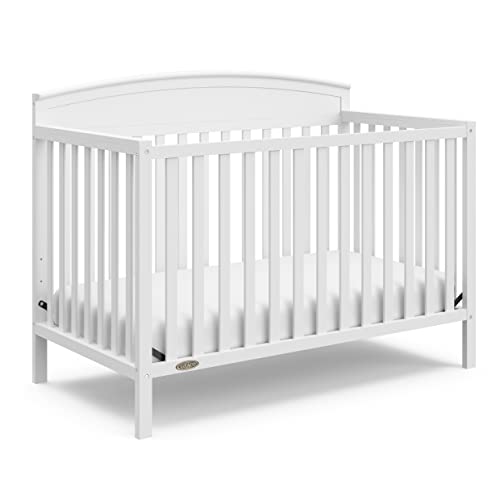
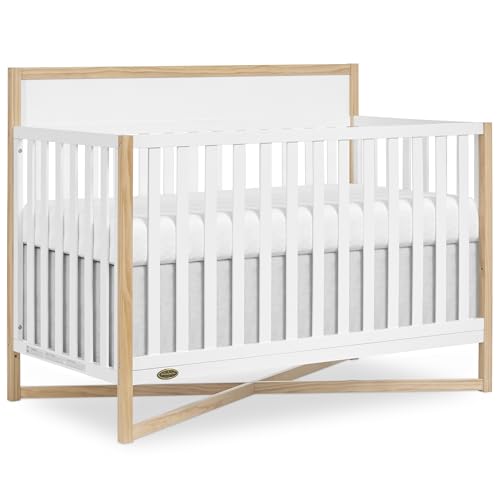
A crib with adjustable mattress height features a mattress support platform that can be set at two or more fixed levels. Instead of a single fixed base, the platform locks into notches or brackets on the crib's inner posts, letting you raise or lower the sleeping surface as your baby develops.
This design solves a daily parenting problem: newborns need to be lifted in and out dozens of times a night, and a high mattress makes that motion gentle on your back and shoulders. Once your baby can sit up and pull to stand, a low mattress prevents them from tipping over the rail. The same crib serves both stages with a simple adjustment.
Most modern models combine this feature with convertible designs, so the crib later becomes a toddler bed or daybed. If you are planning a long-term nursery setup, browse our convertible crib guide to understand how adjustable height fits into the full conversion timeline.
How Adjustable Mattress Height Works
The mechanism is simple but precise. The mattress support — usually a metal spring frame or a wooden platform — rests on brackets bolted to the crib's corner posts. Each bracket corresponds to a height position. To change levels, you lift the platform out of one set of brackets and reseat it into another, then re-tighten the hardware.
Three-position cribs are the most common configuration, while four-position cribs add an intermediate level for finer tuning. Some premium cribs use a hand-crank or trigger-release system that lets one parent adjust the platform without tools. Whatever the mechanism, the key safety principle stays the same: the platform must lock firmly into place with no wobble, and all hardware must be re-checked after every adjustment.
If you are still deciding between a standard crib and a bassinet for the earliest months, our comparison of cribs and bassinets explains when each option makes sense and how adjustable cribs can replace a separate bassinet.
Understanding the Height Positions
Each position corresponds to a developmental stage. Using the right level at the right time is the core safety habit that makes an adjustable crib worthwhile.
- Highest position — newborn stage (0–4 months) Keeps the mattress close to the top rail so you can lift a sleeping newborn without reaching deep into the crib. Use this level only while your baby cannot yet push up, roll, or sit. Always follow safe sleep rules: firm flat mattress, fitted sheet only, and nothing else inside the crib.
- Middle position — sitting stage (around 4–8 months) Lower the mattress as soon as your baby can push up on hands and knees or sit independently. This intermediate level keeps the rail high enough to prevent tipping while still allowing comfortable access for diaper changes and bedtime routines.
- Lowest position — standing and toddler stage (8 months and beyond) Drop to the lowest setting once your baby can pull to stand. At this level the top rail should sit at least 26 inches above the mattress surface, well above your child's reach when standing. Keep the crib free of bumpers, pillows, and toys that could be used as a step.
Comparing Crib Tiers by Adjustable Height Features
Adjustable mattress height appears across every product tier, but the mechanism, number of positions, and build quality vary. The table below uses a universal tier system so you can compare models on features rather than numbers.
| Tier | Typical Positions | Best For | What to Expect |
|---|---|---|---|
| Essential Tier | 2–3 fixed levels | Straightforward nursery setups | Manual bracket adjustment with basic hardware. Solid choice for parents who want the core function without extras. |
| Balanced Tier | 3–4 fixed levels | Growing families planning conversions | Reinforced platform, smoother bracket changes, and sturdier posts. Often pairs with toddler-bed conversion kits. |
| Premium Tier | 4 levels with tool-free adjustment | Frequent height changes and shared nurseries | Trigger-release or crank mechanisms, heavier-duty frames, and finishes designed to resist wear over years of use. |
| Luxury Tier | 4+ levels with precision hardware | Design-forward nurseries with long-term plans | Flagship construction, hand-finished details, and conversion systems that extend the crib into a full bedroom set. |
Higher tiers do not automatically mean a safer crib. A well-built essential-tier model with a firm platform and correctly used brackets meets the same safety standards. The upgrade mainly buys smoother adjustment, sturdier materials, and longer conversion life. If you are planning for a second child or a long conversion path, a balanced-tier or premium-tier crib usually offers good value for its class.
What to Look For in an Adjustable-Height Crib
Use this checklist when comparing models. It focuses on the features that directly affect safety, durability, and day-to-day usability.
Number of positions. Three positions cover the newborn, sitting, and standing stages. Four positions add flexibility for taller parents or rapid growers. Two-position cribs are workable but require a bigger jump between stages.
Locking mechanism. Look for a platform that seats into metal brackets or a reinforced rail with a visible lock indicator. Avoid any crib where the platform can be lifted out without releasing a safety catch.
Adjustment method. Manual bracket systems are reliable and simple. Tool-free trigger or crank systems are convenient if you expect to change heights often or share the nursery between caregivers.
Build materials. Solid wood or high-grade steel platforms resist sagging better than thin composite boards. Check that the corner posts are reinforced where the brackets attach, since that is the load-bearing point.
Conversion compatibility. If you plan to convert the crib later, confirm that the conversion kit is available and that the adjustable platform does not interfere with the toddler-bed rail. Our guide to convertible cribs with conversion kits explains what to verify before buying.
Safe Sleep Rules for Adjustable Cribs
Adjustable height is a convenience feature, not a substitute for safe sleep practice. The following rules apply at every position:
Keep the mattress firm and flat, with a fitted sheet that matches the crib's dimensions. Place nothing else inside the crib — no bumpers, pillows, blankets, positioners, or toys. Put your baby to sleep on their back for every sleep. Keep the crib in your room for at least the first six months if possible.
Check the mattress fit as well. A gap larger than two fingers between the mattress and the crib frame is a safety concern, especially at lower positions where a baby may press against the sides. Our guide to choosing a crib mattress covers fit, firmness, and material considerations in detail.
Finally, register your crib with the manufacturer so you receive recall notices. Inspect the platform brackets and bolts monthly, and after every height adjustment, to confirm nothing has loosened.
Matching the Crib to Your Nursery Setup
An adjustable crib rarely lives alone. Most parents pair it with a changing station, storage, or a full nursery furniture set. Before choosing a model, think about the room layout and how the height positions will interact with surrounding furniture.
If space is tight, a crib with an attached changing table can consolidate functions, but confirm that the changing surface does not block access to the crib rail at the highest position. Our overview of cribs with changing tables covers the layout trade-offs. For a fuller room plan, the convertible crib with changing table and drawers guide shows how storage and sleep areas can share a wall without crowding the rail.
Also consider the chair you will use during night feeds. A comfortable chair placed within arm's reach of the highest mattress position saves repeated standing and bending. Our guide to a comfortable nursery chair explains how to position seating relative to the crib rail.
Ready to Compare Adjustable Cribs?
Browse our recommended models, filter by position count and conversion options, and find the crib that fits your nursery stage.
VIEW RECOMMENDED CRIBS