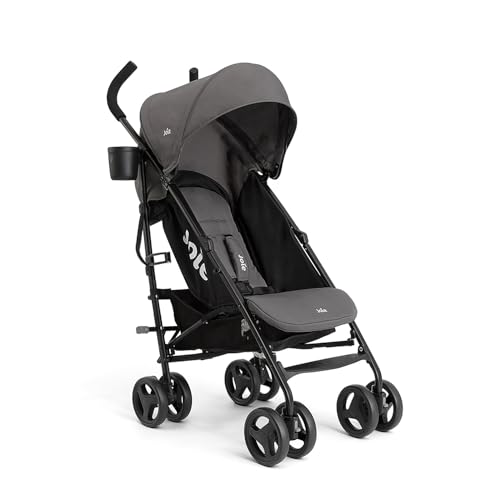
Umbrella Stroller With Extended Handles
A practical buying guide for taller parents and caregivers who want compact folding without sacrificing pushing comfort. Learn what extended and telescoping handles really change, and how to choose the right model for daily use and travel.
Why this guide exists: An umbrella stroller is a lightweight, quick-fold option that many families keep by the door or in the car trunk. But standard handle heights often sit too low for taller parents, creating a stooped pushing posture that becomes uncomfortable on longer walks. An umbrella stroller with extended handles solves that specific problem. This guide explains the mechanisms, the trade-offs, and what to check before you commit to a model.
What “Extended Handles” Actually Means
The phrase covers several different designs, and manufacturers use the terms loosely. Before comparing models, it helps to know which mechanism you are actually looking at, because they behave very differently in daily use.
- Fixed extended handles: The handlebar is permanently set at a taller height. There are no moving parts, so nothing to loosen over time. The trade-off is that the stroller only suits one pushing height comfortably.
- Adjustable handle height: The handlebar slides between preset positions, usually with a push-button or lever lock. This is the most versatile arrangement for households where two caregivers of different heights share the stroller. You can read more about this configuration in our guide to an umbrella stroller adjustable handle height.
- Telescoping handles: The handle tubes extend and retract continuously rather than clicking into fixed slots. This gives finer height control. Our overview of an umbrella stroller with telescoping handles explains how the locking collars work.
- Curved or extended grip bars: Some models keep a standard frame but add a longer, angled handlebar that pushes the grip point further away from the seat and slightly higher. These are the simplest, lightest version of the concept.
The right choice depends on whether one person or several people will push the stroller, and whether you need the handle to shorten again for storage or for a shorter caregiver.
Who Benefits From a Taller Handle
The obvious answer is tall parents, but the benefit is broader than that. A handle that sits at the right height changes how your whole body works while pushing.
- Taller parents and caregivers: If you are above average height, a standard umbrella stroller forces you to lean forward or shorten your stride. An extended handle restores a natural walking posture.
- Parents with back or shoulder sensitivity: A stooped pushing position loads the lower back and upper shoulders. Raising the grip point reduces that strain on longer outings.
- Caregivers of different heights: Grandparents, aunts, uncles, and babysitters all push the same stroller. An adjustable or telescoping handle lets each person set their own comfortable position.
- Frequent air travelers: A taller handle can double as a grip point when lifting the folded stroller into an overhead bin or car trunk. Combine that with a compact fold and you get a genuinely practical travel setup — see our roundup of options that fit in the overhead bin.
If you are shorter than average, an extended handle is not automatically better. A fixed tall bar can put the grip point above your natural reach. In that case, an adjustable model that drops back down is the safer pick.
What to Check Before You Buy
Extended handles are one feature among many. These are the points that matter most when you compare specific models side by side.
1. Handle height range and locking mechanism
Look for the actual height range rather than a vague “tall handle” claim. The handle should lock firmly at each position with no wobble when you push. Push-button locks are quicker to adjust; lever locks tend to feel more solid. Avoid mechanisms that rely on friction alone, because they loosen with use.
2. Frame stability at full extension
Raising the handle changes the leverage on the frame. A well-built stroller stays rigid at its highest setting, with no flex in the joints. Heavier-gauge tubing and reinforced hinge points are the signs of a solid build. Lighter frames may flex slightly at the top position, which is noticeable on uneven pavement.
3. Weight and folded size
Extended handles add a small amount of material and mechanism, so the lightest umbrella strollers usually have fixed handles. If portability is the priority, check the folded dimensions carefully and confirm that the handle retracts or folds flat. Our guide to an umbrella stroller that folds up small covers what to measure.
4. Recline and harness
A taller handle says nothing about how the seat supports your child. For newborns and younger infants you need a recline, which many umbrella strollers lack. If your child is still napping on the go, review an umbrella stroller that reclines back and confirm the harness is a five-point design — our notes on an umbrella stroller with a 5-point harness explain why that matters.
5. Wheels and canopy
Most umbrella strollers are designed for smooth surfaces. If your routes include gravel paths, park trails, or cobblestones, look at wheel size and suspension. An umbrella stroller with all-terrain wheels is a different build class entirely. A decent canopy and a small basket also make a big difference to daily usability — see our overview of an umbrella stroller with canopy and storage.
Handle Designs Compared
| Handle Design | Best For | Trade-Offs | Typical Tier |
|---|---|---|---|
| Fixed extended handle | One tall caregiver, daily quick errands | No adjustment for other users; not ideal for shorter caregivers | Entry-level to mid-range |
| Adjustable height (preset slots) | Households with two or more caregivers | Slightly more mechanism and weight | Mid-range |
| Telescoping handle | Fine-tuned fit, frequent storage | More joints to maintain; check locking collars | Premium |
| Curved extended grip bar | Lightest possible setup, occasional use | Less height gain than a true extension | Essential tier |
Tier here reflects market positioning and build complexity, not a judgment of quality. A well-made entry-level stroller with a fixed extended handle can serve a single tall parent perfectly for years. A premium telescoping model earns its place when several people share the stroller or when you need it to pack down repeatedly.
Extended Handles vs. Adjustable Handles
These two features are often confused, and the distinction matters. “Extended” describes the position of the handle; “adjustable” describes whether that position can change.
A fixed extended handle is simpler and has fewer failure points. An adjustable handle is more flexible but introduces a locking mechanism that needs to stay tight. If you are the only person pushing the stroller and you know your comfortable height, a fixed bar is often the more durable choice. If the stroller will be shared, adjustability pays for itself in daily comfort. For a direct comparison of sliding mechanisms, see our guide to an umbrella stroller with adjustable handles.
A related but different feature is a handle that flips direction, letting your child face you. That is a seating configuration, not a height feature, and we cover it separately in our notes on an umbrella stroller with a reversible handle.
Safety and ergonomics checklist
- Test the lock at full height. Push down firmly on the handle with the stroller empty. Any movement or clicking means the mechanism is not seating properly.
- Check the folding lock. A raised handle should never interfere with the fold latch. Confirm the stroller cannot fold accidentally while a child is inside.
- Watch your stride. A taller handle can bring the rear axle closer to your feet. Test that you are not kicking the frame while walking.
- Keep your wrist loop or tether attached. Taller handles make it easier to push one-handed, which increases the risk of the stroller rolling away on a slope.
- Respect the weight limit. The frame rating applies regardless of handle position. Never hang heavy bags from the handlebar, because the added leverage can tip the stroller backward.
Extended Handles for Travel
Umbrella strollers are a common travel choice because they fold quickly and take up little space. Extended handles fit naturally into that use case, but travel adds a few specific requirements.
First, the handle should retract or fold so the stroller meets airline gate-check dimensions. Second, the folded package should be light enough to carry up stairs and lift into an overhead compartment. Third, the frame should survive being handled by airport staff. If you are building a travel setup from scratch, start with our general guide to an umbrella stroller for travel and then check the handle specification against the points above.
Families who travel with a car seat often need a compatible stroller rather than a pure umbrella model. In that case, a travel system is the better category — see our comparison of travel systems and our notes on a travel system with a bassinet.
A Simple Way to Choose
- Measure your comfortable pushing height. Stand relaxed with your arms at your sides, then bend your elbows slightly. The handle should meet your hands at roughly that level.
- Decide whether the stroller will be shared. One user points to a fixed extended handle; multiple users point to adjustable or telescoping.
- Confirm the seat suits your child's age. If your child is under six months or naps on the go, prioritize recline over handle convenience.
- Check the folded size against your storage. Car trunk, hallway closet, and overhead bin all have different limits.
- Test the lock in person if possible. Online descriptions rarely convey how solid a mechanism feels. A quick in-store push is worth ten product pages.
If you are still comparing umbrella stroller categories broadly, our umbrella strollers hub is the place to start. Parents who also want storage and a reclining seat often end up looking at a umbrella stroller with a reclining seat instead of a bare-bones model.
Frequently Asked Questions
Are extended handles worth it for average-height parents?
Often, yes. Many umbrella strollers are built around a relatively low handle height, so even average-height parents notice the difference on longer walks. The benefit is most pronounced if you push the stroller for more than short trips. If you only use it occasionally for a few minutes at a time, the difference is smaller.
Do extended handles make an umbrella stroller less stable?
A well-built stroller remains stable at full extension. The risk comes from added leverage: a taller handle makes it easier to push one-handed and easier for a hanging bag to tip the frame. Keep the weight limit in mind, use the tether, and never hang heavy items from the bar.
Can I add an extension to my existing stroller?
Handlebar extenders and grip covers exist, but they are not a substitute for a properly designed handle. They do not change the frame geometry and can introduce a wobble point. If the handle height is genuinely a problem, choosing a stroller designed with a taller or adjustable handle is the safer route.
What is the difference between extended and telescoping handles?
Extended means the handle sits higher than standard. Telescoping is one mechanism for achieving that — the tubes slide continuously and lock at any point in the range. Telescoping gives finer adjustment; a fixed extended bar gives simplicity and fewer parts to maintain.
Should the handle height match the caregiver or the child?
Always the caregiver. The handle is a pushing control, so it should suit the adult's posture. The child's comfort depends on the seat recline, harness fit, and leg support, which are separate specifications.