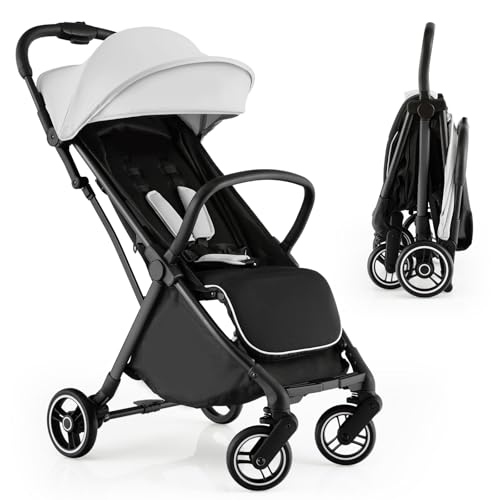
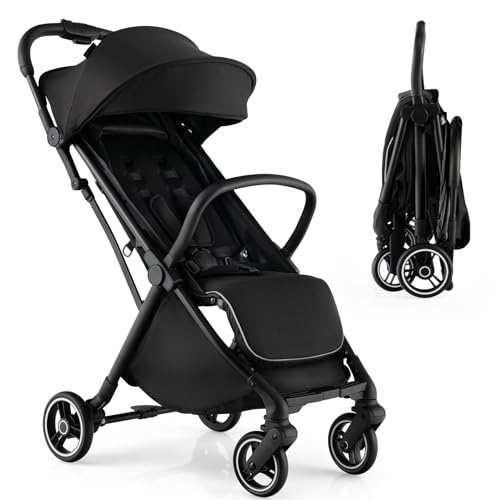
Umbrella Stroller That Fits in Overhead: The Complete Travel Guide
Everything you need to know about choosing a compact umbrella stroller that clears airport security and stows in the overhead bin.
START THE GUIDEWhy this guide matters: If you have ever wrestled a bulky stroller through a jet bridge or waited at the gate for a checked stroller, you already know the appeal of a model that folds down to carry-on size. This guide walks you through fold dimensions, weight limits, harness safety, canopy coverage, and the practical features that separate a genuinely travel-ready umbrella stroller from one that only looks compact on paper.
What Makes an Umbrella Stroller Overhead-Friendly?
An umbrella stroller earns the "overhead-friendly" label when its folded footprint fits within standard carry-on limits. Most airlines cap overhead bin space at roughly 22 x 14 x 9 inches, but regional jets and smaller aircraft can be tighter. The safest approach is to choose a model whose folded dimensions sit comfortably inside the smallest cabin you expect to use, rather than one that only just squeezes into a large overhead bin.
Beyond raw dimensions, three factors determine whether a stroller is truly practical for cabin storage:
- Fold mechanism: A true one-hand or two-step fold lets you collapse the stroller while holding your child or a bag. Models that require wrestling with a locking clip slow you down at the gate.
- Folded shape: Umbrella strollers fold into a long, narrow profile, while some compact models fold into a more cube-like shape. Cube folds tend to slide into overhead bins more easily.
- Standing fold: A stroller that stands upright when folded is easier to park in a corner and less likely to topple while you juggle tickets and passports.
If you want a broader comparison of cabin-ready options, our guide to travel strollers that fit in overhead covers the full category, while this page focuses specifically on the umbrella-style models that prioritize a slim fold.
Key Features to Evaluate Before You Buy
Travelers researching this category usually already know they want a compact stroller. What they need is a clear framework for comparing models, so the checklist below focuses on the details that matter most in real-world airport and city use.
Harness and Safety
A five-point harness is the standard for safety in this category. Look for a harness with padded straps and a single-release buckle that you can operate without fumbling. Our overview of the umbrella stroller with 5-point harness explains why this feature is non-negotiable, especially on models that recline.
Weight and Carry Options
Most umbrella strollers in this class land in the lightweight range, but "lightweight" is relative. A carry strap or integrated handle makes a meaningful difference when you are walking long terminal corridors. For models that push the boundaries of portability, see our roundup of the ultra-lightweight travel stroller options.
Seat Recline and Comfort
Some umbrella strollers have a fixed, upright seat, while others offer a partial recline. If your child naps on the go, a reclining seat is worth prioritizing. The umbrella stroller that reclines back guide covers the models that balance a slim fold with a more comfortable seat angle.
Canopy and Storage
A canopy with UPF protection shields your child from sun during outdoor layovers and city walks. A small under-seat basket is useful for a diaper pouch, snacks, or a light jacket. For models that combine both, see the umbrella stroller with canopy and storage comparison.
Handle Height and Adjustability
If more than one caregiver will push the stroller, adjustable handles matter. Taller parents often find fixed-height umbrella strollers uncomfortable to push for long stretches. Our guides to the umbrella stroller with adjustable handles and the umbrella stroller with telescoping handles break down the options by height range.
Comparing Umbrella Stroller Tiers
Rather than focusing on any single figure, it helps to understand how umbrella strollers are positioned across the market. The table below uses universal quality tiers so you can match a model to your travel habits and expected frequency of use.
| Tier | Typical Focus | Best For | Trade-Offs to Expect |
|---|---|---|---|
| Entry-level | Basic fold, simple canopy, fixed seat | Occasional weekend trips and short errands | Fewer comfort features and limited recline |
| Mid-range | One-hand fold, partial recline, larger canopy | Frequent flyers and urban commuters | Slightly heavier frame than the lightest models |
| Premium | Refined fold, premium fabrics, smoother wheels | Families who travel often and want long-term durability | Higher initial outlay for features you may not use daily |
| Luxury | Flagship materials, near-flat recline, travel bag included | Parents who want a single stroller for home and travel | Heavier than pure umbrella designs, less minimal |
Within each tier, the difference between a good and a great model usually comes down to fold smoothness, wheel quality, and how well the harness and canopy hold up after repeated use. A mid-range model often delivers the best balance for families who fly several times a year.
Step-by-Step Buying Guide
Use the following sequence to narrow your options efficiently. It mirrors how experienced travelers evaluate strollers before committing.
- Measure your airline's bin limits. Check the carry-on dimensions for the airlines you fly most, then add a small buffer. A stroller that folds a couple of inches smaller than the limit is far easier to stow.
- Confirm the fold type. Test whether the fold is genuinely one-hand or requires two hands and a foot. A smooth fold is the single biggest quality-of-life factor at the gate.
- Check the minimum age and weight rating. Umbrella strollers are typically intended for babies who can sit unassisted. If you need newborn support, consider a reclining model or a travel system.
- Evaluate the harness and brake. A five-point harness and a one-step foot brake are baseline safety features. Test the buckle action if you can.
- Weigh the stroller against your carry load. A lighter frame is easier to lift into an overhead bin, but check that it still feels stable when pushed.
- Look for a travel bag or carry strap. These small accessories protect the stroller in transit and make it easier to carry when folded.
If you are also comparing stroller styles, our overview of umbrella strollers puts the category in context, and the umbrella stroller for travel guide expands on airport-specific considerations such as TSA screening and gate procedures.
Overhead Bin Rules: What Travelers Should Know
Airline policies for strollers vary, and gate agents have final discretion. In general, a stroller that folds within carry-on limits can be brought through security and stowed in the overhead bin. Larger strollers are usually gate-checked and returned at the jet bridge. Before you fly, confirm the following with your airline:
- Whether the stroller counts toward your carry-on allowance
- The maximum folded dimensions accepted in the cabin
- Whether a travel bag is required for cabin storage
- Any restrictions on specific aircraft types in your itinerary
For a deeper look at cabin-friendly models beyond the umbrella category, see our guide to the travel stroller that fits in overhead bin and the ultra-compact travel stroller comparison.
Common Mistakes to Avoid
Even well-informed shoppers can overlook a few details. The most frequent missteps in this category include:
- Assuming all umbrella strollers fold small. Some models have a long folded profile that exceeds carry-on length limits. Always check the folded dimensions, not just the folded height.
- Overlooking the recline. A fixed upright seat is fine for short trips but frustrating on longer travel days when your child needs to nap.
- Ignoring wheel quality. Small plastic wheels struggle on cobblestones and airport carpet. Larger, rubberized wheels roll more smoothly.
- Skipping the harness check. A five-point harness with padded straps is essential; a simple lap belt is not sufficient for a travel stroller.
- Forgetting the storage question. A small basket and a canopy make a big difference during long layovers.
Who Should Choose an Overhead-Friendly Umbrella Stroller?
This category suits families who prioritize portability and frequently navigate airports, trains, and public transit. It is a strong fit if you:
- Fly several times a year and want to avoid gate-checking
- Live in a city where storing a full-size stroller is impractical
- Need a secondary stroller for travel that complements a larger model at home
- Have a child who can sit upright unassisted and is comfortable in a compact seat
If you need newborn support, a reclining model or a travel system is usually a better starting point. Our guide to the travel stroller for infant covers the options that bridge compact folding with newborn-friendly seating.
Frequently Asked Questions
What size does an umbrella stroller need to be to fit in an overhead bin?
Most airlines limit overhead bin space to roughly 22 x 14 x 9 inches, though exact dimensions vary by aircraft. Choose a folded stroller that stays within the smallest carrier dimensions you expect to encounter, and verify with your airline before flying.
Is an umbrella stroller that fits in overhead safe for newborns?
Most overhead-friendly umbrella strollers are designed for babies who can sit upright unassisted, typically around six months and older. For newborns, a reclining model or a travel system with a compatible infant car seat is usually a better fit. Always check the manufacturer's minimum age and weight recommendations.
Do I still need to gate-check an umbrella stroller if it fits in the overhead bin?
No. If your stroller folds small enough to meet the airline's carry-on size limits, you can typically bring it through security and stow it in the overhead bin. Gate agents have final discretion, so confirm the policy with your airline in advance.
What features matter most in a compact umbrella stroller for travel?
Prioritize a true one-hand fold, a five-point harness, a canopy with UPF protection, a small storage basket, and a lightweight frame. A carry strap or travel bag is also helpful for navigating airports and public transit.
Can I use an overhead-friendly umbrella stroller as my only stroller?
It can work well for urban families and frequent travelers, but a compact umbrella stroller may lack the storage, suspension, and recline of a full-size model. Many families keep a larger stroller for neighborhood walks and use the umbrella model for travel and quick errands.