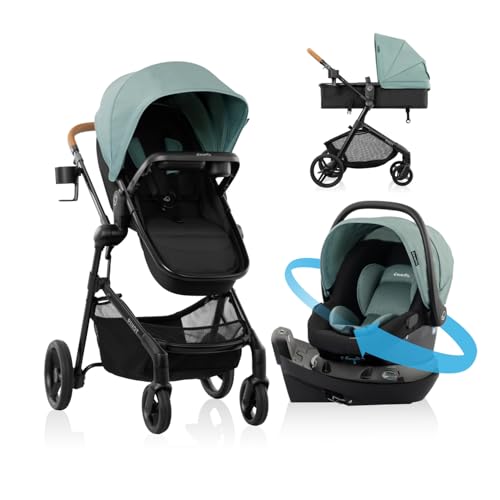
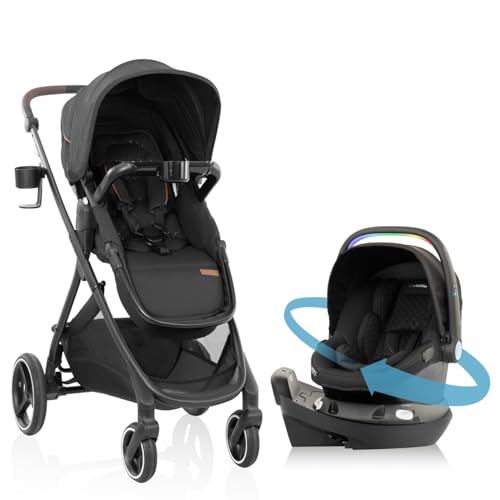
Travel System with Rotating Car Seat: A Smarter Way to Move with Baby
Loading a newborn into a car seat shouldn't require acrobatics. A travel system with a rotating car seat brings the seat to you—swiveling toward the door so you can buckle your baby without straining your back or wrestling with tight spaces. This guide walks you through how these systems work, what to look for, and whether one belongs in your parenting toolkit.
Explore Key InsightsKey Takeaways
- A rotating car seat swivels up to 90 degrees, bringing the seat closer to the car door for easier loading.
- Travel systems combine a stroller, car seat, and base—rotating models add a swivel mechanism to the base.
- These systems are especially helpful for parents with back pain, tall vehicles, or tight parking spaces.
- Safety certifications and correct installation remain the top priorities regardless of rotation features.
- Consider stroller compatibility, seat weight limits, and vehicle fit before choosing a model.
What Exactly Is a Travel System with a Rotating Car Seat?
A travel system stroller and car seat bundle typically includes three core components: a stroller frame, an infant car seat, and a vehicle base. The rotating variant adds a swivel mechanism to the car seat base, allowing the seat to turn toward the open car door before you lift your baby in or out.
Think of it as a lazy Susan for your car seat—except engineered to meet rigorous safety standards. Once your baby is buckled, you rotate the seat back to the locked forward-facing position, and you're ready to drive. The stroller component works just like any other travel system: the car seat clicks onto the stroller frame for seamless transitions from car to sidewalk.
This category sits at the intersection of convenience and ergonomics. It's particularly valuable for parents recovering from C-sections, those with chronic back issues, or anyone who has ever contorted themselves trying to reach a rear-facing seat in a compact car.
How the Rotating Mechanism Works
The rotation happens at the base, not the seat itself. The base stays installed in your vehicle, and the car seat locks onto it. A release handle or lever—usually located at the front of the seat—unlocks the swivel, letting you rotate the seat up to 90 degrees toward the door.
When you're done, you push the seat back until it clicks into the locked, forward-facing position. Most models have visual and audible indicators to confirm the seat is secure. Some premium models offer multi-angle rotation, allowing you to position the seat at various angles for easier access in different vehicle configurations.
It's worth noting that the rotation feature is designed for stationary use only. The seat must always be locked forward before the vehicle is in motion. Reputable manufacturers build in fail-safes to prevent driving with an unlocked seat, but parental diligence remains essential.
Why Parents Choose Rotating Travel Systems
Ergonomic Loading
No more twisting and reaching across a cramped back seat. The seat comes to you, reducing strain on your back, shoulders, and wrists—especially helpful during postpartum recovery.
Faster Transitions
Loading and unloading take seconds instead of minutes. This matters when you're juggling a diaper bag, groceries, and a fussy baby in a busy parking lot.
Ideal for Tight Spaces
If you park in a narrow garage or frequently deal with compact parking spots, the rotation feature lets you load your baby without fully opening the door.
Taller Vehicles Made Easier
SUVs and lifted vehicles can be challenging for shorter parents. A rotating seat lowers the effective loading height, making these vehicles more accessible.
What to Look for in a Travel System with Rotating Car Seat
Not all rotating travel systems are created equal. Here's what separates a solid choice from a frustrating one:
Safety Certifications
Every car seat sold in the United States must meet Federal Motor Vehicle Safety Standard 213. Look for seats that also carry JPMA certification or have undergone independent crash testing. The rotation mechanism should have a clear locking indicator—visual and audible—to confirm the seat is secure before driving.
Rotation Range and Ease of Use
Most rotating seats offer 90-degree rotation, but some provide multi-angle positioning. Test the release mechanism if possible—it should be intuitive and require minimal force. A stiff or confusing release defeats the purpose of the feature.
Stroller Compatibility and Fold
The stroller half of the system matters just as much. Look for a stroller that folds compactly, maneuvers well on uneven surfaces, and has a spacious storage basket. If you travel frequently, consider a model that folds small enough for an airplane overhead bin—our guide to travel strollers that fit in overhead bins can help you compare options.
Weight Limits and Longevity
Infant car seats typically accommodate babies up to 30–35 pounds, but rotating models sometimes have slightly different limits due to the base mechanism. Check both the seat and base weight limits. If you want a system that grows with your child, explore travel systems with bassinet and car seat combinations that offer more versatility.
Vehicle Fit
The rotating base adds bulk. Measure your back seat and check the manufacturer's vehicle compatibility list before committing. Some models require additional clearance behind the seat, which can be an issue in compact cars.
Build Quality and Materials
Entry-level models may use lighter plastics and simpler fabrics, while premium models often feature reinforced bases, higher-grade upholstery, and smoother rotation mechanisms. Mid-range options typically balance durability with ease of use, making them a solid choice for most families.
Comparing Rotating Travel Systems by Tier
To help you navigate the market, here's a breakdown of what different tiers typically offer. Remember: higher tiers generally mean smoother mechanisms, more premium materials, and additional features—not necessarily better safety, since all seats must meet the same federal standards.
| Tier | Best For | Typical Features |
|---|---|---|
| Entry-Level | Occasional use, straightforward needs | Basic 90-degree rotation, single recline position, simpler fabrics, standard stroller fold |
| Mid-Range | Daily use, growing families | Smoother rotation mechanism, multiple recline positions, better padding, easier fold, larger storage basket |
| Premium | Frequent travel, ergonomic priorities | Multi-angle rotation, premium fabrics, one-hand fold, all-terrain wheels, extended canopy, higher weight limits |
| Luxury | Maximum convenience and style | Flagship materials, advanced safety indicators, self-standing fold, integrated accessories, refined design |
If you're also considering a system that converts for a second child, our guide to a travel system that converts to a double stroller might be worth exploring.
Safety Considerations You Shouldn't Overlook
The rotating feature is convenient, but safety remains non-negotiable. Here's what to keep in mind:
- Always lock before driving. Confirm the seat is in the forward-facing locked position. Most models have visual indicators, but develop the habit of checking manually.
- Install the base correctly. Use either the LATCH system or seat belt according to your vehicle's manual. A loosely installed base undermines every safety feature.
- Check the recline angle. Newborns need a specific recline angle to keep their airway open. Most bases have an angle indicator—use it.
- Don't use the rotation feature while the vehicle is moving. This should go without saying, but it's worth repeating.
- Register your product. This ensures you'll be notified of any recalls or safety updates.
For a deeper look at how travel systems compare to standalone strollers, explore our broader travel systems resource.
Who Benefits Most from a Rotating Travel System?
This category isn't for everyone, but certain parents find it indispensable:
- Parents recovering from surgery or injury. The reduced twisting and reaching can be a game-changer during postpartum recovery.
- Owners of tall vehicles. SUVs, trucks, and lifted cars become significantly easier to manage.
- City dwellers with tight parking. Parallel parking and narrow garages no longer require contortionist skills.
- Caregivers with limited mobility. Grandparents or caregivers with arthritis or shoulder issues will appreciate the ergonomic design.
- Frequent travelers. Quick loading and unloading add up over dozens of trips. If you're often on the go, our guide to travel strollers for infants for airplane travel can complement this information.
If you're leaning toward a system that prioritizes versatility, consider a travel stroller with reversible seat for added flexibility as your baby grows.
Potential Drawbacks to Weigh
No product is perfect. Rotating travel systems have a few trade-offs worth acknowledging:
- Added weight and bulk. The rotating base is heavier than a standard base, which can be a consideration if you frequently move the base between vehicles.
- Higher learning curve. The mechanism requires a bit of practice to operate smoothly, especially in the beginning.
- Vehicle fit limitations. Not every car accommodates the extra clearance required by rotating bases.
- Price tier positioning. Rotating models generally sit in the mid-range to premium tiers due to the additional engineering.
Frequently Asked Questions
What is a travel system with a rotating car seat?
It's a bundled stroller and infant car seat where the car seat swivels on its base. The rotation lets you turn the seat toward the car door for easier loading, then lock it forward before driving. The car seat also clicks onto the stroller for seamless transitions.
Is a rotating car seat safe for newborns?
Yes, provided it's installed correctly and used according to the manufacturer's instructions. Rotating car seats meet the same federal safety standards as fixed seats. The key is ensuring the seat is locked in the forward-facing position before the vehicle moves. Always check the recline angle for newborns.
Can I use a rotating car seat without the stroller?
Absolutely. The car seat works independently in your vehicle. The stroller component simply adds convenience for errands and travel. Many parents use the car seat as their primary infant seat and the stroller when needed.
Do rotating car seats fit all vehicles?
Most fit standard back seats, but the rotating base requires additional clearance. Check the manufacturer's vehicle compatibility list and measure your back seat before purchasing. Compact cars may have tighter fits than mid-size SUVs.
How long can my baby use a rotating travel system?
Infant car seats typically accommodate babies up to 30–35 pounds or until they outgrow the height limit. The stroller portion often supports children up to 50 pounds or more. Check the specific limits for the model you're considering.
Making Your Decision
A travel system with a rotating car seat is a meaningful investment in daily convenience and physical comfort. It won't suit every family—especially those with very compact vehicles or minimal storage space—but for many parents, the ergonomic benefits outweigh the trade-offs.
As you weigh your options, prioritize safety certifications, vehicle fit, and stroller functionality. Test the rotation mechanism in person if possible. And remember: the best system is the one that fits your lifestyle, your vehicle, and your baby's needs. For further exploration, browse our full collection of travel strollers for infants and related guides.
Whether you choose a rotating model or a traditional travel system, the goal remains the same: keeping your baby safe and making your days a little smoother.