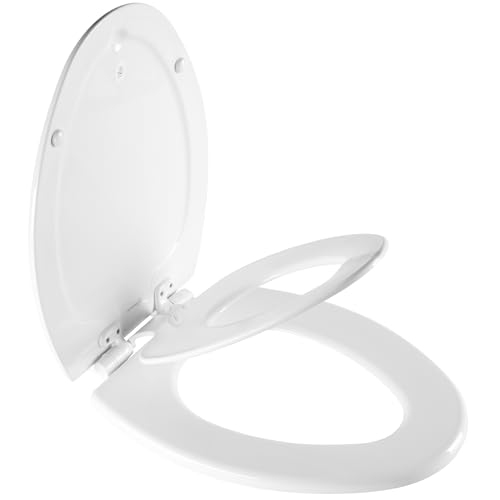
Toilet Seat with Potty Seat Built In: The Complete Buying Guide
One seat, two sizes, zero extra clutter. Learn how a built-in potty seat works, which features matter, and how to choose the right model for your family's bathroom.
Explore Recommended ModelsWhy parents choose a built-in potty seat: Potty training is a milestone that touches every part of your daily routine. A toilet seat with a potty seat built in blends a child-sized ring into your everyday toilet seat, so toddlers can train on the real toilet while adults keep their full-size seat. No separate trainer to store, clean, or trip over — just a smoother transition from diapers to the family bathroom.
What Is a Toilet Seat with Potty Seat Built In?
A toilet seat with potty seat built in is a complete replacement seat that includes three functional layers in one unit: a standard adult seat, a smaller integrated child seat, and the mounting hardware that secures everything to your bowl. The child ring folds down when your toddler needs it and tucks away — often held by magnets or a latch — when adults use the toilet.
Unlike a removable training insert that sits loosely on top of the rim, the built-in design stays anchored to the toilet. That means less wobbling, fewer slips, and no frantic search for the trainer seat when your child announces they need to go. Many families find that this continuity — same bathroom, same routine — makes the leap from a standalone trainer to the family toilet feel far less intimidating.
If you are still comparing approaches, our guide to a training potty that looks like a toilet explains how realistic standalone trainers help younger toddlers build confidence before they graduate to a built-in seat.
How a Built-In Potty Seat Works
Understanding the mechanics helps you judge quality before you buy. Most models follow one of two operating patterns:
- Fold-down child ring: The child seat is hinged at the back and drops forward into position. Magnets or a soft-close mechanism hold it upright against the adult lid when not in use.
- Slide or lift-out child insert: A smaller ring rests inside the adult opening and can be lifted out for cleaning or removed once training is complete.
Both styles attach to the bowl with the same hardware as a standard seat. Installation usually takes a few minutes with a screwdriver or a quick-release hinge system. The key difference lies in how the child ring is secured: magnets and latches are convenient, while a positive mechanical lock gives extra peace of mind for wriggly toddlers.
Because the seat replaces your existing lid and ring entirely, it is worth checking that your current seat is due for an upgrade anyway. A worn, loose seat is a safety concern for children and adults alike, which makes the switch easier to justify.
Types of Built-In Potty Seats
Built-in seats are not one-size-fits-all. They differ in fit, mounting, and the age range they serve. The table below compares the main categories so you can match a model to your bathroom and your child.
| Type | Best For | Key Consideration |
|---|---|---|
| Standard elongated built-in seat | Most modern US bathrooms with elongated bowls | Confirm bowl length; elongated seats are longer than round ones |
| Round built-in seat | Older or compact bathrooms with round bowls | Less seating area for adults, but fits tighter spaces |
| Soft-close family seat | Households with light sleepers and nighttime use | Quiet closing reduces noise; check hinge durability |
| Quick-release removable seat | Families who deep clean often | Easy off for scrubbing; verify the lock stays firm |
| Training-stage seat with narrower child opening | Small toddlers who need extra support | Smaller opening reduces the risk of slipping through |
Each type has trade-offs. A soft-close mechanism is a genuine comfort upgrade in a household with a toddler who wakes easily, but hinges on entry-level soft-close models can loosen over time. Mid-range and premium models typically use sturdier hinge assemblies and better magnet alignment, which shows in how cleanly the child ring parks against the lid.
Why Choose a Toilet Seat with Potty Seat Built In?
Advantages
- Saves floor and cabinet space — no extra trainer to store
- Encourages training on the real toilet from the start
- Fewer moving parts to clean around than a loose insert
- Child ring stays anchored, reducing wobble and slips
- One purchase replaces a worn seat and a separate trainer
- Adults keep a full-size seat with no daily swapping
Limitations
- Requires a compatible bowl shape and mounting style
- Installation is more involved than placing a trainer on top
- Not portable — you cannot take it on trips
- Child ring size may not suit very small toddlers
- Replacement parts can be model-specific
The biggest advantage is continuity. Children who train on the same toilet the whole family uses tend to accept the bathroom routine faster than children who practice on a standalone trainer and then face a second transition. For households with limited bathroom space, the built-in design is especially practical.
That said, a built-in seat is not the only sensible choice. Some families pair it with a potty training chair for the earliest weeks, when a child may feel more secure with feet flat on the floor and a backrest behind them. The two tools complement each other rather than compete.
Key Features to Evaluate Before Buying
Not every built-in seat is engineered to the same standard. When comparing models, focus on these features rather than surface details.
1. Bowl Shape and Mounting Compatibility
This is the single most important check. Measure your bowl from the mounting holes to the front rim and identify whether it is round or elongated. Then confirm the seat's mounting style — top-mount, bottom-mount, or quick-release — matches your toilet. A seat that does not fit flush will wobble, which undermines the whole point of a built-in design.
2. Child Ring Size and Opening
The child opening should be small enough to keep a toddler stable but large enough to be comfortable. Training-stage models with a narrower opening suit smaller children. Check the manufacturer's stated age and weight guidance and compare it against your child's build.
3. Hinge and Magnet Quality
Hinges take constant stress in a family bathroom. Look for reinforced hinge assemblies and magnets that align cleanly so the child ring parks without dangling. Entry-level models often use lighter hardware; premium models tend to use metal-reinforced hinges rated for years of daily use.
4. Seat Material and Surface
Smooth, non-porous surfaces are easier to sanitize and resist staining. Molded plastic is common and practical; premium materials feel more substantial and tend to hold their finish longer. Avoid textured surfaces around the child ring, where residue can collect.
5. Soft-Close and Slow-Close Mechanisms
A soft-close lid is a small luxury that matters in a house with a sleeping baby. It also protects little fingers from pinches. Check that the soft-close action applies to the adult lid, the adult seat, and the child ring — some models only soften one layer.
6. Cleanability
Quick-release hinges let you lift the seat off for thorough cleaning. If the seat is fixed, look for smooth undersides and rounded edges that wipe down easily. The child ring in particular collects splashes, so easy access matters.
7. Weight Capacity and Adult Comfort
The adult seat should be rated for normal adult use without flexing. Read the weight rating and check reviews for reports of creaking or movement. A seat that feels flimsy to adults will not inspire confidence in children either.
Built-In Potty Seat vs. Standalone Trainer vs. Insert
Parents typically weigh three options. Each serves a slightly different stage of training.
| Option | Best For | Trade-Off |
|---|---|---|
| Toilet seat with potty seat built in | Families ready to train on the real toilet; space-conscious bathrooms | Permanent installation; requires bowl compatibility |
| Standalone potty trainer | Very young toddlers who need back support and floor-level confidence | Extra item to store and clean; requires a second transition later |
| Removable training insert | Travel, visiting relatives, and short-term use | Can shift on the rim; must be stored between uses |
Many families end up using more than one approach. A standalone trainer works well in the first weeks, a built-in seat becomes the daily routine, and a removable insert travels in the diaper bag. The built-in seat earns its place because it removes friction from the routine you repeat most often.
If your child is still in diapers part-time, it also helps to have a reliable changing setup nearby. Our guide to a waterproof diaper changing pad covers the practical side of the transition period.
Quality Tiers: How Built-In Potty Seats Differ
Built-in seats fall into recognizable tiers. Rather than focusing on absolute figures, compare what each tier typically delivers in build, features, and longevity.
Essential Tier
Basic fold-down child ring, standard plastic body, simple top-mount hardware. A solid choice for occasional use or short training windows. Expect lighter hinges and fewer comfort features.
Balanced Tier
Reinforced hinges, smoother magnet alignment, and often soft-close lids. Better adult comfort and more consistent child-ring action. A good long-term investment for a family bathroom.
Top-Tier
Premium materials, precision hardware, quiet close on all layers, and quick-release cleaning. Designed for years of daily family use and multiple children in sequence.
Mid-range models often deliver the best balance: the hinge and magnet improvements over entry-level seats are noticeable in daily use, while top-tier models add refinement and durability that matter most in busy households. If you plan to train more than one child on the same seat, the higher tier usually proves worthwhile.
How to Introduce the Built-In Seat to Your Toddler
Even a well-designed seat needs a thoughtful introduction. A few practical steps make the transition easier:
- Let them explore first. Show your child how the child ring folds down and back up. Let them practice sitting on it fully clothed before training begins.
- Use a step stool. Toddlers need their feet supported to feel secure. A stable step stool lets them climb up independently and brace their feet.
- Keep a consistent routine. Offer the toilet at predictable times — after waking, after meals, before bath — so the seat becomes part of a familiar sequence.
- Praise effort, not results. Early success is about cooperation, not perfect timing. Positive reinforcement builds willingness.
- Always supervise. Young children should never be left alone on the toilet, and the child ring should be checked for secure positioning before each use.
Patience matters more than technique. Some children take to the seat in days; others need weeks. If your child resists, step back to a potty training chair for a while and return to the built-in seat when interest returns.
Safety and Hygiene Checklist
A built-in potty seat is safe when installed and maintained correctly. Run through this checklist regularly:
- Check the hinge screws monthly. Loose hardware is the most common cause of wobbling. Tighten or replace as needed.
- Confirm the child ring locks in place. Press down on the ring before your child sits. It should not flex or shift sideways.
- Clean the child ring after every use. A quick wipe with a mild bathroom cleaner keeps the surface hygienic.
- Deep clean weekly. Lift the seat off if it has quick-release hinges and clean the underside, hinges, and mounting area.
- Inspect for cracks. Replace the seat if the plastic develops cracks or sharp edges, especially around the child opening.
- Teach handwashing. The built-in seat is a chance to build a handwashing habit from day one.
For households with more than one child, consider whether the seat you choose can handle repeated daily use. Hinge durability is the first component to fail on lighter models, and a replacement seat is often easier than sourcing a single spare part.
Common Mistakes to Avoid
- Buying without measuring the bowl. Round and elongated bowls are not interchangeable. Measure before you order.
- Ignoring the mounting style. A bottom-mount toilet may not accept a top-mount seat without adapters. Check the manufacturer's compatibility notes.
- Overlooking the child opening size. A ring that is too large lets small toddlers slip; one that is too small is uncomfortable. Match it to your child.
- Skipping the step stool. Foot support is not optional. Without it, many toddlers feel unstable and resist sitting.
- Assuming one seat fits all ages. A built-in seat suits training-age children; older kids may want a standard seat with a separate reducer.
- Neglecting cleaning. The child ring is the most-used surface in the early weeks. A quick wipe after each use prevents buildup.
Frequently Asked Questions
What is a toilet seat with potty seat built in?
It is a complete replacement toilet seat that includes a full-size adult seat and a smaller integrated child ring. The child seat folds down for toddlers and tucks away for adult use, so no separate training insert is required.
At what age can my child use a built-in potty seat?
Most children are ready between 18 months and 3 years, but readiness signs matter more than age. A child who can sit steadily, follow simple instructions, and shows interest in the bathroom is likely ready. Always supervise young toddlers.
Will a built-in potty seat fit my existing toilet?
Most models fit standard elongated and round toilets, but you must confirm the bowl shape and mounting style. Measure your bowl length and check the manufacturer's compatibility list before ordering.
Is a built-in potty seat hygienic?
Yes, when cleaned regularly. Choose smooth, non-porous surfaces and a seat that removes easily for washing. Wipe the child ring after each use and deep clean the full seat weekly.
Built-in potty seat vs. a standalone trainer: which is better?
A built-in seat saves space, avoids extra cleanup, and helps children transition directly to the family toilet. A standalone trainer is portable and can suit very young toddlers. Many families use both during training.
Can adults use the toilet normally with a built-in seat?
Yes. The child ring folds up or is held by magnets, leaving a full-size adult seat. Check the seat's weight rating and reviews for adult comfort before buying.
Ready to Make Potty Training Easier?
Explore our recommended built-in potty seats below and compare the features that matter for your family.
View Recommended Models