Safe Co-Sleeping with Newborn: What Every Parent Needs to Know
Understand the differences between co-sleeping and bed-sharing, learn evidence-based safety guidelines, and discover how to create a secure sleep environment while keeping your newborn close.
What Is Co-Sleeping and Why Parents Choose It
Co-sleeping is an umbrella term that describes any arrangement where a baby sleeps in close proximity to a parent or caregiver. For many families, it represents a practical response to the realities of newborn sleep patterns. Newborns wake frequently through the night for feeding, comfort, and warmth, and co-sleeping allows parents to respond to those needs with minimal disruption to everyone's rest.
Parents choose co-sleeping for several reasons. Breastfeeding mothers often find that having the baby within arm's reach simplifies nighttime nursing. Others appreciate the emotional closeness and the ability to monitor their newborn's breathing and temperature throughout the night. Cultural traditions also play a significant role, as many communities around the world have practiced co-sleeping for generations.
Understanding the terminology is essential before deciding which arrangement works for your family. The phrase "co-sleeping" can mean many different things, and the safety considerations vary significantly depending on the specific setup. For families exploring safe sleep products that align with pediatric guidance, reviewing dedicated safe sleep product guides can provide a solid foundation for informed decision-making.
Co-Sleeping vs Bed-Sharing vs Room-Sharing
The three terms are often used interchangeably, but they describe distinctly different sleep arrangements with different safety profiles.
Bed-Sharing
Bed-sharing means the baby sleeps on the same surface as an adult, usually in the adult bed. This is the arrangement that carries the most significant safety considerations and requires the strictest adherence to safety guidelines. It is the form of co-sleeping that pediatric organizations approach with the most caution.
Room-Sharing
Room-sharing means the baby sleeps in the same room as the parents but on a separate surface, such as a bassinet or crib placed near the adult bed. The American Academy of Pediatrics recommends room-sharing for at least the first six months, and ideally for the first year, because it reduces the risk of sleep-related infant deaths while keeping the baby close for feeding and monitoring.
Bedside Sleeping
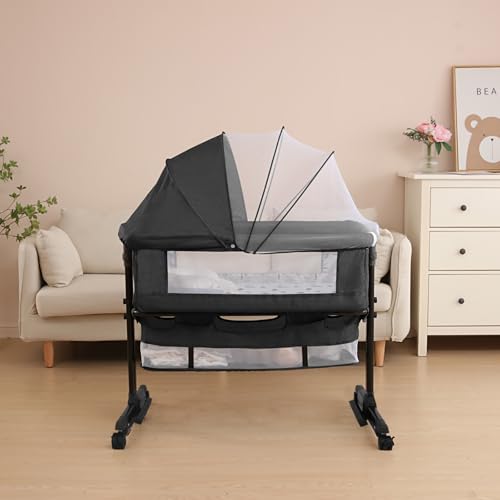
Bedside sleeping uses a specially designed co-sleeper or bedside bassinet that attaches to the side of the adult bed. This arrangement provides the closeness of bed-sharing with the separate sleep surface of room-sharing. Products such as a rocking bassinet for newborn can offer this convenient bedside positioning while maintaining a distinct sleep space for the infant.
Benefits of Safe Co-Sleeping
When practiced safely, co-sleeping arrangements offer several documented benefits for both parents and newborns.
Easier Nighttime Feeding
Having the baby nearby means shorter interruptions for breastfeeding or bottle-feeding. Mothers who breastfeed often report better sleep quality when they can nurse without fully waking and walking to another room. The convenience factor is especially significant during the first few months when newborns feed every two to three hours.
Enhanced Monitoring
Parents who room-share can hear and see their baby more easily, which provides peace of mind and allows for quicker responses to signs of discomfort or illness. This proximity can be particularly reassuring for first-time parents.
Emotional Bonding
The closeness of co-sleeping supports the parent-infant bond through physical proximity and responsiveness. Many parents describe feeling more connected to their newborn and more confident in their ability to read their baby's cues.
Regulation of Sleep Patterns
Some research suggests that room-sharing infants may have more stable sleep patterns and better temperature regulation due to the proximity of a parent. The parent's breathing and body heat can help regulate the newborn's physiology during the early months.
Risk Factors and When to Avoid Bed-Sharing
While room-sharing and bedside sleeping are widely endorsed, bed-sharing requires careful evaluation of risk factors. Certain conditions make bed-sharing particularly dangerous and should be treated as absolute contraindications.
Absolute Contraindications for Bed-Sharing
- Smoking: Any adult in the bed who smokes, even if they do not smoke in bed, significantly increases the risk of sleep-related infant death.
- Alcohol or drug use: Adults under the influence of alcohol, sedatives, or recreational drugs cannot respond safely to the baby during sleep.
- Extreme fatigue: Exhaustion that prevents the adult from waking easily is a serious risk factor.
- Premature or low birth weight: Babies born before 37 weeks or weighing less than 2.5 kg have an elevated risk and should not bed-share.
- Soft bedding: Pillows, quilts, comforters, and loose blankets pose suffocation and overheating risks.
- Sleeping on a sofa or armchair: This is one of the most dangerous sleep surfaces for an infant and should never be used for bed-sharing.
Other Considerations
Adults who are obese, who have long hair that could entangle the baby, or who take medications that cause drowsiness should also exercise extreme caution. If any of these factors apply, the safer choice is room-sharing with a separate sleep surface rather than bed-sharing.
For families who want the closeness of co-sleeping without the risks of bed-sharing, a dedicated safe sleep product such as a bedside bassinet provides an excellent middle ground.
The Safe Co-Sleeping Seven: Evidence-Based Guidelines
These seven guidelines form the foundation of safe co-sleeping practice. Whether you choose room-sharing, bedside sleeping, or bed-sharing, each principle should be applied consistently.
1. Keep the Sleep Surface Firm and Flat
A firm, flat surface is critical for newborn safety. Soft mattresses can create indentations that trap a baby's face. If bed-sharing, the adult mattress should be firm, and the baby should never sleep on a pillow, waterbed, or soft mattress topper.
2. Remove All Soft Bedding and Objects
Pillows, blankets, quilts, stuffed animals, and bumper pads should be kept entirely away from the baby's sleep area. Dress the baby in a wearable blanket or sleep sack instead of using loose blankets. The sleep bags guide explains how to choose the right wearable blanket for different room temperatures.
3. Place the Baby on Their Back
Always place the newborn on their back for sleep, never on the stomach or side. This position is one of the most effective ways to reduce the risk of sleep-related infant death.
4. Maintain a Smoke-Free Environment
No one should smoke in the home or in any room where the baby sleeps. Smoke exposure, even secondhand or thirdhand, increases the risk of sleep-related deaths.
5. Avoid Overheating
Keep the room at a comfortable temperature and dress the baby in light layers. Signs of overheating include sweating, flushed skin, and rapid breathing. A general guideline is to dress the baby in one more layer than an adult would wear in the same room.
6. Ensure No Gaps or Entrapment Hazards
If bed-sharing, the mattress should fit tightly against the headboard and walls to prevent the baby from becoming trapped in gaps. Bed rails, if used, must meet current safety standards and be appropriate for infant use.
7. Supervise at All Times
A responsible adult should always be present when a newborn is sleeping. This is especially important for bed-sharing, where the adult must be able to respond immediately to any change in the baby's position or breathing.
Setting Up a Safe Co-Sleeping Environment
Creating a safe co-sleeping environment requires attention to the sleep surface, the surrounding furniture, and the baby's clothing. A well-prepared space reduces risk and supports restful sleep for the whole family.
Preparing the Adult Bed for Bed-Sharing
- Use a firm mattress with a tight-fitting sheet.
- Remove all pillows, blankets, and decorative items from the area where the baby will sleep.
- Push the bed tightly against the wall or use a firm, breathable mesh bed rail designed for infant safety.
- Ensure there are no gaps between the mattress and the wall or headboard.
- Keep the baby away from the edge of the bed at all times.
Setting Up a Bedside Bassinet
A bedside bassinet provides a dedicated sleep surface that attaches securely to the adult bed. This arrangement is widely recommended because it combines the benefits of proximity with the safety of a separate sleep space. When selecting a bassinet, look for a firm mattress, mesh sides for airflow, and a secure attachment mechanism. A rocking bassinet for newborn can be particularly useful because the gentle motion helps soothe the baby while maintaining a safe, separate sleep surface.
Clothing and Temperature
Dress the baby in a fitted onesie or a wearable blanket. Avoid loose clothing that could ride up over the face. Keep the room between 20°C and 22°C (68°F to 72°F) and check the baby's chest or back to gauge temperature rather than relying on the hands or feet.
Safe Sleep Products That Support Co-Sleeping
The right products can make safe co-sleeping easier to implement. Below are the key categories to consider, described using universal quality descriptors rather than specific pricing.
Bedside Bassinets
Bedside bassinets are the most widely recommended co-sleeping product for newborns. They attach to the side of the adult bed and provide a separate, firm sleep surface within arm's reach. Entry-level bedside bassinets typically offer the essential features — a firm mattress, mesh sides, and a secure attachment — while mid-range models add adjustable height positions and rocking or gliding functions. Premium bedside bassinets often include a wider range of height adjustments, superior materials, and additional storage features.
Co-Sleeper Cribs
These products are essentially full cribs with one side that lowers or removes to create a bedside sleeping arrangement. They bridge the gap between a bassinet and a standard crib, allowing the baby to transition from bedside sleeping to a standalone crib as they grow. Mid-tier co-sleeper cribs offer a good balance of features and durability, while top-tier models may include conversion options to a toddler bed.
Firm Mattress Alternatives
If bed-sharing, a firm mattress is non-negotiable. Some families use a firm portable mattress or a co-sleeping pad specifically designed for bed-sharing. These products typically feature a firm core and a washable, breathable cover. Essential-tier options provide the basic firm surface, while premium alternatives may include waterproof layers and enhanced breathability.
Sleep Sacks and Wearable Blankets
These replace loose blankets and help regulate the baby's temperature. The sleep bags buying guide offers detailed recommendations for different age groups and room temperatures. Entry-level sleep sacks are typically simple, one-layer cotton designs, while premium options may include multi-layer construction for colder rooms and adjustable shoulder snaps.
Co-Sleeping Arrangement Comparison
The table below compares the three main co-sleeping arrangements across key safety and practical dimensions.
| Arrangement | Safety Profile | Best For | Key Consideration |
|---|---|---|---|
| Room-Sharing | Highest safety profile; recommended by pediatric organizations | All families, especially first-time parents | Separate sleep surface in the same room |
| Bedside Bassinet | Very high safety profile; combines proximity with separate surface | Breastfeeding mothers, parents who want easy nighttime access | Secure attachment and firm mattress |
| Bed-Sharing | Requires strict adherence to guidelines; not recommended as first choice | Families who meet all safety criteria and consult their pediatrician | Absolute contraindications must be fully evaluated |
| Sofa/Armchair Sharing | Extremely dangerous; should never be used | Not recommended under any circumstances | High risk of suffocation and entrapment |
Additional Guidance for New Parents
Preparing for a newborn involves many decisions beyond sleep arrangements. If you are building your baby registry or gathering essentials, the safe sleep product collection provides a comprehensive overview of the items that support safe sleeping practices. For families who are also considering how to manage diaper changes and nighttime routines, exploring safe sleep products alongside your co-sleeping setup can help streamline the nursery organization.
Parents who plan to transition from co-sleeping to a crib later on may find it helpful to review the safe sleep products guide for crib and mattress recommendations that maintain the same safety standards.
Frequently Asked Questions
Ready to Create a Safe Sleep Space?
Explore our curated selection of safe sleep products designed to support co-sleeping with confidence.
Explore Safe Sleep Products