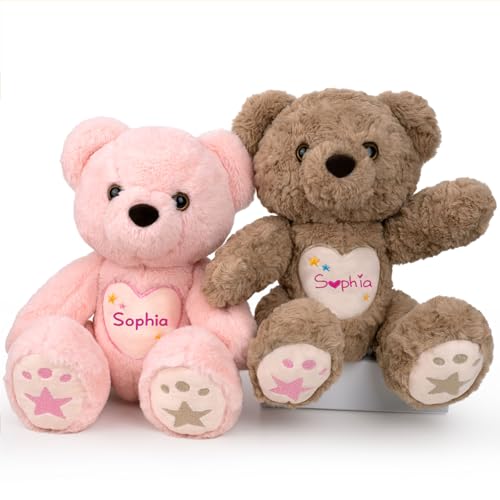
Personalized Teddy Bears for Newborns: A Complete Buying Guide
Learn how to choose a custom teddy bear that is safe, durable, and meaningful — from embroidery methods and fabric quality to tier-based recommendations.
Why this guide matters: A personalized teddy bear is often the first gift a newborn receives — and the one parents keep the longest. But not every custom bear is created equal. Fabric composition, embroidery safety, and construction quality vary widely across tiers. This guide walks you through every decision point so you can choose with confidence.
Why Personalized Teddy Bears Are a Meaningful Newborn Gift
A personalized teddy bear is more than a plush toy. It often becomes a child's first keepsake — a tangible record of birth weight, birth date, or a name stitched in thread. Parents frequently display these bears on nursery shelves long after the newborn stage, turning them into decorative anchors for the room.
Beyond sentiment, customization adds a practical layer. A bear embroidered with a name is harder to lose at a baby shower, easier to identify among sibling gifts, and more likely to be preserved rather than donated. For families who plan to have more children, a personalized bear can serve as a hand-me-down with built-in history.
If you are building a coordinated gift set, consider pairing the bear with a personalized baby blanket or a gender-neutral coming home outfit to create a cohesive newborn keepsake collection.
Safety First: What Parents Must Check Before Buying
Newborn safety standards apply to plush toys even when they are intended as keepsakes rather than sleep companions. The most important distinction is between supervised use and crib use. Pediatric guidance generally advises keeping soft objects out of the crib during sleep, so a personalized teddy bear should be treated as a display piece or a supervised play item until your child is older.
When evaluating a bear, prioritize these construction details:
- Embroidered features over plastic parts. Plastic eyes and noses can detach under stress. Embroidery eliminates that risk entirely.
- Reinforced stitching. Check seams along arms, legs, and the neck. Double-stitched seams are a hallmark of mid-range and premium construction.
- No loose ribbons or removable tags. Anything that can be pulled free is a potential hazard. Personalized patches should be stitched down, not pinned.
- Hypoallergenic fill. Polyester fiberfill labeled hypoallergenic is standard; some premium bears use organic cotton fill.
- Colorfast dyes. Embroidered names should use dyes that will not bleed when the bear is spot-cleaned.
If your newborn has sensitive skin, the same fabric considerations that apply to eczema-friendly baby products also apply here — look for unbleached cotton or OEKO-TEX certified plush.
Customization Methods Compared
Not all personalization is equal. The method used affects durability, visual quality, and how long the bear remains presentable as a keepsake.
- Direct machine embroidery. The name or date is stitched directly into the bear's fabric. This is the most durable option and the standard for mid-range and premium bears. Stitch density matters: high-density embroidery holds its shape for years.
- Embroidered removable patch. A patch is stitched with the name, then attached to the bear with reinforced stitching. This allows the patch to be removed and framed later — a thoughtful option for high-end tier gifts.
- Heat-transfer vinyl. Common in entry-level customization. Vinyl can crack or peel over time, especially after washing. Acceptable for a short-term display piece but not ideal for long-term keepsakes.
- Hand-stitched lettering. Found in luxury artisan bears. The visual character is unmatched, but turnaround times are longer and consistency varies by maker.
Whichever method you choose, confirm spelling and date format before production begins. Most customization errors happen at the proof stage, not in manufacturing.
Tier Comparison: Entry-Level, Mid-Range, and Premium
Personalized teddy bears fall into three broad market tiers. The differences are most visible in fabric quality, embroidery density, and packaging — the details that determine whether the bear survives a decade of display.
| Tier | Best For | Typical Characteristics |
|---|---|---|
| Entry-Level | Baby shower favors, casual gifts | Shorter plush pile, heat-transfer or low-density embroidery, basic packaging, shorter expected lifespan as a display piece |
| Mid-Range | Primary newborn keepsake gift | Denser plush, direct machine embroidery, reinforced seams, gift-ready packaging, solid choice for long-term display |
| Premium | Heirloom-quality keepsakes | High-grade plush or organic cotton shell, high-density embroidery with removable patch option, artisan finishing, presentation box |
| Luxury / Artisan | Collector-grade gifts | Hand-stitched detailing, limited-run construction, custom fabric selection, hand-finished embroidery |
A mid-range bear is usually the most balanced choice for a newborn gift. Entry-level bears serve well as event favors where quantity matters, while premium and luxury tiers justify themselves when the bear is intended to be passed down or displayed prominently. For a broader perspective on tier-based gift selection, see our guide to gifts for one-year-olds, which follows similar tier logic for older children.
Fabric and Materials: What to Look For
The outer fabric determines how the bear feels, how it ages, and how easy it is to clean. Here is how the common materials compare:
- Short-pile polyester plush. The standard for entry-level and many mid-range bears. Soft, durable, and easy to spot-clean. Pile length under 5mm reduces shedding risk around newborns.
- Long-pile faux fur. Visually appealing but sheds more and traps dust. Not ideal for a newborn's environment unless kept as a display piece away from the crib.
- Organic cotton shell. Found in premium and luxury tiers. Breathable, hypoallergenic, and free from synthetic dye concerns. Slightly less soft than plush but ages gracefully.
- Recycled fiber fill. Increasingly common in mid-range and premium tiers. Performance is comparable to virgin polyester when the fill is properly carded.
Check for OEKO-TEX Standard 100 certification where available. It confirms the fabric has been tested for harmful substances — a useful marker when the bear will spend years in a nursery.
Buying Checklist: Before You Order
- Confirm embroidered eyes and nose — no plastic components
- Verify seam reinforcement at arms, legs, and neck
- Check fabric pile length (shorter is safer for newborns)
- Confirm customization method (direct embroidery preferred)
- Review the proof for spelling and date format
- Check production and shipping timeline against your event date
- Look for OEKO-TEX or equivalent fabric certification
- Confirm care instructions for spot-cleaning
Display, Care, and Long-Term Preservation
To keep a personalized bear looking presentable for years, treat it as a display object rather than a washable toy. Spot-clean with a damp cloth and mild soap, then air-dry away from direct sunlight. Avoid machine washing unless the manufacturer explicitly permits it — embroidery and fiberfill both degrade under agitation.
For nursery display, place the bear on a shelf or dresser out of direct sunlight. UV exposure fades both plush dye and embroidery thread over time. If the bear is part of a themed nursery, coordinate the placement with your nursery layout plan so it reads as an intentional accent rather than clutter.
Families who plan to preserve the bear as an heirloom often store it in a breathable cotton bag rather than a sealed plastic bin. Sealed storage traps moisture and can encourage mildew in humid climates.
Ready to Choose Your Newborn's Teddy Bear?
Browse curated options across tiers, compare customization methods, and find the bear that fits your gift and your nursery.
Explore Recommended OptionsFrequently Asked Questions
Are personalized teddy bears safe for newborns?
Safety depends on construction. Choose bears with embroidered eyes and noses rather than plastic parts, reinforced stitching, and no loose ribbons. Even so, plush bears should be kept out of the crib during sleep and used as supervised keepsakes or nursery decor until your baby is older.
What customization options are available on newborn teddy bears?
Common options include embroidered names, birth dates, birth weight, monograms, and short messages stitched directly into the fabric. Some premium bears offer removable personalized patches or tags that can be kept as a keepsake even after the plush is outgrown.
When should I order a personalized teddy bear before a baby shower?
Order at least three to four weeks before the event. Custom embroidery typically adds several business days to production, and shipping delays are common during busy gift seasons. Ordering early also gives you time to confirm spelling and design proofs.
Can a personalized teddy bear double as a nursery decor piece?
Yes. Many families place the bear on a shelf or dresser as a display keepsake rather than inside the crib. Choosing a bear that matches your nursery palette helps it function as both a sentimental gift and a decorative accent.
How does a personalized teddy bear compare to other newborn keepsakes?
Teddy bears offer a combination of softness, display potential, and customization depth that most keepsakes lack. A personalized baby blanket is more functional for daily use, while a bear leans toward display and sentiment. Many families give both as a paired gift set.