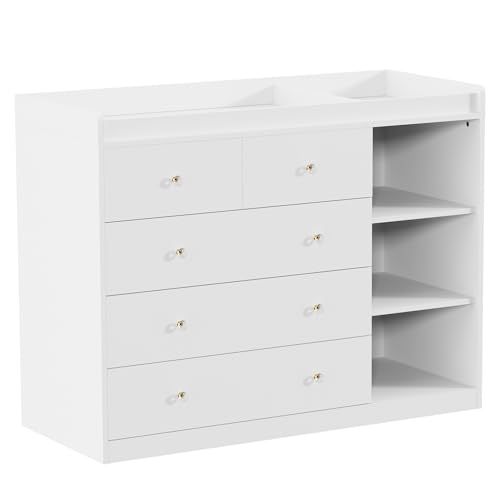
Nursery Dresser Changing Table: The Complete Buying Guide
Discover how a dresser changing table combo can transform your nursery into a functional, organized, and safe space. Learn what to look for, safety essentials, and setup tips before you buy.
Explore Top PicksWhy a dresser changing table combo? Space-saving, long-lasting, and practical—a nursery dresser with a changing table top gives you a dedicated diaper station that converts into a standard dresser once your little one outgrows diapers. This guide walks you through everything you need to know before choosing one.
What Is a Nursery Dresser Changing Table?
A nursery dresser changing table is a dual-purpose furniture piece that combines a standard dresser with a secure changing surface on top. Instead of purchasing two separate items—a changing table and a dresser—you get one unit that serves both functions. Most models feature a removable changing topper, so the piece transitions into a regular dresser as your child grows.
Parents often choose this combination for three reasons: it saves floor space in smaller nurseries, it keeps diaper supplies and clothing within arm's reach, and it extends the lifespan of the furniture well beyond the baby years. If you're also planning the broader room setup, our nursery layout guide can help you position each piece for safe, efficient flow.
Key Features to Evaluate Before Buying
Not all dresser-changing table combos are built the same. The right choice depends on your nursery size, your storage needs, and how long you intend to use the unit. Below are the features that matter most when comparing models across entry-level, mid-range, and premium tiers.
Changing Surface Depth
A recessed or raised-edge changing area helps keep the pad and baby secure. Deeper trays offer more containment, especially for wriggly newborns.
Safety Rails & Straps
Look for a unit with a safety strap and at least three raised sides. These are non-negotiable for preventing falls during diaper changes.
Drawer Glides & Stops
Metal glides with drawer stops prevent accidental pull-outs. Soft-close mechanisms are a plus in shared or small spaces.
Removable Topper
A removable changing tray lets the dresser live on as a standard piece once diaper days are over—a smart long-term investment.
Storage Capacity
Deep drawers for clothing, a shelf for diapers, and side compartments for wipes and creams keep the station self-contained.
Material & Finish
Solid wood or high-grade engineered wood with non-toxic finishes is preferred. Consider non-toxic nursery furniture standards for indoor air quality.
Dresser Changing Table vs. Standalone Changing Table
Understanding the trade-offs helps you decide whether a combo unit fits your nursery plan. Here's a side-by-side comparison across the main decision factors.
| Factor | Dresser Changing Table Combo | Standalone Changing Table |
|---|---|---|
| Space efficiency | High—one footprint serves two purposes | Lower—requires separate floor space |
| Longevity | Long-term—converts to a dresser | Short-term—outgrown after diaper stage |
| Storage | Generous drawer and shelf space | Usually limited to a small shelf or basket |
| Stability | Heavier and more stable, especially mid-range and premium models | Lighter and easier to tip if not anchored |
| Best for | Smaller nurseries and long-term furniture planning | Temporary setups or very tight budgets |
Safety Essentials for Diaper Changing Stations
Safety should drive every decision when a baby is placed on an elevated surface. Whether you choose an entry-level or premium tier combo, these practices apply universally.
- Anchor the dresser to the wall. Anti-tip straps are essential—toddlers climb, and unanchored furniture is a leading cause of nursery injuries.
- Never leave a baby unattended. Even with raised sides and a safety strap, a changing table is not a safe place to leave a baby alone.
- Use a contoured changing pad. A pad with raised edges and a safety belt adds a layer of protection. Keep one hand on the baby at all times.
- Keep supplies within reach but out of baby's grasp. Store creams, wipes, and small items in drawers or high shelves—never on the changing surface itself.
- Check weight limits. Most changing toppers are rated for infants and young babies; transition to floor changing once your child becomes mobile.
Pro tip: Position the changing station so you can reach diapers, wipes, and a fresh outfit without stepping away. A well-organized station reduces the temptation to leave the baby unattended—even for a moment.
How to Choose the Right Size and Layout
Measure your nursery before committing to a dresser changing table. Standard combo units range from compact two-drawer models for tight corners to wide six-drawer units that double as a primary storage piece. Consider the following:
- Room dimensions: Leave at least 30 inches of clearance in front of the dresser for comfortable changing and drawer access.
- Changing surface height: A surface around waist height reduces back strain during frequent changes.
- Adjacent furniture: Place the unit near the crib for night-time changes, but keep a safe distance from windows, cords, and heating sources.
- Future use: If the dresser will stay in the room for years, prioritize drawer quality and a timeless finish over baby-specific styling.
For complementary pieces that complete the room, explore our guides to nursery chest of drawers with changing table and nursery dresser and changing table options, as well as broader nursery furniture planning.
Material and Build Quality: What to Expect by Tier
Build quality varies significantly across the market. Understanding tier differences helps you set realistic expectations without relying on numeric comparisons.
- Entry-level tier: Engineered wood with laminated finishes, basic drawer glides, and a simpler changing tray. Adequate for short-term use if properly anchored.
- Mid-range tier: Solid wood frames or high-grade engineered wood, metal drawer glides with stops, and a removable changing topper. A balanced choice for most families.
- Premium tier: Solid hardwood construction, dovetail drawer joints, soft-close hardware, and a refined finish. Designed as a long-term investment piece.
Regardless of tier, confirm that the finish is low-VOC and the unit meets current safety standards. Our guide to non-toxic nursery furniture explains what to check on labels and product listings.
Setting Up Your Changing Station
Once the dresser arrives, setup matters as much as the purchase. Follow these steps for a safe, functional station:
- Assemble the unit according to the manufacturer's instructions and confirm all fasteners are tight.
- Install the anti-tip strap and secure the dresser to a wall stud.
- Place a contoured changing pad on the topper and thread the safety strap through the pad's slots.
- Stock the top drawer with diapers, wipes, and a change of clothes; keep creams and small items in a closed drawer.
- Add a small, soft night light nearby for overnight changes without harsh overhead lighting.
Pair the station with a comfortable seat for feedings—our guide to the most comfortable nursery glider recliner can help you complete the room.
Maintenance and Longevity Tips
A well-maintained dresser changing table can serve your family for years. Wipe surfaces with a damp cloth and mild soap, avoid harsh abrasives that dull the finish, and periodically check drawer glides and wall anchors. Once the changing topper is removed, the dresser can be repurposed for clothing, toys, or linens—making it one of the most practical furniture investments in the nursery.
If you're building out the rest of the room, our nursery dresser guide and nursery bookshelf recommendations round out a cohesive, functional space.
Frequently Asked Questions
Can I use a dresser changing table from birth?
Yes, most combo units are designed for newborns and infants. Always use a contoured pad, keep one hand on the baby, and transition to floor changing once your child begins to roll or push up.
Do I need to anchor the dresser to the wall?
Absolutely. Anti-tip anchoring is essential for any dresser, especially in a nursery. Use the included strap or a furniture safety kit and secure it to a wall stud.
What is the ideal height for a changing surface?
Aim for a surface around waist height for the primary caregiver. This reduces back strain during frequent changes and keeps the baby safely within view.
Can the changing topper be removed later?
Most mid-range and premium models feature a removable topper. Once removed, the piece functions as a standard dresser—an efficient long-term choice.