
Infant Car Seat That Converts to Stroller
Your complete guide to choosing a travel system that lets you move a sleeping baby from the car to the pavement without waking them — and back again in seconds.
Explore Top PicksWhy this guide matters: Parents researching an infant car seat that converts to a stroller are usually one decision away from a purchase. You already know you want a travel system. What you need now is clarity on how these products work, what features separate an entry-level model from a premium one, and which safety details actually matter. This guide answers those questions so you can choose with confidence.
What Is an Infant Car Seat That Converts to Stroller?
An infant car seat that converts to a stroller is a two-part travel system: a rear-facing infant car seat and a stroller frame or stroller body designed to accept that seat. The car seat clicks onto the stroller, turning it into a rolling carrier. When it is time to drive, the seat lifts off and locks into a base installed in your vehicle.
This category sits at the intersection of three product types parents often compare:
- The standalone infant car seat, which is the safety component.
- The infant car seat and stroller travel system, which bundles both pieces from one brand.
- The infant car seat and stroller pairing sold as a matched set with shared attachment points.
Some parents also look at the infant convertible car seat and stroller category, which describes seats that grow with the child and pair with a compatible stroller. Understanding the difference between a dedicated infant seat and a convertible seat matters: infant seats are designed for the first year or so, while convertible seats stay rear-facing longer but are heavier to lift in and out of a car.
How the Conversion Mechanism Works
The conversion is mechanical and usually tool-free. Here is the sequence most systems follow:
- Vehicle installation: The car seat base is anchored with the vehicle's LATCH system or a seat belt, then leveled using an indicator. Many models also support baseless installation for taxis and rideshare trips — a feature worth checking if you travel without your own car.
- Seat removal: A release handle or lever on the car seat disengages it from the base. The seat lifts out with the baby still buckled in.
- Stroller docking: The seat aligns with receivers on the stroller frame and clicks into place. An audible click and a visual indicator confirm a secure connection.
- Reverse for driving: The seat detaches from the stroller with the same release mechanism and re-docks into the vehicle base.
Key Benefits for Travel-Ready Parents
The core appeal is continuity: the baby stays asleep, and the parent avoids a mid-errand transfer that often ends in a wake-up. Beyond that, the format solves several practical problems.
- One-handed transitions: A single motion moves the seat from car to stroller, which matters when you are also carrying groceries or a diaper bag.
- Compact stroller footprint: Frame-style systems fold smaller than full-size strollers, which helps in tight entryways and small vehicle trunks. Parents shopping for infant car seats that fit in small cars often find that the frame design is the deciding factor.
- Reduced handling: Fewer transfers mean less lifting and less bending, which is a meaningful benefit during postpartum recovery.
- Nap protection: Newborns sleep in short windows, and a seamless car-to-stroller move preserves that window.
- Scalable configuration: Many frames later accept a toddler seat, a bassinet, or a standing board, so the system grows with the family.
If you frequently hike or walk on uneven terrain, a standard travel system may feel limited. In that case, compare it against an infant car seat and jogger stroller combo, which pairs the same seat with a three-wheel chassis built for trails.
Features to Compare Before You Buy
Once you have decided on the category, the comparison shifts to specifications. Focus on these areas:
Seat weight and carry handle
The car seat is the piece you lift most often. A lighter seat with an ergonomic, padded handle reduces strain. Parents with smaller vehicles or frequent stair use should prioritize this over stroller extras.
Weight and height limits
Check the infant car seat weight limit on both components. The car seat limit determines how long the seat functions in the car; the stroller limit determines how long the frame stays useful. A mismatch — for example, a high-limit stroller paired with a low-limit seat — shortens the system's practical life.
Attachment compatibility
Attachment systems are often brand-specific. If you already own a stroller, confirm compatibility before buying a seat. If you are starting fresh, buying both pieces from one brand is the simplest path to a secure, tested connection.
Fold mechanism and folded size
Frame systems typically fold with one hand and stand independently. Measure your vehicle trunk and your entryway before committing. A compact fold that fits your actual space is more valuable than a feature list.
Recline and newborn positioning
Newborns need a flatter, well-supported position. Look for a seat with a newborn insert and a stroller recline that supports flat sleeping. This is especially relevant if your baby will spend long stretches in the stroller.
Sun canopy and storage
A canopy with a peek-a-boo window and extendable coverage is useful for naps on the go. An under-seat basket with a high weight capacity and accessible opening makes errands easier.
Base and baseless installation
If you regularly use more than one vehicle, a second base simplifies switching. If you use taxis or rideshares, confirm the seat supports baseless installation. This is a common point of confusion for parents comparing the infant car seat that doesn't need a base.
Market Tiers Explained
Products in this category fall into three broad tiers. The descriptors below are relative positions, not fixed labels, and they help you set expectations before you compare specific models.
| Tier | Best For | Typical Characteristics |
|---|---|---|
| Entry-Level | Occasional errands, first-time parents who want a straightforward setup | Two-hand release, basic canopy, simpler fold, fewer accessory options, solid but less refined materials |
| Mid-Range | Daily use, families who want a balance of convenience and durability | One-hand release, extendable canopy, smoother fold mechanism, improved padding, broader accessory compatibility |
| Premium | Frequent travel, urban families, parents who value long-term durability | Self-guiding dock, premium fabrics, heavier-duty frame, refined suspension, expanded configuration options, high-grade hardware |
In general, a mid-range model offers a noticeably smoother docking mechanism and a better canopy than an entry-level option, while a premium model adds durability and refinement that matter most to families who use the system daily. The right tier depends on how often you will use the system and how much weight you want to lift.
Safety Checklist and Installation Tips
Safety is not a feature tier — it is a standard. Every car seat sold in the United States must meet federal motor vehicle safety standards. The differences between models are in ease of correct use, not in whether they are safe when installed properly.
Installation checklist
- Install the base at the correct recline angle using the built-in level indicator.
- Check that the base moves less than one inch side to side at the belt path.
- Confirm the car seat clicks audibly into the base and the release lever is fully engaged.
- Adjust the harness to the correct slot — at or below the shoulders for rear-facing infants.
- Perform the pinch test: you should not be able to pinch slack at the shoulder.
- Check the chest clip position at armpit level.
- Confirm the stroller dock locks with an audible click before walking away.
- Register the product so you receive recall notifications.
Everyday use tips
- Do not leave a baby unattended in the car seat outside the vehicle.
- Avoid using the car seat as a primary sleep surface; flat, firm sleep surfaces are recommended.
- Re-check the recline angle after moving the base between vehicles.
- Remove bulky coats before buckling — they create slack in the harness.
- Inspect straps and buckles for wear, and replace the seat after any crash.
Pros and Cons at a Glance
Pros
- Seamless car-to-stroller transitions protect naps
- Fewer lifts and less bending for the parent
- Compact frame folds smaller than full-size strollers
- Many systems expand to accept toddler seats and bassinets
- Bundled systems are tested together for a secure connection
Cons
- Car seat portion has a shorter usable life than a convertible seat
- Attachment systems are often brand-specific
- Frame strollers can feel less plush than full-size models
- Lifting a loaded seat repeatedly can strain the shoulder and back
- Some models limit baseless installation options
Parents who walk on trails or uneven pavement should also review a jogging stroller for infants under 6 months, since a standard frame system is not designed for that use.
Common Mistakes to Avoid
- Buying for the stroller, not the seat. The car seat is the safety-critical piece and the one you lift daily. Prioritize its weight, handle, and limits.
- Ignoring the second-vehicle problem. If two adults share drop-off duties, budget for a second base or confirm baseless installation works for your routine.
- Assuming universal compatibility. Attachment systems vary. Verify compatibility rather than assuming a seat fits a stroller frame.
- Overlooking the fold size. Measure your trunk and entryway. A compact fold that fits your actual space matters more than a spec sheet.
- Skipping the recall registration. Register the product so you are notified if a safety fix is issued.
- Using the seat as a sleep surface. The car seat is for travel, not for overnight sleep.
For a broader view of how these systems compare with standalone seats, see our guide to the infant car seat with stroller attached. If your priority is a seat that stays in the car and grows with your child, compare against an infant car seat that doesn't need a base for travel flexibility.
Frequently Asked Questions
What is an infant car seat that converts to a stroller?
It is a travel system where the infant car seat docks onto a stroller frame. You move a sleeping baby from the car to the pavement without unbuckling, then detach the seat for driving.
Is a convertible car seat stroller safe for newborns?
Yes, when used correctly. The car seat must meet federal safety standards, be installed at the proper recline angle, and be used within its weight and height limits. Never leave a baby unattended in the seat outside the vehicle.
How long can my baby use a car seat stroller combo?
Most infant car seats accommodate babies up to roughly 30 to 35 pounds, typically covering the first 12 to 18 months. The stroller frame often supports a higher limit and can later accept a toddler seat or standing board.
Do I need a base for an infant car seat that converts to a stroller?
Most systems include a base for the family vehicle. Some models support baseless installation with a seat belt for taxis and rideshares. Check the specific model's manual before relying on baseless use.
Can I use the stroller frame with a different brand's car seat?
Only if the manufacturer lists that seat as compatible. Attachment systems are often brand-specific, and a mismatched connection can be unsafe. Verify compatibility in the product manual or with the manufacturer.
Is a frame stroller suitable for jogging or trails?
No. Frame systems are designed for paved surfaces and everyday errands. For running or uneven terrain, choose a jogging stroller with a fixed front wheel and appropriate suspension.
Top Infant Car Seat & Stroller Convertible Systems
⚠️ AFFILIATE DISCLOSURE: This website contains affiliate links. As an Amazon Associate, we earn from qualifying purchases. If you make a purchase through these links, we may receive a small commission at no additional cost to you. Read our full affiliate policy.

Doona + Car Seat & Stroller, Nitro Black
Check price on Amazon
Graco Modes Pramette 3-in-1 Travel System (Stroller & Car Seat), Ellington | 3 Modes: Infant Car Seat Carrier & Pramette, Toddler Stroller; Reversible Stroller Seat; One-Hand Fold, Travel-Ready
Check price on Amazon
Baby Trend Passport® Switch 6-in-1 Modular Stroller Travel System with EZ-Lift™ Plus Infant Car Seat, Dash Black
Check price on Amazon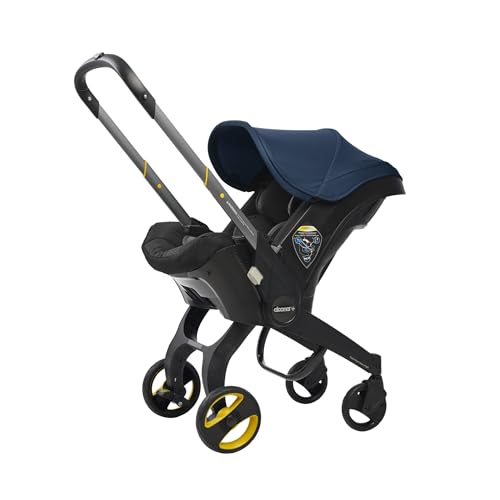
Doona + Car Seat & Stroller, Deep Blue
Check price on Amazon
Graco Modes Pramette 3-in-1 Travel System (Stroller & Car Seat), Lilac Mod | 3 Modes: Infant Car Seat Carrier & Pramette, Toddler Stroller; Reversible Stroller Seat; One-Hand Fold, Travel-Ready
Check price on Amazon
Baby Trend Passport® Switch 6-in-1 Modular Stroller Travel System with EZ-Lift™ Plus Infant Car Seat, Dash Pink
Check price on Amazon
Safety 1st Smooth Ride Travel System Stroller and OnBoard FLX Infant Car Seat, Newborn to Toddler Baby Combo, Easy-Install, Large Canopy, Ample Storage, Foldable, Rear-Facing 4-30 lbs, Monument
Check price on Amazon
Cosco Kids Simple Stroll Travel System with Car Seat, Brickwork | Travel System with Foldable Stroller & Light N Comfy Infant Car Seat for Everyday Family Outings for Growing Babies
Check price on AmazonDisclaimer
Baby product selection and parenting decisions involve personal preferences and individual circumstances. The information provided on CradleCheck is for educational and informational purposes only. We are not medical professionals, and our content should not replace professional medical advice, diagnosis, or treatment. Always consult with your pediatrician or healthcare provider regarding your baby's health and safety. Some content may use AI assistance. Always check product safety standards and recalls before purchasing. If you do not agree, please do not use this website. Read the full disclaimer.