High Chair for 4 Month Old: Complete Buying Guide & Safety Tips
Everything you need to know about choosing a safe, supportive, and practical high chair for your four-month-old baby — from recline positions to harness systems and beyond.
At four months old, your baby is likely showing exciting signs of readiness for sitting with support, reaching for objects, and showing curiosity about the world around them — including what happens at the dining table. While most pediatricians recommend waiting until around six months before starting solid foods, many parents begin researching high chairs at the four-month mark to prepare for the transition ahead.
Choosing the right high chair for a four-month-old is not simply about picking a seat — it is about finding a piece of furniture that supports your baby's developing posture, keeps them safe during supervised upright time, and grows with your family through the toddler years. This guide walks you through every consideration, from recline and harness design to footprint and cleaning, so you can make an informed decision with confidence.
CradleCheck Tip: A high chair for a four-month-old should never be used for feeding solids unless your pediatrician has given the green light. At this stage, the chair is best used for supervised, upright play and to help your baby become comfortable with the idea of mealtime routines.
Why Consider a High Chair at Four Months?
You might wonder whether a high chair is even necessary this early. The answer depends on your goals. Many families use a high chair at four months for several practical reasons:
- Building mealtime familiarity: Bringing your baby to the table in a supportive chair helps them observe family meals and begin associating the high chair with positive, social experiences.
- Practicing supported sitting: A high chair with a good recline and adequate head and torso support can offer a safe, supervised environment for your baby to practice upright posture.
- Preparing for solids: Having the chair ready before the six-month mark means you are not scrambling to buy and assemble one when your baby shows signs of readiness.
- Creating routine: An early start helps establish a predictable mealtime rhythm that benefits both baby and parents.
That said, a four-month-old still needs significant head and neck support. The high chair you choose must accommodate this developmental stage through reclining backrests, supportive inserts, and secure harness systems. If you are also researching what comes next, our guide to the high chair for 6 month old covers the transition to self-feeding and more upright seating.
Key Features to Look for in a High Chair for a 4 Month Old
Not every high chair is suitable for a four-month-old. The following features are essential for safety, comfort, and long-term usefulness.
1. Recline Positions
A deep recline is one of the most important features for a four-month-old. At this age, your baby may not yet have full head and neck control, so a chair that reclines to at least 30 degrees — and ideally closer to 45 degrees — allows them to sit back comfortably without slumping forward. High chairs with multiple recline positions are more versatile, as they can be adjusted as your baby grows and gains strength. Entry-level models often offer two or three recline settings, while mid-range and premium options typically provide a smoother, multi-position recline mechanism.
2. Five-Point Harness
A five-point harness is non-negotiable. This system secures your baby at the shoulders, waist, and between the legs, preventing them from sliding down or climbing out. For a four-month-old who is still developing core stability, the harness should be easy to adjust and padded for comfort. Avoid high chairs with only a three-point harness, as these leave the shoulders unsecured. The harness should also be simple to clean, as spills and spit-up are inevitable.
3. Head and Torso Support
Look for a high chair with a supportive seat insert or a contoured backrest that cradles your baby's head and torso. Many high chairs designed for infants include removable newborn inserts that provide extra padding around the head and sides. As your baby grows, the insert can be removed to create more room. If the high chair you are considering does not include an insert, check whether one is available separately or whether the seat shape naturally supports a small baby.
4. Adjustable Footrest
An adjustable footrest is often overlooked but plays a crucial role in comfortable, ergonomic seating. When your baby's feet are supported, they feel more stable and are less likely to slouch. For a four-month-old, the footrest should be able to be positioned relatively high so that the knees are slightly bent and the feet rest flat. As your child grows, the footrest can be lowered to accommodate longer legs. Mid-range and premium high chairs frequently offer multi-position or fully adjustable footrests.
5. Easy-to-Clean Materials
Babies are messy, and a high chair that is difficult to clean will quickly become a source of frustration. Look for seats with smooth, wipeable surfaces, removable trays that are dishwasher-safe, and harness straps that can be spot-cleaned or machine-washed. Avoid high chairs with fabric covers that cannot be removed, as food and liquid can become trapped in the fibers. Premium models often feature seamless seat designs that eliminate crevices where crumbs collect.
6. Stability and Footprint
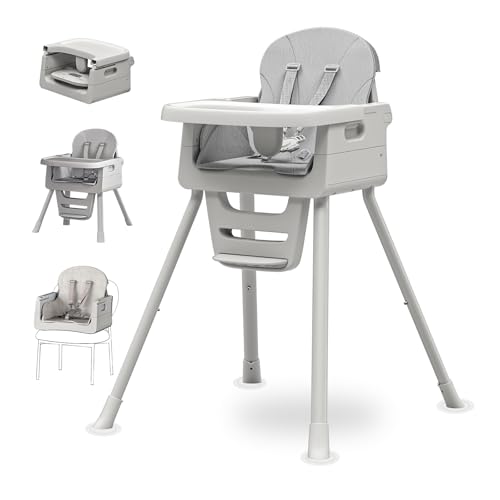
A high chair must be stable. Look for a wide base or a design with a low center of gravity that resists tipping. If you have a small dining area, consider the chair's footprint — some high chairs fold flat for storage, while others have a compact, space-saving design. Full-size high chairs offer more features but take up more room; space-saving or clip-on chairs are an alternative, though they may not offer the same recline and support for a four-month-old.
7. Grow-with-Me Design
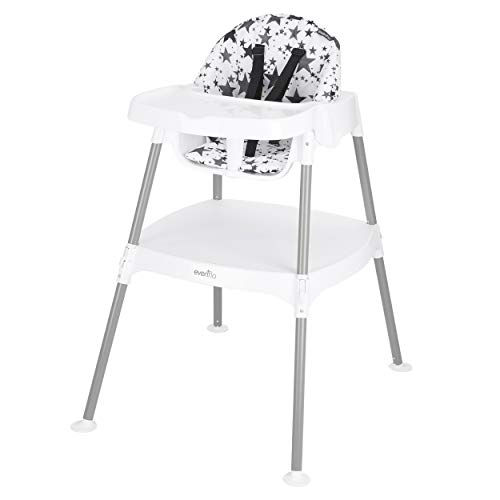
Many high chairs today convert into booster seats or toddler chairs, extending their useful life well beyond infancy. This is a worthwhile investment if you want a single product that adapts through multiple stages. Some models even convert into a table-and-chair set, which can be a great option for families who want long-term versatility. Our guide to the high chair that converts to table and chair explores these multi-stage designs in detail.
Comparing High Chair Tiers for a 4 Month Old
High chairs for infants span a range of market positions, from essential-tier models to premium and luxury designs. The table below outlines what you can generally expect at each tier, using universal quality descriptors rather than specific figures.
| Tier | Best For | Typical Features |
|---|---|---|
| Essential Tier | Families seeking a straightforward, functional chair for supervised upright time | Basic recline (2–3 positions), five-point harness, wipeable seat, fixed footrest, simple fold |
| Balanced Tier | Parents who want a comfortable, adaptable chair that grows with their baby | Multi-position recline, adjustable footrest, removable tray, newborn insert, compact fold |
| Premium Tier | Families prioritizing smooth adjustments, easy cleaning, and long-term durability | Tool-free recline and height adjustment, seamless seat design, dishwasher-safe tray, premium materials |
| Luxury Tier | Those seeking a design-forward, heirloom-quality chair with top-tier convenience | Premium wood or metal frame, effortless glide recline, full-grain upholstery, convertible to toddler chair |
When evaluating tiers, consider how often you will use the chair and for how long. A balanced-tier model is often the sweet spot for families who want good value for its tier without sacrificing essential features. If you plan to use the chair for multiple children or want a design that blends with your home decor, a premium or luxury tier may be a worthwhile long-term investment.
Safety Tips for Using a High Chair at Four Months
Safety is paramount, especially for a baby who is still developing head and neck control. Follow these guidelines every time you place your four-month-old in a high chair:
- Always supervise: Never leave your baby unattended in a high chair, even for a moment. At four months, they may not be able to sit fully upright or catch themselves if they slump.
- Use the harness correctly: Secure the five-point harness snugly every time. The harness should fit close to the body without being uncomfortably tight, and you should not be able to slip more than two fingers under the straps.
- Recline appropriately: Set the recline to a position that supports your baby's head and prevents slumping. As your baby gains head control, you can gradually move to a more upright position.
- Position the chair safely: Place the high chair away from walls, counters, and other furniture that your baby could push against. Never place it near a stove, hot surfaces, or dangling cords.
- Check the tray lock: Ensure the tray is securely locked in place before placing your baby in the chair. A loose tray can pinch fingers or cause instability.
- Inspect regularly: Check the harness, straps, tray, and folding mechanism for wear and tear. Tighten any loose screws or bolts and discontinue use if any part is damaged.
- Follow the manufacturer's guidelines: Each high chair has specific weight and developmental recommendations. Do not use the chair in a way that contradicts the manufacturer's instructions.
If you are also preparing for the feeding stage, our high chair for 6 month old guide covers additional considerations for when your baby is ready for solids. And for parents who want to protect a wooden high chair from daily wear, our article on high chair covers for wooden high chairs offers practical solutions.
How to Choose the Right High Chair for Your Four-Month-Old
With so many options available, narrowing down your choice can feel overwhelming. Follow this step-by-step approach to make a confident decision:
Step 1: Assess Your Baby's Development
Every baby develops at their own pace. Before choosing a high chair, consider your baby's head and neck control, their ability to sit with support, and their overall comfort in an upright position. If your baby still needs significant head support, prioritize models with deep recline and a supportive newborn insert. If they are already showing strong head control, you have more flexibility.
Step 2: Measure Your Space
Measure your dining area and consider how much space you can dedicate to a high chair. Full-size high chairs offer the most features but require more room. Space-saving designs, folding high chairs, or chairs that attach to a dining table are alternatives, though they may not offer the same recline and support for a four-month-old. Think about where you will store the chair when not in use and whether you need a model that folds flat.
Step 3: Prioritize Features
Make a list of must-have features based on your lifestyle. If you have limited storage, a compact fold is essential. If you plan to use the chair for multiple children, a grow-with-me design is worth the investment. If cleaning is a concern, prioritize removable trays and wipeable seats. Use the tier comparison above to understand what is typically available at each level, and choose the tier that aligns with your priorities.
Step 4: Read Reviews and Compare
Once you have narrowed your options, read reviews from other parents to understand real-world performance. Pay attention to comments about stability, ease of cleaning, harness adjustability, and long-term durability. Compare features side by side and consider how each chair will function in your daily routine.
Step 5: Consider Long-Term Value
A high chair is an investment that can last for years if chosen wisely. Look for models with durable construction, replaceable parts, and a design that transitions through multiple stages. A mid-range or premium tier chair that converts to a booster or toddler seat may offer better long-term value than an essential-tier model that only lasts through infancy.
Common Mistakes to Avoid
Even well-intentioned parents can make mistakes when choosing and using a high chair. Here are some common pitfalls to avoid:
- Choosing a chair without a five-point harness: A three-point harness is not sufficient for a four-month-old. Always prioritize a five-point harness.
- Skipping the recline: A fully upright chair is not suitable for a baby who cannot yet sit independently. Choose a chair with a reclining backrest and use it appropriately.
- Ignoring the footrest: An unsupported footrest can lead to slouching and discomfort. Choose an adjustable footrest that grows with your baby.
- Overlooking cleaning: A high chair with hard-to-clean crevices will become a daily frustration. Prioritize removable trays and wipeable surfaces.
- Starting solids too early: A high chair at four months is for supervised upright time, not for feeding solids unless your pediatrician has advised otherwise. Always follow your pediatrician's guidance on when to introduce solids.
- Placing the chair in an unsafe location: Keep the chair away from hot surfaces, dangling cords, and areas where your baby could push against walls or furniture.
Ready to Explore Your Options?
Browse our curated selection of high chairs suitable for four-month-olds, with features that prioritize safety, comfort, and long-term usability.
Compare FeaturesFrequently Asked Questions
Can a 4-month-old use a high chair?
Yes, but with important caveats. A four-month-old can use a high chair for supervised, upright play and to become familiar with mealtime routines, provided the chair has a deep recline, a five-point harness, and adequate head and torso support. However, a four-month-old should not be fed solid foods in a high chair unless your pediatrician has confirmed readiness. Always supervise your baby closely and never leave them unattended.
What type of high chair is best for a 4-month-old?
The best high chair for a four-month-old is one that offers multiple recline positions, a five-point harness, a supportive newborn insert, and an adjustable footrest. Look for models with easy-to-clean surfaces and a stable base. A grow-with-me design is a bonus if you want the chair to last through the toddler years. Our guide to the high chair for 6 month old can help you plan for the next stage.
How long can a baby stay in a high chair at 4 months?
At four months, limit high chair sessions to short periods — typically 15 to 20 minutes at a time — and always under direct supervision. Your baby is still developing core strength and head control, so prolonged sitting is not recommended. Use the high chair as a brief, positive experience rather than a long-term containment solution.
Do I need a high chair before starting solids?
You do not strictly need a high chair before starting solids, but having one ready can make the transition smoother. Many parents begin researching and purchasing a high chair around the four-month mark to prepare for the six-month milestone. If you are still deciding, consider a chair with a recline that can be adjusted to a more upright position as your baby grows.
What safety features are non-negotiable?
Non-negotiable safety features include a five-point harness, a stable base that resists tipping, a securely locking tray, and a recline position appropriate for your baby's developmental stage. Avoid high chairs with only a three-point harness or those that feel unstable. Always follow the manufacturer's weight and developmental guidelines, and inspect the chair regularly for wear and tear.
Can I use a booster seat instead of a high chair at 4 months?
Most booster seats are not suitable for a four-month-old because they typically require the baby to sit independently and do not offer the recline and head support needed at this age. A full-size high chair with a reclining backrest and newborn insert is a safer choice for a four-month-old. If you are considering a booster, wait until your baby has strong head and neck control and can sit upright with minimal support.
Choosing a high chair for a four-month-old is an important decision that blends safety, comfort, and practicality. By prioritizing recline, harness design, head and torso support, and long-term usability, you can find a chair that serves your baby well now and for years to come. Take your time, compare features across tiers, and choose a model that fits your lifestyle and your baby's developmental needs. With the right high chair, mealtime routines become something to look forward to — for both you and your little one.