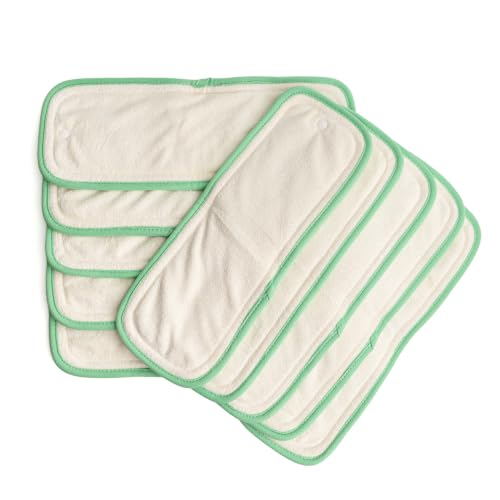
Why Heavy Wetters Leak Through Cloth Diapers
A heavy wetter is not simply a baby who urinates more often. In most cases, the volume is normal for the baby's age and fluid intake — the real issue is how quickly liquid arrives and whether the insert can hold it under pressure. Cloth diapers fail in three predictable ways, and each one calls for a different fix.
- Flooding. A large volume of urine arrives in a short burst. Inserts made of slow-absorbing natural fibers cannot wick it away fast enough, so liquid runs toward the leg gussets before it is captured.
- Saturation. The insert has genuinely reached its capacity. This usually happens overnight or during long naps when the diaper stays on for many hours.
- Compression leaks. The insert is damp rather than soaked, but pressure from sitting, lying, or a tight cover squeezes moisture back out of the fibers. Microfiber is especially prone to this because it releases liquid easily when squeezed.
The practical takeaway is that absorbency alone is not enough. You need a material that absorbs quickly and a material that retains moisture when pressed. That is the foundation of every heavy wetter solution described below.
Quick diagnostic: If the insert is bone dry at the edges but leaks appear at the legs, the problem is speed of absorption. If the insert is fully soaked, the problem is capacity. If the insert is only damp but the baby's clothes feel wet, the problem is compression.
Cloth Diaper Insert Materials Compared
Every insert on the market is built from one of four fiber families, or a blend of them. Understanding how each one behaves is the single most useful piece of knowledge for solving heavy wetter leaks.
| Material | Absorbency Speed | Holds Under Pressure | Best Role | Tier Positioning |
|---|---|---|---|---|
| Microfiber | Very fast | Weak | Top layer for quick capture | Entry-level, widely available |
| Cotton | Moderate | Moderate | Reliable everyday layer | Essential tier |
| Bamboo | Moderate to fast | Good | Balanced all-purpose insert | Mid-range |
| Hemp | Slow | Excellent | Bottom layer for overnight capacity | Premium tier for heavy wetters |
| Charcoal bamboo blends | Moderate | Good | Odor control with balanced absorbency | Mid-tier to high-end tier |
Microfiber: Fast but Forgiving of Nothing
Microfiber is the most common insert material in pocket diapers because it is efficient to produce and absorbs a burst of liquid almost instantly. Its weakness is compression. When a baby sits or sleeps on a saturated microfiber insert, liquid is pushed back out into the cover and clothing. It also becomes less effective over time if washed with fabric softener or detergent buildup. Microfiber should never touch the skin directly — always place it beneath a fleece stay-dry liner or inside a pocket.
Cotton: The Dependable Baseline
Cotton prefolds and flats have been used for generations for good reason. Cotton absorbs steadily and holds moisture reasonably well under pressure. It is not the highest-capacity fiber, but it is predictable, durable, and easy to wash. For moderate wetters, cotton alone is often sufficient. For heavy wetters, cotton works best as a middle or bottom layer paired with a faster-absorbing top layer.
Bamboo: The Balanced Performer
Bamboo inserts absorb faster than hemp and hold moisture better than cotton, which makes them an excellent all-round choice. They are softer against the skin and trimmer than many cotton options. Bamboo does have a slower preparation period — new inserts typically need several washes before reaching full absorbency. Bamboo blends with cotton or microfiber are common and perform well for daytime use.
Hemp: The Heavy Wetter Standard
Hemp is the material most associated with heavy wetters, and for good reason. It absorbs a large volume of liquid relative to its thickness and, crucially, holds that liquid when compressed. Hemp is slow to absorb, so it works best as the bottom layer beneath a faster material. If you use hemp alone on a flooding baby, liquid may escape before the fiber has time to capture it. Hemp also needs a thorough preparation period of multiple hot washes before it performs at its rated capacity.
Charcoal Bamboo and Specialty Blends
Charcoal bamboo inserts combine bamboo absorbency with an activated charcoal outer layer marketed for odor control. Performance is comparable to standard bamboo, and the charcoal layer can help with smell in a diaper pail. They are a reasonable mid-tier to high-end tier option for parents who want balanced absorbency without the full capacity of hemp.
How to Layer Inserts for a Heavy Wetter
The most effective heavy wetter setup is a layered system, not a single thick insert. Layering lets you combine fast absorption with high-capacity retention, and it lets you adjust the total absorbency to the time of day.
The Three-Layer Principle
- Top layer — speed. A fleece stay-dry liner or a microfiber insert captures the initial flood and moves liquid downward.
- Middle layer — transfer and balance. A bamboo or cotton insert bridges the fast top layer and the high-capacity bottom layer, spreading moisture evenly.
- Bottom layer — retention. A hemp insert holds the accumulated moisture under pressure and prevents it from being squeezed back out.
In practice, many parents simplify this to two layers for daytime: a bamboo insert over a hemp insert. For overnight, the full three-layer stack is more reliable. The exact combination depends on your baby's output and the style of diaper you use, so expect to fine-tune it over the first week.
Layering in Pocket Diapers
Pocket diapers make layering straightforward because all inserts go inside the pocket. Place the slowest-absorbing insert (hemp) at the back of the pocket, against the outer waterproof layer, and the fastest-absorbing insert (microfiber or bamboo) closest to the baby. This ordering ensures liquid passes through the quick layer first and is stored in the high-capacity layer furthest from the skin.
Layering in Covers and Prefolds
With a cover and prefold system, the prefold itself acts as the main absorbent body. Add a hemp insert folded inside the prefold for overnight capacity, or place a stay-dry liner on top if the baby is sensitive to wetness. Covers with double leg gussets provide an extra barrier against leaks when the insert is heavily loaded.
Adjusting over time: A newborn heavy wetter usually needs less total absorbency than a toddler heavy wetter. Reassess your stack every few months and when you notice new leaks, rather than assuming the original setup will always be sufficient.
Daytime vs Overnight Heavy Wetter Setups
Daytime and overnight diapering have different demands. During the day, the baby is changed more frequently and is active, so speed and trimness matter most. Overnight, the diaper stays on for many hours and the baby is lying down, so capacity and compression resistance take priority.
Daytime Setup
- One bamboo insert or a bamboo-cotton blend as the primary absorbent layer.
- Optional fleece stay-dry liner if the baby is bothered by dampness.
- Change every two to three hours, or sooner if you notice the insert is saturated.
- Pocket diapers and all-in-twos work well because they are quick to change and trim under clothing.
Overnight Setup
- A hemp insert at the bottom for capacity, with a bamboo or cotton insert above it for transfer.
- A fleece stay-dry liner on top so the baby's skin stays comfortable through the night.
- A fitted diaper or a well-stuffed pocket diaper with a snug, double-gusset cover.
- Consider a dedicated overnight fitted diaper if standard pockets consistently leak despite extra inserts.
If overnight leaks persist even with a full stack, the limiting factor is often fit rather than absorbency. A cover that gaps at the legs will leak regardless of how much hemp is inside. Review the fit section below before adding a fourth insert.
Fit, Covers, and Preventing Compression Leaks
Many parents solve heavy wetter leaks with absorbency changes alone, then feel frustrated when leaks return. The reason is that fit and cover design determine whether absorbed liquid stays inside the diaper.
Why Fit Matters More Than You Think
A thick stack of inserts changes how a diaper sits on the baby. Overstuffing a pocket diaper can cause the waterproof outer fabric to pull away from the legs, creating gaps that leak. The goal is the thinnest stack that reliably handles your baby's output — not the thickest stack you can fit.
Cover Design and Leg Gussets
Covers with double leg gussets create two barriers at the leg opening and are more forgiving of a saturated insert. Snap closures allow incremental fit adjustment as the baby grows, which helps maintain a seal at the waist. Pull-on covers are convenient but offer less adjustability, so they suit babies who are between sizes rather than heavy wetters who need a precise seal.
Testing for Compression Leaks
To confirm whether leaks are compression-related, press a clean damp insert firmly between two fingers. If liquid beads out easily, the material releases moisture under pressure. Microfiber will do this readily; hemp will resist. If your current setup relies on microfiber alone, replacing or supplementing it with hemp is usually the fastest improvement.
Wicking and Clothing
Damp clothing around the legs can also come from wicking, where moisture travels along the fabric of the diaper rather than through a gap. Ensure the absorbent insert is fully tucked inside the waterproof layer and that no insert fabric is poking out at the legs or waist. This is a common cause of leaks that look like fit problems but are actually a tucking issue.
Washing and Preparing Inserts for Maximum Absorbency
Even the best insert underperforms if it is not washed and prepared correctly. Detergent buildup, fabric softener residue, and inadequate preparation of natural fibers all reduce absorbency and contribute to leaks.
Preparing New Inserts
- Hemp: Wash several times in hot water before first use. Hemp contains natural oils that repel water until they are stripped away.
- Bamboo: Similar to hemp, bamboo needs multiple washes to reach full absorbency, though usually fewer than hemp.
- Cotton: A few hot washes are typically sufficient, especially for prefolds and flats.
- Microfiber: Usually ready after a single wash. Do not use fabric softener at any point.
Routine Washing
Use a detergent formulated for cloth diapers or a straightforward detergent without added softeners, brighteners, or enzymes that target natural fibers. A pre-rinse helps remove urine before the main wash. Hot water is generally recommended for the main cycle, followed by a thorough rinse. Avoid overloading the machine — inserts need room to agitate and rinse clean.
What to Avoid
- Fabric softener, which coats fibers and blocks absorbency.
- Diaper creams containing petroleum or zinc oxide in large amounts, which can leave residue on inserts. Use a liner if cream is necessary.
- Bleach on a routine basis, which degrades natural fibers over time. Reserve it for sanitizing after illness.
- High heat drying for natural fibers, which can shrink hemp and bamboo and shorten their lifespan.
Common Mistakes When Buying Inserts for Heavy Wetters
- Buying one type of insert for every situation. A single insert type rarely covers both daytime and overnight needs. A small mixed stash of bamboo and hemp is more versatile than a large stash of one material.
- Assuming thicker means more absorbent. A thick microfiber insert can hold less usable liquid under pressure than a thinner hemp insert. Capacity under compression matters more than bulk.
- Ignoring preparation washes. Natural fiber inserts that have not been washed enough will underperform, leading parents to conclude the material does not work when the real issue is preparation.
- Overstuffing the pocket. Adding a fourth insert to fix a leak often makes fit worse. If three layers are not enough, the problem is likely fit or cover design.
- Neglecting the stay-dry layer. Without a fleece liner, a heavy wetter may be uncomfortable and more prone to diaper rash, even if the absorbency is technically sufficient.
For parents building a broader cloth diapering routine, related guidance on cloth diaper inserts for heavy wetters pairs well with general newborn care topics such as postpartum must-haves for new moms and practical diapering accessories like hypoallergenic wipes for sensitive skin.
Frequently Asked Questions
What is the best insert material for a heavy wetter?
Hemp and bamboo are the top choices because they absorb large volumes and hold liquid under pressure. Many parents combine a fast-absorbing microfiber or bamboo layer on top with a hemp layer underneath for the best of both worlds.
How many inserts should I use overnight?
For overnight use with a heavy wetter, a common approach is two to three layers: a stay-dry fleece liner on top, a fast-absorbing insert in the middle, and a high-capacity hemp or bamboo insert at the bottom. Adjust based on your baby's output and the fit of the diaper cover.
Can I use microfiber inserts directly against baby's skin?
No. Microfiber should always be covered by a fleece liner or placed inside a pocket diaper. Direct contact can cause dryness and irritation because microfiber pulls moisture away aggressively.
Why do my cloth diapers leak even with extra inserts?
Leaks often come from compression rather than insufficient absorbency. If inserts are saturated and pressed against the body, liquid can be squeezed out. Using materials that hold moisture under pressure, such as hemp, and ensuring a snug fit at the legs and waist usually solves the problem.
How do I prepare new cloth diaper inserts?
Most natural fiber inserts, such as hemp and bamboo, need several wash cycles to reach full absorbency. Microfiber inserts are typically ready after one wash. Always follow the manufacturer's washing instructions and avoid fabric softeners, which coat fibers and reduce absorbency.
Building a Reliable Heavy Wetter System
Solving heavy wetter leaks is a process of matching materials to the type of leak you are seeing. Fast absorption at the top, balanced transfer in the middle, and high-capacity retention at the bottom form a system that handles both flooding and overnight saturation. Fit and cover design determine whether that absorbed liquid stays inside the diaper, and correct washing keeps every layer performing at its rated capacity.
Start with a small mixed set of bamboo and hemp inserts, test a two-layer daytime stack, and build up to a three-layer overnight stack only if your baby needs it. Most heavy wetters settle into a dependable routine within a couple of weeks, and the result is fewer leaks, less laundry, and more comfortable sleep for everyone.