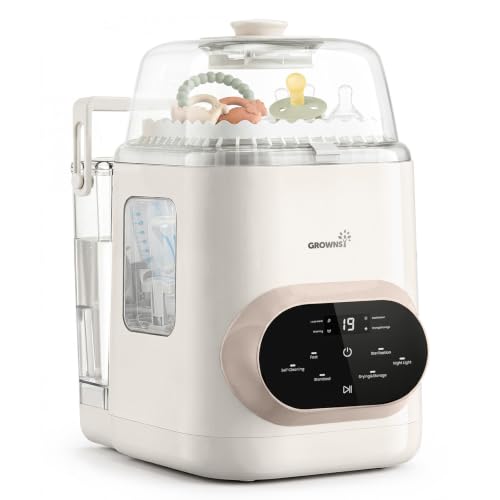
What Is a Bottle Washer Sterilizer and Dryer?
A bottle washer sterilizer and dryer is a countertop appliance that combines three tasks in a single cycle: washing bottles and feeding accessories with directed water jets, sterilizing them with steam or another approved method, and drying them with filtered warm air. Instead of hand-scrubbing each bottle, loading a separate sterilizer, and then waiting for parts to air-dry on a rack, you load everything into one unit and let it run through a complete cycle.
These machines are designed for parents who bottle-feed — whether with expressed breast milk, formula, or a combination — and who want a repeatable, hygienic process that saves time and reduces handling. Most models accommodate standard and wide-neck bottles, nipples, rings, caps, and pump parts. Some units also fit small bowls, spoons, and pacifiers, making them useful well beyond the newborn stage.
It helps to think of this category as an evolution of the standalone bottle sterilizer. A dedicated sterilizer handles only the sanitizing step, while a washer-sterilizer-dryer adds washing and active drying for a more complete workflow. If you are still comparing single-function devices, our guide to bottle sterilizers covers the core sanitizing options in more detail.
How These Machines Work, Step by Step
Although designs differ between brands, most all-in-one units follow a similar sequence:
- Load and connect. Bottles, nipples, and small parts are placed on trays or spindles. Many models use a water reservoir or a direct water connection, and some require you to attach bottles to spray nozzles.
- Wash cycle. Directed jets of water — often heated — spray the interior and exterior of each item. Some units add a small amount of detergent or use a dedicated cleaning tablet.
- Sterilize cycle. Steam generated inside the chamber raises the temperature to a level that neutralizes bacteria and residue on cleaned surfaces. Cycle length varies by model and load size.
- Dry cycle. Filtered, warmed air circulates through the chamber to remove moisture. A HEPA-style filter helps keep particles out of the drying air.
- Auto-off and storage. Many units keep contents sterile for a period after the cycle ends, so bottles can stay inside until you need them.
Because washing, sterilizing, and drying happen in one enclosed chamber, you handle the bottles less and reduce the chance of recontamination that can occur when wet parts sit out on a drying rack. If you are weighing this workflow against manual methods, it pairs naturally with the broader guidance in our bottle washer and sterilizer overview.
Key Features to Compare Before You Choose
Capacity and Load Layout
Check how many bottles and accessories fit per cycle. Spindle-style layouts hold bottles upright; tray layouts suit pump parts and small items. Match capacity to your daily feeding volume.
Wash Mechanism
Look at jet pressure, spray coverage, and whether the unit requires detergent or cleaning tablets. Better coverage means fewer missed spots on nipples and bottle threads.
Sterilization Method
Steam is the most common approach. Confirm the cycle reaches a temperature that meets your hygiene expectations and that the chamber seals properly during operation.
Drying Performance
Filtered warm-air drying is the standard. A HEPA-style filter and adjustable drying time help prevent water spots and keep the chamber clean between cycles.
Water Supply and Reservoir
Some units use a refillable reservoir; others connect directly to a water line. Reservoir models are easier to place anywhere, while direct-connect models avoid refills.
Footprint and Noise
Measure your counter space before ordering. Cycle noise varies — check user feedback if your kitchen or nursery is close to sleeping areas.
Market Tiers: What to Expect at Each Level
Bottle washer sterilizer and dryer machines generally fall into three broad market tiers. Rather than focusing on figures, compare what each tier typically delivers in build quality, cycle flexibility, and convenience.
| Tier | Best For | Typical Characteristics |
|---|---|---|
| Entry-level | Parents new to all-in-one cleaning who want the core three functions | Basic wash, steam sterilize, and warm-air dry cycles; smaller capacity; manual reservoir fill; simpler controls; plastic housing |
| Mid-range | Daily-use households with a steady bottle workload | Larger load capacity; improved jet coverage; HEPA-style drying filter; more cycle options; quieter operation; sturdier build |
| Premium / high-end tier | Frequent feeders, pump users, and parents who want minimal handling | Direct water connection options; extended sterile-hold storage; app or smart controls on some models; reinforced components; refined drying performance |
As a rule, mid-range models tend to offer noticeably smoother cycle operation and better drying consistency than entry-level units, while premium models add convenience features and longer sterile-hold windows rather than changing the core process. The right tier depends on how many bottles you clean each day and how much counter space you can dedicate.
All-in-One vs. Separate Appliances
All-in-One Washer Sterilizer Dryer
- Single load, single cycle for wash, sterilize, and dry
- Less handling and lower recontamination risk
- Takes up one countertop footprint
- Higher upfront investment than single-function devices
- Best when you clean bottles multiple times per day
Separate Sterilizer + Drying Rack
- Lower upfront outlay and simpler mechanics
- Requires manual washing before sterilizing
- Air-drying leaves parts exposed between uses
- More counter clutter across multiple devices
- Works well for occasional bottle feeding
If your feeding routine includes pumping, you may also want to review how these machines pair with pump-part cleaning and storage. Our guides to breast pumps and breast pumps for working moms explain how daily pump schedules affect cleaning volume, which directly influences whether an all-in-one unit is worthwhile for you.
How It Fits Into Your Daily Routine
Most parents run the machine once or twice per day, depending on how many bottles and pump parts accumulate. A typical routine looks like this:
- After each feed: Rinse bottles and nipples briefly and place them in the machine's basket or on the tray.
- Once or twice daily: Run a full wash-sterilize-dry cycle, then leave items inside until needed.
- Weekly: Clean the reservoir, filter, and chamber according to the manufacturer's instructions to keep performance consistent.
Keeping a spare set of bottles in rotation means you are never waiting on a cycle during a hungry moment. Parents who combine breastfeeding and bottle feeding often keep a few bottles recommended by lactation consultants on hand so the machine can run while another bottle is in use.
Practical tip: Check the machine's compatibility list before buying. Wide-neck and angled bottles may need specific tray positions, and some pump parts require separate baskets. A unit that fits your exact bottle collection will save frustration later.
Safety, Hygiene, and Maintenance Notes
An all-in-one machine is a convenience tool, not a substitute for basic hygiene practices. Follow these guidelines to get consistent results:
- Follow the manufacturer's instructions for water type, detergent use, and descaling frequency.
- Replace filters on the schedule the brand recommends — a clogged filter reduces drying performance.
- Inspect bottles and nipples for wear, and replace them when they show cracks or cloudiness.
- Allow the chamber to cool before opening if the unit does not have a cool-down indicator.
- Keep the appliance on a stable, dry surface away from the edge of the counter.
If you are also setting up a feeding station, our bottle warmer guide explains how warming fits alongside cleaning and sterilizing in a well-organized routine.
Who Should Consider a Bottle Washer Sterilizer and Dryer?
These machines tend to deliver the most benefit for:
- Exclusively or mostly bottle-feeding parents who clean several bottles every day.
- Pumping parents who need to sanitize pump parts alongside bottles.
- Households with limited drying space where an enclosed dry cycle keeps counters clear.
- Caregivers and grandparents who want a simple, repeatable process when watching the baby.
If you bottle-feed only occasionally, a standalone bottle sterilizer paired with a drying rack may be sufficient and easier to store. If you are building out a full feeding setup, browse our bottle warmers collection and the broader bottle washer and sterilizer category to compare configurations side by side.
Frequently Asked Questions
Do I still need to hand-wash bottles before loading them?
Most units are designed to wash from a rinsed state. Scrape or rinse off thick residue first so the jets can work effectively, but you generally do not need to scrub every bottle by hand before a full cycle.
Can I put pump parts and pacifiers in the machine?
Many models include baskets or trays for small parts. Check the manufacturer's compatibility list, since some pump valves and membranes have specific heat tolerances.
How often should I run a full cycle?
Once or twice daily is typical for bottle-feeding households. The right frequency depends on how many bottles and parts you use each day and whether the machine has a sterile-hold storage feature.
Is a direct water connection better than a reservoir?
Direct-connect models avoid manual refills but require plumbing access near the counter. Reservoir models are easier to place and are the more common choice in most kitchens.
How long do these machines typically last?
With regular filter replacement and descaling, a well-built unit is designed for the multi-year bottle-feeding window. Build quality and maintenance habits matter more than any single specification.