
High Back Booster Seat: Age, Weight & Height Requirements
Know the exact milestones for a safe transition. Learn when your child is ready for a high back booster and which models offer the best protection.
Shop Top-Rated BoostersQuick Reference: High Back Booster Requirements
Always check your specific booster seat manual. Requirements vary by manufacturer.
When to Switch to a High Back Booster Seat
Transitioning your child from a forward-facing car seat with a harness to a high back booster seat is a major milestone in child passenger safety. However, age and weight are just the starting points – maturity and proper fit are equally crucial. Many parents wonder: "Is my child ready for a booster?" This guide breaks down the exact requirements, safety tips, and how to choose the right seat.
The American Academy of Pediatrics (AAP) and the National Highway Traffic Safety Administration (NHTSA) recommend that children remain in a forward-facing car seat with a harness for as long as possible, up to the highest weight or height limit of the seat. Only when they have outgrown that seat should they transition to a belt-positioning booster. A high back booster provides side-impact protection and helps position the vehicle's lap and shoulder belt correctly over the strongest parts of a child's body.
Age, Weight & Height: The Golden Rules
While laws vary by state, safety experts agree on these general guidelines. Use them as a baseline, but always defer to your specific car seat and vehicle manuals.
1. Minimum Age: 4 Years Old
Most high back boosters have a minimum age of 4 years. However, many child passenger safety technicians (CPSTs) recommend waiting until age 5 or 6 if your child still fits comfortably in a 5-point harness. Harness seats offer better protection in a crash because they distribute forces over a larger area and keep the child more secure.
2. Weight: At Least 40 Pounds (18 kg)
The minimum weight for almost all high back boosters is 40 lbs. Some seats have a lower limit of 30 lbs, but it's safer to wait until your child reaches 40 lbs to ensure they have adequate skeletal development to withstand crash forces. Always check the label on your booster seat – it will list the weight range (e.g., 40–100 lbs or 40–120 lbs).
3. Height: Between 38 and 57 Inches
Height is often overlooked, but it's critical for proper belt fit. Most high back boosters accommodate children from 38 to 57 inches (97–145 cm). The child's ears should be below the top of the booster's headrest or vehicle seat head restraint. Additionally, the shoulder belt must lie across the center of the shoulder (not the neck or arm), and the lap belt should rest flat across the upper thighs (not the stomach).
Is Your Child Mature Enough for a Booster?
Even if your child meets the age and weight requirements, they must be mature enough to sit properly for the entire ride. A booster does not have a harness to hold them in place – it relies on the vehicle's seat belt. If your child slouches, leans forward, or plays with the belt, they are not ready.
- Sits still upright – Can sit with their back flat against the booster seat for the whole trip.
- Keeps the belt in place – Does not move the shoulder belt behind their back or under their arm.
- Follows rules – Understands and follows instructions about car safety.
- Ages 5–6 are typically ready – Most children develop the needed self-control by kindergarten or first grade.
⚠️ Important: Never rush to a booster. Keeping your child in a 5-point harness as long as possible is the safest option. Boosters are for children who have outgrown their harness seats, not for convenience.
High Back vs. Backless Booster: Which to Choose?
A high back booster provides head and neck support, especially important in vehicles without high seat backs or head restraints. It also helps guide the shoulder belt to the correct position. A backless booster is smaller and easier to move between cars, but offers no side-impact or head protection. For most children, a high back booster is recommended until they outgrow it, usually around 57 inches tall.
If your vehicle has a low seat back and no head restraint, a high back booster is absolutely essential to prevent whiplash in a rear-end collision. For daily use, we recommend starting with a high back booster and only transitioning to a backless when the child is tall enough for the vehicle's headrest to support them properly.
For more detailed comparisons, see our guide on high back booster seat recommendations.
Safety Tips: Installing & Using Your Booster
A booster seat is only effective if it's used correctly every time. Follow these essential safety tips:
- Read both manuals – Always read the booster seat manual and your vehicle owner's manual for installation specifics.
- Use the lower anchors (LATCH) – Many high back boosters can be secured with LATCH to keep them from moving when not occupied. This is a safety feature, not a requirement for crash protection.
- Check the belt fit – The lap belt must be low on the hips (touching the thighs), and the shoulder belt must cross the center of the chest and shoulder.
- No bulky clothing – Remove heavy coats or jackets before buckling. Bulky clothing can prevent the belt from fitting snugly.
- Use it every ride – Never allow your child to ride without the booster, even for short trips. Most crashes occur close to home.
When Can My Child Stop Using a Booster?
A child is ready to use the vehicle seat belt alone when they pass the 5-Step Test:
- Does the child sit all the way back against the vehicle seat?
- Do the child's knees bend comfortably at the edge of the seat?
- Does the lap belt cross the top of the thighs (not the stomach)?
- Does the shoulder belt cross the center of the shoulder (not the neck or arm)?
- Can the child stay seated like this for the whole ride?
Most children pass this test between 10 and 12 years old, when they reach about 4'9" (57 inches) tall. Keep using the high back booster until they meet all these criteria. It's not just about age – it's about physical fit and maturity.
👉 Related: Learn about other car seat transitions in our guides on rear-facing convertible car seats and car seat stroller combos.
Top-Rated High Back Booster Seats
⚠️ AFFILIATE DISCLOSURE: This website contains affiliate links. As an Amazon Associate, we earn from qualifying purchases. If you make a purchase through these links, we may receive a small commission at no additional cost to you. Read our full affiliate policy.

Graco TurboBooster 2.0 Highback Booster Car Seat, Declan

Evenflo GoTime LX Booster Car Seat (Quincy Blue)

Graco TurboBooster 2.0 Highback Booster Car Seat, Freya

Britax Skyline 2-Stage Belt-Positioning Booster Car Seat, Dusk - Highback and Backless Seat
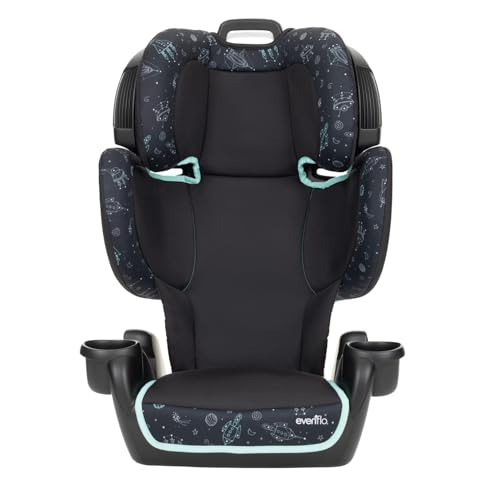
Evenflo GoTime LX Booster Car Seat (Astro Blue)

Chicco KidFit ClearTex Plus 2-in-1 Belt-Positioning Booster Car Seat

Hot Wheels x Graco Turbobooster 2.0 High Back Booster Seat, Belt Positioning Booster Car Seat for Big Kids

Chicco KidFit ClearTex Plus 2-in-1 Belt-Positioning Booster Car Seat
Disclaimer
Baby product selection and parenting decisions involve personal preferences and individual circumstances. The information provided on CradleCheck is for educational and informational purposes only. We are not medical professionals, and our content should not replace professional medical advice, diagnosis, or treatment. Always consult with your pediatrician or healthcare provider regarding your baby's health and safety. Some content may use AI assistance. Always check product safety standards and recalls before purchasing. If you do not agree, please do not use this website. Read the full disclaimer.