
Best Sensitive Skin Baby Lotion: A Gentle & Fragrance-Free Guide
Discover the safest, most effective baby lotions for delicate, eczema-prone skin. Learn what ingredients to look for, what to avoid, and how to choose the perfect formula for your little one.
SHOP RECOMMENDED LOTIONSCradleCheck Expert Insight: A baby's skin is up to 30% thinner than an adult's, making it highly susceptible to irritation and dryness. Choosing the right sensitive skin baby lotion is crucial to protect their delicate moisture barrier and prevent conditions like eczema and contact dermatitis.
Why Your Baby Needs a Specialized Lotion for Sensitive Skin
Newborn and infant skin is still developing its natural protective barrier. Factors like genetics, climate, and even the laundry detergent you use can trigger flare-ups. A sensitive skin baby lotion is formulated without common irritants to gently hydrate and soothe without causing redness or rashes. Unlike adult moisturizers, these products are rigorously tested to be hypoallergenic and often meet pediatrician-recommended standards.
If your baby shows signs of dry patches, redness, or itching, switching to a fragrance-free, dye-free lotion can make a dramatic difference. For persistent issues like eczema, look for lotions containing colloidal oatmeal or ceramides, which help restore the skin's barrier.
Key Ingredients to Look For (and Avoid)
Understanding the label on a baby lotion can be overwhelming. Here’s a simple breakdown of what to embrace and what to steer clear of when choosing a sensitive skin baby lotion.
✅ Ingredients to Embrace
These ingredients are known to be gentle, moisturizing, and barrier-strengthening. Colloidal oatmeal, for example, is a dermatologist-recommended ingredient for soothing eczema and itchiness.
🚫 Ingredients to Avoid
These additives are common culprits of allergic reactions and skin irritation. Even "natural" essential oils can be problematic for a baby's sensitive skin. Always choose a lotion that is explicitly labeled "fragrance-free" (not just "unscented," which may still contain masking fragrances).
How to Choose the Right Sensitive Skin Baby Lotion
With so many options on the market, how do you select the best one for your baby? Here are some practical criteria to guide your decision, especially if you're comparing different lotions for infant dry skin.
- Check for the "National Eczema Association" Seal: This is a strong indicator that the product has been evaluated and accepted for use on eczema-prone skin.
- Read the Ingredients: As highlighted above, avoid common irritants. A shorter ingredient list often means fewer chances for an allergic reaction.
- Consider the Texture: For very dry skin, a thicker cream or ointment might be more effective than a thin lotion. Creams and ointments have a higher oil-to-water ratio and provide a better moisture seal.
- Patch Test: Before applying a new lotion all over, test a small amount on your baby's forearm or ankle. Wait 24 hours to see if any redness or irritation develops.
💡 Pro Tip: The best time to apply baby lotion is right after a bath. Pat the skin dry (don't rub) and apply the lotion while the skin is still slightly damp. This helps lock in maximum moisture and is a key practice for any newborn sleep guide routine to prevent nighttime itching.
Real-World Tips for Managing Sensitive Skin
Choosing the right lotion is only part of the solution. Here are a few more tips to help keep your baby's skin healthy and comfortable.
- Bathing Tips: Use lukewarm water and limit bath time to 5–10 minutes. Use a mild, fragrance-free baby wash. Adding a bath oil can also help.
- Laundry Matters: Use a gentle, fragrance-free laundry detergent. Avoid fabric softeners and dryer sheets, which can leave irritants on baby's clothes and bedding.
- Consult Your Pediatrician: If your baby's skin condition is severe or doesn't improve with over-the-counter options, it's always best to seek professional medical advice. They may recommend a specific prescription cream or lotion.
Top-Rated Sensitive Skin Baby Lotions
⚠️ AFFILIATE DISCLOSURE: This website contains affiliate links. As an Amazon Associate, we earn from qualifying purchases. If you make a purchase through these links, we may receive a small commission at no additional cost to you. Read our full affiliate policy.

Aveeno Baby Daily Moisture Body Lotion, Fragrance Free, 18 fl. oz

Baby Dove Sensitive Skin Care Baby Lotion Fragrance Free Moisture 20 oz

CeraVe Baby Lotion, Baby Skin Moisturizer with Vitamin E & Niacinamide, 8oz
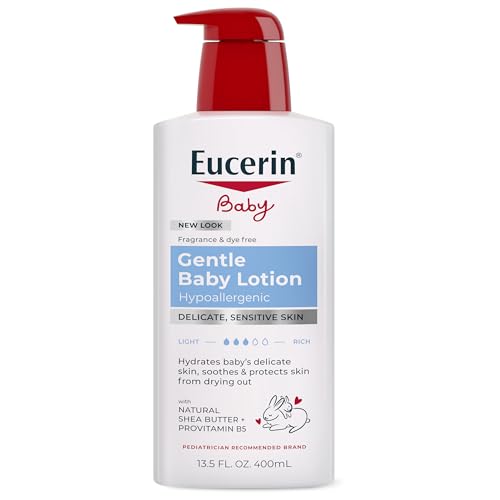
Eucerin Baby Gentle Baby Lotion, Pro-Vitamin B5 and Shea Butter, 13.5 FL OZ

Aquaphor Baby Sensitive Lotion, Gentle Moisturizer, 8 FL OZ

Cetaphil Baby Daily Lotion Organic Calendula Sensitive Skin 13.5 oz

Baby Dove Sensitive Skin Care Body Lotion Rich Moisture 20 oz

Aveeno Baby Daily Moisture Body Lotion, Fragrance-Free, 18 fl oz, 2 Pack
Frequently Asked Questions (FAQ)
Q: Can I use regular body lotion on my baby?
A: It's best to avoid adult lotions as they often contain fragrances and other ingredients that can be too harsh for a baby's sensitive skin. Always opt for a product specifically formulated for babies.
Q: How often should I apply baby lotion?
A: For babies with dry or sensitive skin, applying lotion 2-3 times a day is beneficial, particularly after baths and before bed. You can also apply it to areas prone to dryness, like cheeks and knees, as needed.
Q: Is petroleum jelly a good option for baby skin?
A: Petroleum jelly (like Vaseline) is an excellent occlusive agent that helps trap moisture. It's often used as a protective barrier for diaper rash, but for overall moisturizing, a lotion or cream with hydrating ingredients like ceramides is a better choice as it adds hydration rather than just sealing it in.