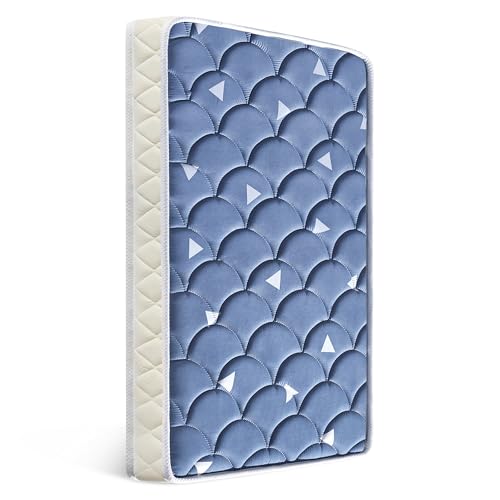
Pediatrician Recommended Crib Mattress: A Complete Buying Guide
Understand what makes a crib mattress pediatrician-approved: firmness, safety standards, materials, fit, and long-term durability. This guide helps you research with confidence before you purchase.
Start ResearchingWhy this guide matters: A crib mattress is one of the most important purchases for your nursery. Pediatricians emphasize firmness, a snug fit, and safety certifications to support safe infant sleep. This page explains each factor clearly so you can compare options and choose with confidence.
Why Pediatricians Focus on Crib Mattresses
Safe sleep is a cornerstone of infant health, and the crib mattress plays a central role. Pediatricians and safe-sleep organizations consistently recommend a firm, flat sleep surface with a well-fitted sheet and no soft bedding. A mattress that is too soft can create rebreathing risks, while a mattress that does not fit the crib properly can leave dangerous gaps.
Beyond safety, the right mattress supports spinal development and temperature regulation. Because infants spend a significant portion of their first year sleeping, the mattress you choose directly affects comfort, hygiene, and long-term usability. Parents researching a pediatrician recommended crib mattress typically want to confirm three things: that the product meets current safety standards, that it is appropriately firm, and that it fits their specific crib model precisely.
Key Takeaways for Parents
- Prioritize a firm surface designed specifically for infants.
- Confirm the mattress meets recognized safety certifications.
- Measure your crib to ensure a snug, gap-free fit.
- Choose materials that are easy to clean and low in odor.
- Consider dual-firmness designs if you plan to use the mattress into the toddler years.
Safety Standards and Certifications to Look For
In the United States, crib mattresses are subject to federal safety regulations, and reputable manufacturers pursue additional third-party certifications. When you compare products, look for clear statements about compliance and independent testing.
Certifications Commonly Cited
- CPSC compliance: Confirms the mattress meets Consumer Product Safety Commission requirements for crib mattresses.
- GREENGUARD Gold: Indicates low chemical emissions and improved indoor air quality, which is relevant for nurseries.
- CertiPUR-US (for foam): Verifies foam content is made without certain harmful chemicals and meets emission standards.
- GOTS or OEKO-TEX (for textiles): Indicates organic or tested textile components in the cover.
Certifications are not interchangeable, and some apply only to specific components. Read manufacturer documentation carefully. A mattress labeled as pediatrician recommended should also provide transparent information about materials, assembly, and flammability compliance.
Practical tip: Keep the original documentation and any certification labels. Some programs require proof of compliance, and having records simplifies warranty claims and future resale.
Firmness: The Core Requirement
Firmness is the single most frequently discussed attribute in any pediatrician recommended crib mattress. A firm mattress prevents an infant from sinking into the surface, which supports open airways and reduces rebreathing risk. Unlike adult mattresses, infant mattresses should not conform to the body.
Firmness is achieved through construction. Innerspring models use a dense coil unit with limited give, while foam models use higher-density foam that resists compression. Hybrid designs combine layers to balance support and durability. For infants, avoid any mattress described as plush, pillow-top, or pressure-relieving.
How to Assess Firmness
- Press the center of the mattress with your palm; it should rebound quickly with minimal indentation.
- Check whether the surface feels uniform from edge to edge.
- Confirm the manufacturer describes the product as firm and intended for infants.
- Avoid adding mattress toppers or soft layers on top.
Dual-firmness mattresses offer an infant side and a toddler side, with the toddler side typically slightly softer. If you plan for extended use, confirm the infant side meets the same firmness expectations.
Materials and Construction
Mattress materials affect durability, odor, cleaning, and indoor air quality. The three main constructions are innerspring, foam, and hybrid.
Innerspring
Innerspring mattresses use a coil unit wrapped in padding and a cover. They tend to be firm, breathable, and durable. Coil count and gauge influence support and longevity; higher coil counts with heavier gauge wire generally indicate a more substantial build. Edge support is an important consideration because it affects how well the mattress holds its shape within the crib frame.
Foam
Foam mattresses are lightweight and available in firm densities. High-density foam resists compression better than low-density foam, which can soften over time. Foam models are often easier to move during sheet changes and are generally quieter. Look for foam with recognized emission certifications.
Hybrid
Hybrid mattresses combine foam and innerspring layers to balance support, breathability, and durability. They often sit in the mid-range to premium tiers. Because they contain multiple layers, check how the cover is attached and whether the interior is protected from moisture.
| Construction | Best For | Considerations |
|---|---|---|
| Innerspring | Firm support, airflow, long-term use | Check coil gauge and edge support |
| Foam | Lightweight handling, quiet surface | Confirm high density and emissions certification |
| Hybrid | Balanced support and durability | Verify cover waterproofing and layer construction |
Fit and Dimensions: Why a Snug Fit Is Non-Negotiable
Standard crib mattresses are designed to fit full-size cribs, but small variations exist. A gap between the mattress and crib frame can trap a limb or create an unsafe space. Safe-sleep guidance recommends that the mattress fit so snugly that you cannot fit more than two fingers between the mattress and the crib side.
Before purchasing, measure your crib's interior dimensions and compare them with the mattress specifications. If you use a convertible crib, confirm that the mattress is compatible with each conversion stage. Mini cribs and portable cribs require specific mattress sizes and should not use full-size mattresses.
Fit Checklist
- Measure interior width and length of the crib.
- Confirm the mattress dimensions match your crib model.
- Test the fit before first use; the mattress should not shift.
- Use only crib sheets designed for the mattress thickness.
- Check the fit again after rotating or flipping the mattress.
Durability and Dual-Firmness Designs
A crib mattress is used daily for years, so durability matters. Look for reinforced seams, a sturdy cover, and construction details that resist sagging. Waterproof or water-resistant covers simplify cleaning and protect the interior from moisture, which is a common cause of odor and degradation.
Dual-firmness mattresses are increasingly common. They provide a firm infant surface and a slightly softer toddler surface, extending the product's useful life. If you are considering a convertible crib setup, review options such as a convertible crib with storage and changing table to coordinate the mattress with your furniture plan.
Signs of Quality Construction
- Reinforced edges that hold shape during sheet changes.
- Secure cover attachment with no loose threads or gaps.
- Clear labeling of materials and certifications.
- Warranty terms that reflect expected lifespan.
Care, Cleaning, and Maintenance
Regular cleaning protects both the mattress and your baby's sleep environment. Spills, spit-up, and accidents are inevitable, so a wipeable surface is a practical advantage. Use mild, fragrance-free cleaners and avoid soaking the mattress core.
Maintenance Routine
- Wipe the surface promptly after spills using a damp cloth.
- Use a waterproof mattress protector under the sheet.
- Wash crib sheets weekly and after accidents.
- Air the mattress periodically in a well-ventilated room.
- Inspect seams and cover integrity monthly.
- Rotate or flip the mattress as the manufacturer recommends.
Mattress protectors are an effective way to extend mattress life. For options, see crib mattress protectors that are designed to fit snugly without adding bulk.
Comparing Product Tiers
Crib mattresses are available across several market tiers. Rather than focusing on specific figures, consider how construction and features scale across tiers. The table below summarizes typical differences.
| Tier | Typical Construction | Best For |
|---|---|---|
| Entry-level | Basic foam or lighter innerspring; simpler cover | Short-term use or secondary sleep spaces |
| Mid-range | Higher-density foam or reinforced innerspring; waterproof cover | Primary nursery use with standard durability needs |
| Premium | Hybrid construction, dual firmness, advanced cover materials | Long-term use through toddler years |
| Luxury | Premium materials, organic textiles, enhanced certifications | Parents prioritizing material transparency and extended lifespan |
Mid-range models often provide the most balanced combination of firmness, durability, and certification transparency. Premium and luxury tiers add features such as dual firmness, organic covers, and extended warranties.
Frequently Asked Questions
What does "pediatrician recommended" actually mean for a crib mattress?
It generally means the mattress meets safe-sleep guidance for firmness, fit, and safety compliance. Because pediatricians do not certify products directly, look for recognized third-party certifications and clear manufacturer documentation alongside the recommendation.
How firm should a crib mattress be?
The surface should feel firm and resist compression. When you press down, it should rebound quickly. Avoid plush or pillow-top designs for infants.
Is a waterproof cover necessary?
A waterproof cover or mattress protector helps prevent moisture damage and odor. Choose one that fits snugly and does not create a loose layer.
Can I use a mattress from one crib in another crib?
Only if the dimensions match precisely. A loose fit creates gaps and is unsafe. Always measure and confirm compatibility.
How long does a crib mattress last?
With proper care, a quality mattress can last through the infant and toddler years. Inspect regularly for sagging, cracked covers, or loss of firmness.