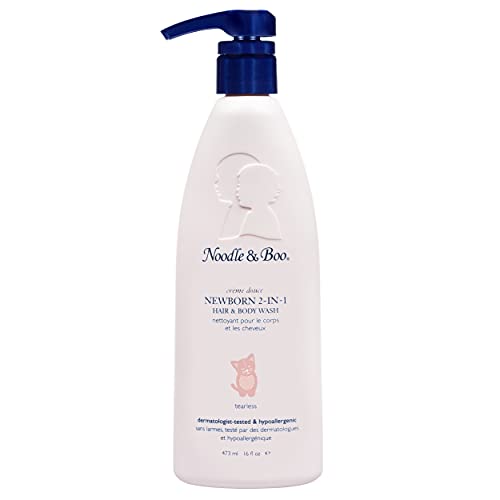
Newborn Shampoo & Body Wash: The Complete Buying Guide
Everything you need to know about choosing a gentle, safe cleanser for your newborn's delicate skin and hair — from ingredient labels to bath-time routines.
START THE GUIDEWhy this guide matters: A newborn's skin is up to five times thinner than an adult's and loses moisture more quickly. The cleanser you choose directly affects skin barrier health, scalp comfort, and even sleep quality. This guide walks you through formulation types, ingredient safety, and practical bath-time decisions so you can choose with confidence.
Why Newborns Need Dedicated Shampoo & Body Wash
Adult cleansers are formulated with stronger surfactants designed to strip oils and residue from mature skin. A newborn's skin barrier — the outermost layer that locks in moisture and blocks irritants — is still developing. Using adult products can disrupt this barrier, leading to dryness, redness, and increased sensitivity. Dedicated newborn formulas are pH-balanced, typically around 5.5, which matches the natural acidity of infant skin and helps preserve its protective mantle.
Beyond pH, newborn cleansers are also tested for ocular irritation (the "tear-free" claim) and are free from common allergens and harsh preservatives. This is not marketing fluff — it is a meaningful formulation difference that reduces the risk of bath-time discomfort and post-bath skin reactions. If you are assembling a broader bath-time kit, you may also find our guide on necessary items for a newborn useful for rounding out the essentials.
Types of Newborn Cleansers: Which Format Fits Your Routine
The market offers several formats, each with trade-offs in convenience, ingredient concentration, and suitability for different skin types. Understanding these distinctions helps you match the product to your baby's needs and your daily routine.
2-in-1 Shampoo & Body Wash
The most popular format for newborns. A single formula cleanses both hair and body, simplifying bath time. Ideal for parents who want a streamlined routine. Look for gentle surfactant blends rather than single strong sulfates.
Separate Shampoo & Wash
Offers targeted formulation — shampoo can focus on scalp balance while body wash prioritizes moisturizing. Useful if your baby has a dry scalp but normal body skin, or vice versa. Slightly more steps but more precise.
Body Wash Only (No Shampoo)
Many newborns have minimal hair in the first months, making a dedicated shampoo unnecessary. A gentle body wash can double as a scalp cleanser when used sparingly. Practical for the earliest weeks.
Bath Gel / Cleansing Oil
Cleansing oils are ideal for very dry or eczema-prone skin because they cleanse without stripping lipids. Bath gels are lighter and rinse more easily. Both are mid-tier to premium options in terms of formulation complexity.
Ingredient Guide: What to Look For and What to Avoid
Reading the ingredient label is the single most reliable way to assess a newborn cleanser. Below is a practical breakdown of common ingredient categories and their role in the formula.
| Ingredient Category | Role in Formula | What to Prefer |
|---|---|---|
| Surfactants (cleansers) | Lift dirt and oils from skin and hair | Glucose-based, amino-acid-based, or amphoteric surfactants — gentler than SLS/SLES |
| Humectants | Attract and retain moisture | Glycerin, panthenol (pro-vitamin B5), sodium PCA |
| Emollients | Soften and smooth skin | Plant-derived oils (sunflower, jojoba), shea butter, colloidal oatmeal |
| Preservatives | Prevent microbial growth | Food-grade or naturally derived preservatives; avoid parabens and formaldehyde releasers |
| Fragrance | Provides scent | Fragrance-free or naturally derived essential oils at low concentration; avoid synthetic phthalates |
| pH adjusters | Maintain skin-compatible acidity | Citric acid or sodium citrate to reach pH ~5.5 |
A useful rule of thumb: shorter ingredient lists are generally easier to audit and carry lower allergy risk. If your baby has a known skin condition, such as eczema or seborrheic dermatitis, prioritize fragrance-free formulas and consult your pediatrician before introducing a new product. For broader newborn care planning, our overview of newborn must-haves covers complementary items like lotions and bathing accessories.
Market Tiers: Understanding Formulation Positioning
Newborn cleansers vary widely in formulation sophistication. Rather than comparing monetary figures, it is more useful to understand where a product sits relative to the category. The tiers below describe formulation and testing depth, not absolute quality — a well-formulated entry-level product can be entirely appropriate for a healthy newborn.
- Entry-level tier: Straightforward formulations with basic gentle surfactants and minimal additives. Suitable for healthy newborns without skin sensitivities. Often fragrance-free and dye-free.
- Mid-range tier: Improved surfactant blends, added humectants and emollients, and more rigorous ocular and dermatological testing. A solid choice for most families and the most common tier in pediatrician-recommended lists.
- Premium tier: More sophisticated formulations — often amino-acid-based cleansing systems, clinically tested for sensitive skin, with carefully controlled fragrance or fragrance-free status. Frequently used for babies with mild skin sensitivities.
- Luxury / professional-grade tier: Highest formulation complexity, often dermatologist-developed or positioned for specific skin conditions. Includes cleansing oils and balms with extensive clinical testing. Best reserved for babies with identified skin needs rather than as a default choice.
When comparing products within a tier, focus on the surfactant system and preservative profile rather than marketing claims. A mid-range formula with a glucose-based surfactant and a short ingredient list is often a better fit for a newborn than a premium product loaded with botanical extracts that increase allergy risk.
The Practical Buying Checklist
Use this checklist to evaluate any newborn shampoo and body wash before purchasing. It is designed to be printed or saved for a store visit or online comparison.
pH-Balanced Formula
Look for a stated pH near 5.5, which matches infant skin. This reduces disruption of the acid mantle and supports barrier function.
Tear-Free or Low-Irritation Testing
Ocular irritation testing is a meaningful quality marker. Tear-free formulas reduce stinging if product reaches the eyes during rinsing.
Fragrance-Free or Naturally Scented
Synthetic fragrance is a common irritant. Fragrance-free is safest for newborns; naturally scented options should use low-concentration essential oils.
Short, Auditable Ingredient List
Fewer ingredients means fewer potential allergens. Prioritize formulas where you can identify each ingredient's purpose.
Dermatologist-Tested
Independent dermatological testing adds confidence, especially for babies with a family history of eczema or sensitive skin.
Appropriate Format for Your Routine
2-in-1 for simplicity, separate products for targeted care, cleansing oil for dry skin. Match the format to your baby's skin and your daily flow.
Bath-Time Best Practices for Newborns
The product is only part of the equation. Technique matters just as much for skin health and safety. Pediatric guidance generally recommends sponge baths until the umbilical cord stump detaches, then transitioning to shallow tub baths. Keep water temperature lukewarm — around 37°C (98.6°F) — and limit bath time to five to ten minutes to prevent skin drying.
Use a small amount of cleanser — roughly a pea-sized quantity for the body and a few drops for the scalp — and rinse thoroughly with clean water. Pat the skin dry rather than rubbing, and apply a newborn-safe moisturizer within three minutes of bathing to lock in hydration. Avoid using cleanser on the face; plain water is sufficient for a newborn's face and eyes. For a complete post-bath care routine, our newborn essentials checklist covers moisturizers, hooded towels, and other bath-time accessories.
Common Mistakes to Avoid
Over-bathing: Daily baths with cleanser can strip natural oils. Two to three times per week with cleanser is typically sufficient; plain water baths can fill the gaps.
Using too much product: More cleanser does not mean cleaner skin. Excess product leaves residue that can irritate. Follow the label's recommended amount.
Ignoring the scalp: Cradle cap is common and often managed with gentle cleansing and a soft brush. A dedicated newborn shampoo used two to three times per week can help without aggravating the scalp.
Skipping a patch test: Before using a new product on the full body, apply a small amount to a small area of skin and observe for 24 hours. This is especially important if your baby has shown sensitivity to other products.
Frequently Asked Questions
Ready to Choose the Right Cleanser?
Browse our recommended newborn shampoo and body wash options, selected for gentle formulation and safety.
EXPLORE RECOMMENDATIONS