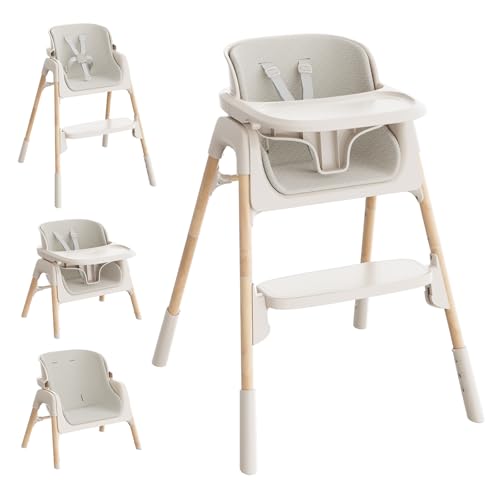
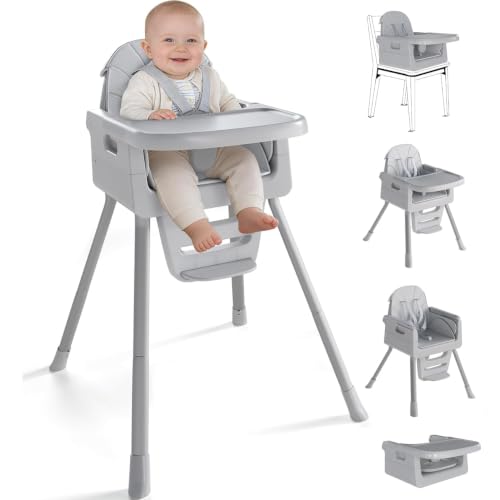
Easy to Clean High Chair with Footrest: The Complete Buying Guide
Everything you need to know before choosing a high chair that wipes down in seconds, keeps your baby comfortable, and survives the messiest mealtimes.
Why Cleaning Ease Matters More Than You Think
A high chair is used multiple times a day for months, and often for years across siblings. The difference between a chair that wipes down in under a minute and one that demands scrubbing crevices after every meal is enormous. Families who choose an easy to clean high chair with footrest consistently report less frustration, fewer stained fabrics, and a more pleasant feeding routine.
Mess is inevitable. Purees drip, crackers crumble, and yogurt finds its way into seams you did not know existed. The right design minimizes the number of hiding places. Smooth surfaces, removable trays, and wipeable seat covers turn a ten-minute cleanup into a thirty-second task.
Cleanliness also has a safety dimension. Trapped food particles and moisture can encourage mold growth in padded covers and hinges. A chair designed for quick, thorough cleaning is simply a healthier environment for your child. If you are still mapping out your feeding setup, our guide to high chair seats that attach to the table explores another space-saving option worth comparing.
Materials That Actually Wipe Clean
The single biggest factor in cleaning ease is the material of the seat and frame. Before you compare features, understand what each material demands from you in daily upkeep.
Molded Plastic Seats
A one-piece molded plastic seat is the gold standard for wipe-clean convenience. There are no fabric seams, no deep grooves, and no stitching to trap crumbs. A damp cloth or baby wipe handles almost everything. Entry-level and mid-range models frequently use this construction, and it holds up well to daily use.
Wipeable Polyurethane or Leatherette Covers
Premium high chairs often use padded seats wrapped in polyurethane or leatherette. These surfaces look more like furniture and feel softer for the baby, while still being wipeable. The key is seam placement: covers with sealed or minimal seams clean far more easily than quilted designs with deep channels. Look for covers that are removable and machine-washable as a backup.
Fabric Inserts and Cushions
Fabric inserts add comfort but complicate cleaning. If you prefer a padded seat, choose a model where the insert is removable and machine-washable. Avoid fixed fabric upholstery on a chair that will face daily food exposure.
Frame Materials
Powder-coated steel and aluminum frames wipe clean and resist rust. Wooden frames look beautiful but require more attention around joints where food accumulates. High-grade steel with a rust-proof finish is the most maintenance-friendly choice for a chair that will be cleaned constantly.
Tray and Harness Design: Where Mess Hides
The tray is ground zero for mealtime mess, so its design deserves close scrutiny. A removable, dishwasher-safe tray insert is one of the most practical features you can prioritize. Being able to lift the top tray and rinse it in the sink saves far more time than wiping a fixed surface.
- Dual-tray systems: A base tray plus a removable top insert lets you lift off the dirty layer and keep feeding while the insert soaks.
- Tray adjustment: Multiple depth positions let the tray sit close to your baby, reducing the drop zone between spoon and mouth.
- Smooth tray edges: Rounded, seamless rims are easier to wipe than sharp corners with raised lips.
- Harness straps: Choose wipeable straps or a harness that removes completely for washing. Fabric straps with tight webbing are a common crumb trap.
The harness matters as much as the tray. A five-point harness is the safety standard, but the material and attachment method determine how easy it is to clean. Straps that clip off quickly and can be rinsed or machine-washed are a meaningful convenience over months of use.
The Role of the Footrest
A footrest is not a decorative extra. It supports stable posture, which helps your baby sit upright, chew, and swallow comfortably. When feet dangle, many children feel unsteady and fidget, which increases spills and prolongs mealtimes.
From a cleaning perspective, an adjustable footrest has trade-offs. A fixed, molded footrest that is part of the seat shell wipes clean in one pass. An adjustable footrest with multiple positions adds usefulness but introduces joints and brackets where food can collect. If adjustability matters to you, look for a footrest with a smooth top surface and minimal exposed hardware.
Why an Adjustable Footrest Is Worth Considering
- It grows with your child from first solids through toddlerhood.
- Proper foot support improves posture and reduces mealtime frustration.
- Children who feel secure in the seat tend to stay calmer and eat better.
Balance the benefit against cleaning effort. A well-designed adjustable footrest with sealed joints is manageable; a poorly sealed one becomes a crumb magnet. If your priority is absolute simplicity, a fixed footrest on a molded seat is the easiest to maintain.
Safety and Stability Are Non-Negotiable
Cleaning ease should never come at the expense of safety. Every high chair you consider should meet current safety standards and include the following.
- Five-point harness: Secures shoulders, waist, and between the legs to prevent climbing and sliding.
- Wide, stable base: A broad footprint resists tipping, especially when a toddler pushes against the tray.
- Locking mechanisms: All folding joints and tray adjustments should lock firmly into place.
- No pinch points: Check hinges and folding areas for gaps that could catch small fingers.
- JPMA or equivalent certification: Third-party certification signals the chair has been tested to recognized safety standards.
Always use the harness, even for short meals, and never leave a child unattended in a high chair. Place the chair away from walls, tables, and countertops where a child could push off and tip the chair.
Quality Tiers Compared
High chairs fall into recognizable tiers based on materials, adjustability, and construction quality. Use this comparison to match a chair to your household's needs without relying on arbitrary numbers.
| Tier | Typical Construction | Cleaning Profile | Best For |
|---|---|---|---|
| Essential tier | Molded plastic seat, fixed or simple footrest, basic tray | Excellent — few seams, one-piece seat | Families prioritizing simplicity and quick wipe-downs |
| Balanced tier | Plastic seat with padded wipeable insert, adjustable footrest, dual tray | Very good — removable insert and tray inserts | Families wanting comfort and growth adjustability |
| Premium tier | Polyurethane upholstery, multi-position recline, height and footrest adjustment | Good — wipeable but more seams to manage | Long-term use across multiple children |
| Top-tier / flagship | Furniture-grade finish, full adjustability, convertible configurations | Good with care — removable, washable components | Parents wanting a chair that blends with home decor |
Entry-level models in the essential tier often deliver the fastest cleanup because there is simply less structure to clean around. As you move up tiers, you gain comfort and adjustability, but you also take on more seams and components. Premium materials are a long-term investment, but they require a more deliberate cleaning routine.
If your feeding setup involves multiple children or travel, it is worth reading about compact high chair seats as a complementary option for smaller spaces.
Pre-Purchase Checklist
Bring this list with you when comparing models online or in a store. Each item directly affects how pleasant the chair is to own.
- Removable, dishwasher-safe tray insert — the single most time-saving feature.
- Molded or sealed seat surface — fewer seams means faster cleanup.
- Removable, washable harness — fabric straps should detach easily.
- Footrest with smooth top and sealed joints if adjustable.
- Five-point harness with easy-release buckle.
- Stable base with a wide footprint.
- Height and tray depth adjustment to fit your table and growing child.
- Third-party safety certification.
- Folding or compact footprint if space is limited.
- Replacement parts availability for long-term ownership.
Frequently Asked Questions
Is a plastic high chair easier to clean than a padded one?
Generally yes. A one-piece molded plastic seat has no fabric and very few seams, so a damp cloth handles most messes. Padded chairs can be easy to clean if the cover is wipeable and removable, but they require more attention around stitching and seams.
Do I really need a footrest on a high chair?
A footrest supports stable posture, which helps your baby sit upright and eat comfortably. Children whose feet dangle often fidget and feel less secure. It is a meaningful comfort feature, though a fixed footrest is easier to clean than an adjustable one.
How often should I deep clean a high chair?
Wipe the seat and tray after every meal. Remove and wash the tray insert and harness weekly, and do a thorough cleaning of joints and hinges monthly. Chairs with fewer crevices need less frequent deep cleaning.
Are dishwasher-safe trays important?
They are one of the most practical features you can prioritize. Being able to lift the tray insert and place it in the dishwasher saves significant time and ensures a more hygienic clean than hand wiping alone.
Can an easy to clean high chair still be comfortable?
Yes. Mid-range and premium models combine wipeable seats with padded inserts that support posture. The key is choosing a chair where the padded elements are removable and washable, so comfort does not come at the expense of hygiene.
Ready to Choose Your High Chair?
Use the checklist above, prioritize a removable tray insert and a wipeable seat, and you will have a chair that serves your family well through every messy meal.