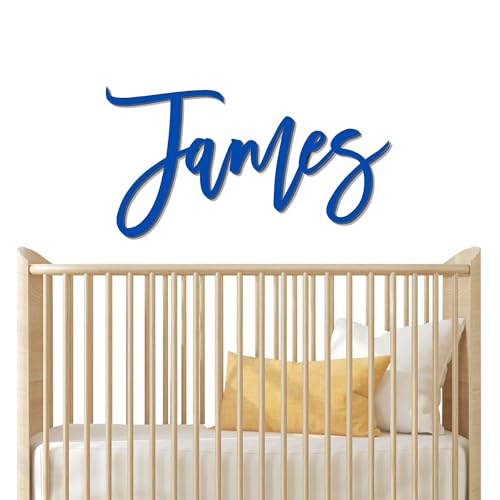
Custom Wooden Name Signs for Nursery: A Complete Buyer's Guide
Personalized wooden name signs are one of the most beloved finishing touches in a nursery. They anchor the wall above the crib, add warmth to a reading nook, and turn a neutral room into a space that feels unmistakably yours. This guide walks you through materials, sizing, lettering, finishes, mounting, and safety so you can order with confidence.
Jump to Buying ChecklistWhy Custom Wooden Name Signs Belong in a Nursery
A nursery is more than a room; it is the first space a baby will call their own. Custom wooden name signs do several jobs at once. They personalize the room without overwhelming it, they add a natural textural contrast to painted walls and fabric, and they create a focal point that photographs beautifully for milestone pictures.
Wood also has practical advantages over other sign materials. It is warmer and more tactile than acrylic or metal, it holds paint and stain in a way that reads as handcrafted, and a well-finished hardwood sign can last through multiple children. Many parents treat the sign as a long-term keepsake that moves with the child into a bigger room later.
If you are still assembling the overall look of the room, it helps to plan the sign alongside other wall and furniture decisions. Our guide to nursery layout ideas covers how to balance a focal wall, and our wall art and prints overview explains how to mix a name sign with framed pieces so the wall does not feel crowded.
Wood Materials Compared
The material determines how the sign looks, how heavy it is, how it ages, and how easy it is to hang safely. Below is a practical comparison of the woods most commonly used for nursery name signs.
| Material | Market Tier | Best For | Notes |
|---|---|---|---|
| Baltic birch plywood | Entry-level to mid-range | Painted signs, large names, lightweight walls | Strong, dimensionally stable, smooth face, takes paint evenly |
| Pine | Entry-level | Rustic and farmhouse styles | Knots and grain vary; softer surface dents more easily |
| MDF | Entry-level | Budget-friendly painted signs | Very smooth finish but heavier and less moisture-resistant |
| Oak | Mid-range to premium | Natural-wood and stained designs | Open grain, very durable, heavier than birch |
| Walnut | Premium to luxury | High-end statement signs | Rich dark tone, excellent for laser-cut lettering |
| Maple | Premium | Minimalist and modern nurseries | Fine, even grain and a bright natural color |
As a general rule, entry-level plywood and pine signs suit painted designs and smaller names, while mid-range birch and oak handle larger lettering with less risk of warping. Premium hardwoods such as walnut and maple are the right pick if you want a natural finish and intend the sign to be a long-term keepsake.
Lettering Styles, Fonts, and Personalization Options
The lettering is what makes a name sign feel personal, and it is where most buyers spend the most decision time. There are three broad approaches.
1. Cut-out lettering (negative space)
The name is cut out of a solid backing board so the wall shows through the letters. This style reads as modern and graphic, photographs well, and is easy to dust. Cut-out lettering works best with clean, medium-weight fonts and names that are not too long relative to the board width.
2. Raised or layered lettering
Individual letters are attached on top of a backing board, often in a contrasting color or a second wood tone. This is the most popular style for nursery signs because it adds depth to the wall. Raised letters come in both script and block fonts.
3. Single-piece script
The entire name is cut as one continuous script piece with no backing board. This is the most delicate option and the most decorative. It suits short names and works particularly well in boho and vintage-inspired rooms. Script pieces are also the most fragile to ship, so packaging quality matters.
Choosing a font
- Script and calligraphy — soft, traditional, and the most popular choice for girls' nurseries, though it works equally well in neutral rooms.
- Block and sans-serif — clean and modern; the safest choice if you plan to keep the room gender-neutral.
- Serif and slab — a classic, bookish feel that pairs well with traditional furniture.
- Hand-lettered styles — playful and casual, ideal for woodland and boho themes.
Beyond the name itself, common add-ons include a birth date, birth weight, a small motif such as a leaf, star, or animal silhouette, and a decorative border. Keep add-ons minimal if the sign will hang above the crib, since visual clutter directly above a sleeping baby is best avoided.
If you are coordinating the sign with a wider theme, our guides to boho nursery and minimalist nursery styles show how lettering choices fit into each aesthetic.
How to Size a Name Sign for Your Nursery Wall
Sign size is the most common source of buyer regret. A sign that looks generous on a product page can look lost on a wide wall, and a sign that looks dramatic in a photo can overwhelm a small room.
The 50–75 percent rule
Size the sign so that its width falls between 50 and 75 percent of the width of the furniture below it. Above a standard crib, that usually means a sign between 24 and 30 inches wide. Above a dresser, you can go wider, up to about 36 inches, as long as the sign does not extend past the furniture edges.
Name length and letter height
Longer names need either a wider board or smaller letters. As a practical guide, plan for roughly 2.5 to 3.5 inches of horizontal space per letter for a comfortable, readable proportion. Short names of three to five letters can support larger letter heights, which is why single-piece script signs tend to look best with shorter names.
Height placement
- Above the crib: center the sign roughly 12 to 18 inches above the top rail, and keep it out of arm's reach.
- Above a dresser or changing station: center it on the wall space between the furniture top and the ceiling line.
- On a gallery wall: treat the name sign as the anchor piece and arrange smaller frames around it.
Finishes, Stains, and Non-Toxic Paint Options
The finish affects both appearance and safety. Because a nursery sign hangs in a room where a baby sleeps, finish selection deserves more attention than it usually gets.
Painted finishes
Water-based, low-VOC paints are the standard recommendation for nursery decor. They dry with minimal off-gassing and are easy to touch up. Popular palettes include soft sage, warm cream, dusty pink, and muted navy, all of which pair well with the neutral palettes covered in our nursery color palettes guide.
Stained and natural finishes
Stain highlights the grain and gives hardwood signs their characteristic warmth. Look for water-based stains and topcoats, and confirm with the maker that the final finish is fully cured before the sign is hung. A cured, sealed finish is far less of a concern than a freshly applied solvent-based one.
Unfinished wood
Some makers ship unfinished signs so parents can paint them at home. This is a reasonable option if you want full control over color, but plan to seal the sign afterward with a water-based topcoat so it resists dust and moisture.
Mounting Methods and Wall Safety
Mounting is the step that determines whether a beautiful sign stays beautiful. The right method depends on the sign's weight and your wall construction.
Adhesive strips
Removable adhesive strips are suitable for lightweight signs, typically under a few pounds. They are renter-friendly and leave no holes, but they must be applied to a clean, smooth, painted surface and rated for the sign's weight. Check them monthly, since heat and humidity can weaken the bond over time.
Sawtooth hangers and D-rings
These are the most common hardware options supplied with wooden signs. They work well on drywall with a proper anchor and on wood paneling. Use two hangers rather than one for wider signs so the piece stays level.
French cleats
For large or heavy signs, a French cleat distributes weight across the wall and holds the sign flush. This is the most secure option for premium hardwood pieces and is worth requesting from the maker if the sign is substantial.
Wall anchors and studs
Any sign above roughly five pounds should be anchored into a stud or use a rated drywall anchor. Never rely on a single small nail for a sign that hangs over a crib or changing area.
Buying Checklist: What to Verify Before You Order
Custom signs are made to order, which means returns are often limited. Use this checklist to confirm the important details before you commit.
- Confirm the exact spelling and capitalization. Double-check the name letter by letter, including apostrophes and accents. Order confirmations are the last easy point to catch a mistake.
- Ask for a digital proof. Most custom makers provide a proof showing font, layout, and proportions. Review it carefully before approving production.
- Verify the material and thickness. Ask for the specific wood species and board thickness. Thicker boards read as more substantial and resist warping better.
- Confirm the finished dimensions. Check width, height, and letter height rather than relying on the photo.
- Ask about the finish. Confirm whether the sign arrives painted, stained, or unfinished, and whether the finish is water-based and low-VOC.
- Check the included hardware. Find out whether hangers, anchors, or adhesive strips are included and whether they are rated for the sign's weight.
- Review shipping protection. Delicate script pieces and laser-cut letters need rigid packaging. Look for makers who describe their packaging or show unboxing photos.
- Read the production timeline and return policy. Custom items typically ship in one to three weeks and are often non-returnable unless defective, so plan around your due date.
If the sign is part of a larger nursery build-out, it is worth ordering it early alongside other custom pieces. Our guides to nursery furniture sets and nursery storage units cover how to plan a room around made-to-order lead times.
Care, Cleaning, and Long-Term Durability
A sealed wooden sign needs very little maintenance. Dust it weekly with a dry microfiber cloth or a soft brush attachment on a vacuum. Avoid wet cloths, household sprays, and abrasive cleaners, all of which can dull the finish or lift paint from cut edges.
Keep the sign out of direct, sustained sunlight if the finish is a natural stain, since UV exposure can shift the tone over time. In humid climates, run a dehumidifier in the nursery during the wettest months to protect both the sign and the furniture around it; our guide to humidifiers explains how to manage nursery humidity.
If the sign will eventually move with a growing child into a bigger room, store it wrapped in paper rather than plastic so the wood can breathe. A well-finished hardwood sign can comfortably last through multiple children and several room changes.
Frequently Asked Questions
What is the best wood for a nursery name sign?
Baltic birch plywood is the most popular choice because it is lightweight, strong, and takes paint and stain well. Solid hardwoods like oak, walnut, and maple offer a premium feel and superior durability, while pine and MDF are common in entry-level options.
How big should a nursery name sign be?
A good rule of thumb is to size the sign between 50 and 75 percent of the width of the crib or shelf it hangs above. Most nursery name signs fall between 18 and 36 inches wide, with 24 to 30 inches being the most versatile mid-range choice.
Are wooden name signs safe for a baby's room?
Yes, when properly mounted and finished. Choose signs with non-toxic, water-based finishes, avoid small detachable pieces, and mount the sign securely out of reach of the crib. Never place a heavy sign directly above the crib where it could fall.
How do I hang a wooden name sign without damaging the wall?
Adhesive strips work well for lightweight signs under a few pounds, while heavier signs need wall anchors or a French cleat. Always follow the manufacturer's weight rating and check the sign periodically to make sure it remains secure.
Can a wooden name sign be reused for a second child?
It can be reused if the name matches or if you choose a neutral design that does not include a name. Many parents order a sign with a family name or a decorative monogram so it can transition between siblings and even into other rooms.