Baby Sunscreen Guide: Safe SPF for Your Little One
Protecting your baby's delicate skin from the sun is crucial. Learn how to choose the safest and most effective baby sunscreen.
Why Sun Protection Matters for Babies
Baby skin is thinner and more sensitive than adult skin, making it more vulnerable to the sun's harmful UV rays. Sunburns in infancy can increase the risk of skin damage and skin cancer later in life. That's why choosing the right baby sunscreen is an essential part of your baby's daily routine, especially during outdoor activities.
In this comprehensive guide, we'll walk you through everything you need to know about baby sunscreen, from understanding SPF to selecting the safest ingredients. We'll also share application tips and answer common questions to help you make the best choice for your little one.
What to Look for in a Baby Sunscreen
When shopping for baby sunscreen, you'll encounter many options. To make the right choice, focus on these key factors:
Mineral vs. Chemical Sunscreens
Mineral (physical) sunscreens are generally recommended for babies. They sit on top of the skin and reflect UV rays. The active ingredients are zinc oxide or titanium dioxide. These are less likely to irritate sensitive skin and are effective immediately upon application.
Chemical sunscreens absorb UV rays and convert them into heat. They often contain ingredients like oxybenzone and avobenzone, which can be absorbed into the skin and are not recommended for infants.
SPF Level
Choose a sunscreen with SPF 30 or higher. SPF 30 blocks about 97% of UVB rays, while SPF 50 blocks about 98%. For babies, SPF 30-50 is ideal. Avoid sunscreens with SPF above 50, as they may provide a false sense of security and often contain more chemicals.
Broad-Spectrum Protection
Ensure the sunscreen offers broad-spectrum protection, meaning it protects against both UVA and UVB rays. UVA rays cause premature aging and skin damage, while UVB rays cause sunburn. Both can lead to skin cancer.
Water Resistance
If your baby will be in water or sweating, choose a water-resistant formula. Water resistance is typically rated for 40 or 80 minutes. Reapply after swimming or sweating, even if the product is water-resistant.
How to Apply Baby Sunscreen Safely
Proper application is just as important as choosing the right product. Follow these tips to ensure your baby is fully protected:
- Do a patch test: Apply a small amount to a small area of your baby's skin to check for any allergic reaction before full application.
- Apply generously: Use enough sunscreen to cover all exposed skin. Don't forget often-missed areas like the tops of feet, backs of hands, neck, and ears.
- Apply 15-30 minutes before sun exposure: This allows the sunscreen to bind to the skin, especially for chemical sunscreens. For mineral sunscreens, you can apply immediately before going outside.
- Reapply every 2 hours: Reapply more often if your baby is swimming or sweating. Even water-resistant sunscreens need to be reapplied.
- Use other sun protection: Sunscreen is just one part of sun protection. Keep your baby in the shade, dress them in protective clothing, and use a hat and sunglasses. Avoid direct sunlight between 10 AM and 4 PM when UV rays are strongest.
Ingredients to Avoid in Baby Sunscreen
To keep your baby safe, avoid sunscreens with these potentially harmful ingredients:
- Oxybenzone and Octinoxate: These chemical filters can penetrate the skin and have been linked to hormonal disruptions.
- Parabens and Phthalates: These are preservatives and plasticizers that may interfere with the endocrine system.
- Fragrances and Dyes: Artificial fragrances and dyes can irritate baby's sensitive skin and cause allergic reactions.
- Nano-particles: Some mineral sunscreens use nano-sized zinc oxide or titanium dioxide. While effective, there are concerns about these particles being inhaled. Choose non-nano mineral sunscreens for added safety.
Always read the ingredient list and opt for products with simple, recognizable ingredients. The best baby sunscreens often have a short ingredient list, with zinc oxide or titanium dioxide as the primary active ingredient.
Our Top Picks for Baby Sunscreen
Based on our research and expert recommendations, these are some of the best baby sunscreens available. They are mineral-based, offer broad-spectrum protection, and are free from harmful chemicals.
- Thinkbaby Safe Sunscreen: SPF 50+, water-resistant, and uses non-nano zinc oxide. Free from parabens, phthalates, and fragrances.
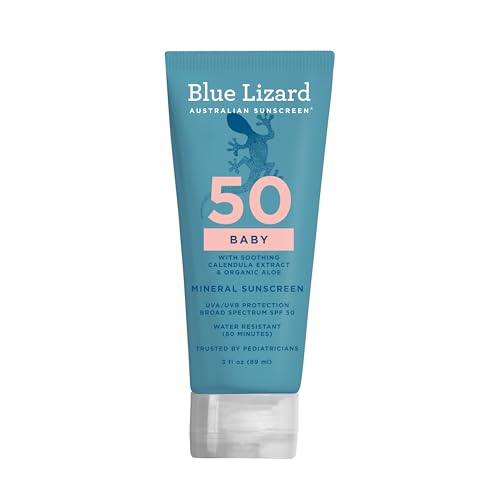
- Blue Lizard Baby Mineral Sunscreen: SPF 30+, water-resistant for up to 80 minutes. Contains zinc oxide and titanium dioxide.
- Badger Baby Sunscreen Cream: SPF 30, unscented, with 98% organic ingredients. Uses clear zinc oxide and is very gentle on sensitive skin.
- Mustela SPF 50 Mineral Sunscreen: Specifically formulated for babies, with 100% mineral filters and no fragrances.
- Babyganics Mineral-Based Sunscreen: SPF 50+, broad-spectrum, with non-nano zinc oxide. A budget-friendly and widely available option.
These products are available online and in stores. When choosing, consider your baby's skin type and any specific sensitivities. You can also explore our baby care guides for more product recommendations and tips.
More Sun Safety Tips for Your Baby
Besides applying sunscreen, here are other ways to protect your baby from the sun:
- Dress your baby in lightweight, long-sleeved clothing: Choose fabrics with UPF (Ultraviolet Protection Factor) for added protection.
- Use a wide-brimmed hat: A hat that shades your baby's face, neck, and ears is essential.
- Protect eyes with baby sunglasses: Look for sunglasses that offer 100% UVA/UVB protection.
- Keep your baby in the shade: Use a stroller canopy, umbrella, or a shade tent at the beach or park.
- Stay hydrated: Offer your baby fluids regularly, especially on hot days, to prevent dehydration.
Remember, sun safety is a combination of practices. Sunscreen is an important part, but it's most effective when paired with other protective measures. For more on baby health and safety, check out our guides on baby essentials and newborn care.
Frequently Asked Questions About Baby Sunscreen
Q: When can I start using sunscreen on my baby?
A: The AAP recommends using sunscreen on babies older than 6 months. For younger infants, it's best to keep them out of direct sunlight and dress them in protective clothing. If shade and clothing are insufficient, you may apply a small amount of mineral sunscreen on exposed areas like the face and hands.
Q: How much sunscreen should I apply?
A: Apply a generous amount. A good rule of thumb is to use about a shot glass full (roughly 1 ounce) to cover your baby's entire body. Don't forget the ears, back of the neck, and tops of feet.
Q: Is SPF 100 better for babies?
A: Not necessarily. SPF 30-50 offers adequate protection. Higher SPF products may contain more chemicals and provide only a marginal increase in protection. Stick with SPF 30-50 for babies.
Q: Can I use adult sunscreen on my baby?
A: It's not recommended. Adult sunscreens may contain fragrances, dyes, and chemical filters that can be irritating to a baby's sensitive skin. Always use a sunscreen formulated specifically for babies or children.
Q: How do I wash off baby sunscreen?
A: Mineral sunscreens can be a bit stubborn to wash off. Use a gentle baby wash and warm water. You may need to use a soft washcloth to gently remove it. Avoid scrubbing, as this can irritate the skin.
For more parenting questions, you might find our parenting and development guides helpful.
Making the Final Choice
Choosing the right baby sunscreen doesn't have to be overwhelming. By focusing on mineral-based formulas with zinc oxide or titanium dioxide, broad-spectrum protection, and an SPF of 30-50, you can ensure your baby is well-protected.
Remember, the best sunscreen is the one you'll use consistently and correctly. Whether you're going to the park, beach, or just running errands, making sunscreen a part of your routine is a simple yet powerful way to protect your baby's health.
After reading this guide, you are well-prepared to make an informed purchase. The products we recommend below are all excellent choices, but feel free to explore other options using the criteria we've outlined. Your baby's skin deserves the safest protection available.