Baby Bowls: The Complete Buying Guide for Starting Solids
Everything you need to know about silicone suction bowls, stainless steel options, and safety features. Learn how to choose the right bowl for your baby's first feeding stage — before you buy.
START READINGIn This Guide
1. Why the Right Bowl Matters for Starting Solids
Introducing solid foods is a milestone that reshapes your daily routine. The bowl you choose becomes part of nearly every meal for the next year or more. A poorly chosen bowl tips over easily, traps food in hard-to-clean seams, or fails to grip a high chair tray. A well-chosen one keeps mealtime calmer, reduces food waste, and supports your baby's growing independence.
Parents researching this topic are typically past the "what do I need at all" stage. They already know they want a bowl; they are deciding which one. The key insight is that no single bowl serves every stage. First-stage feeding needs stability and safety. Self-feeding toddlers need durability and easy cleaning. This guide maps bowl features to those stages so you can buy with confidence.
2. Types of Baby Bowls
Baby bowls fall into a handful of recognizable categories. Each serves a slightly different purpose, and many families end up with two or three in rotation.
Suction Bowls
The most popular category for first foods. A wide, flexible base creates a seal against smooth surfaces such as high chair trays. Suction bowls reduce tipping and the classic "bowl thrown across the kitchen" moment. They work best on non-porous surfaces; textured trays or fabric placemats break the seal.
Open Feeding Bowls
Simple, traditional bowls with no suction base. These are useful once a child has enough coordination to keep the bowl upright, and they stack compactly for storage. They are also handy for older siblings and for mixing formula or cereal.
Divided Bowls
Compartments keep foods separated, which helps when introducing multiple textures at once. A divided bowl is especially useful during the transition from purees to finger foods, when a baby may want variety on the same tray.
Insulated & Temperature-Controlled Bowls
Some bowls use double walls or a water-filled chamber to keep food warm or cool during longer meals. These are a solid choice for slow eaters or for families who prepare food ahead of time.
Travel & On-the-Go Bowls
Collapsible silicone bowls and bowls with lids and carrying cases suit families who feed away from home. They prioritize portability and spill containment over suction strength.
3. Material Comparison: Silicone, Stainless Steel, Plastic, and Bamboo
Material determines durability, cleaning behavior, safety profile, and how long the bowl stays useful. Here is how the main options compare.
| Material | Best For | Key Strengths | Watch-Outs |
|---|---|---|---|
| Food-grade silicone | First-stage feeding, suction bowls | Gentle on gums, flexible, dishwasher-safe, strong suction base when molded | Can retain odors or stains; inspect for tears over time |
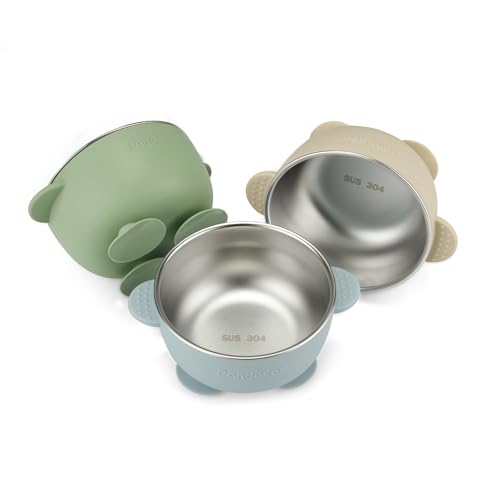
| Stainless steel | Durable everyday bowls, self-feeding toddlers | Indestructible, resists staining, retains temperature, easy to sanitize | Not microwave-safe; can be noisy if dropped; needs a separate suction sleeve |
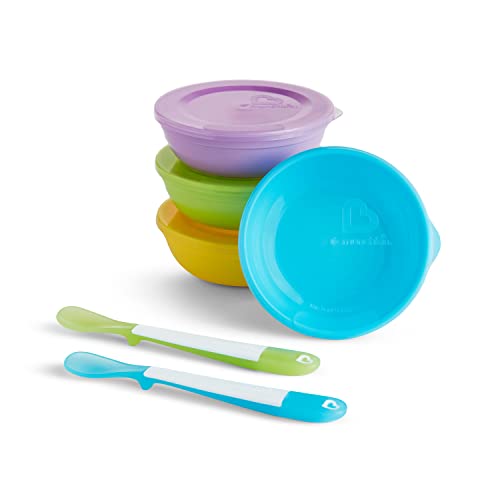
| BPA-free plastic | Essential-tier starter sets | Lightweight, widely available, simple to clean | Scratches over time; verify BPA-free labeling; less durable than steel or silicone |
| Bamboo fiber | Eco-conscious families, older toddlers | Natural look, lightweight, renewable material | Usually not dishwasher-safe; can crack if soaked; verify food-safe binder |
4. The Suction Base Explained
Suction is the single most requested feature in baby bowls, but not all suction bases perform the same. Understanding how they work helps you judge a bowl's real-world stability.
How Suction Works
A suction base works by expelling air from beneath a flexible ring, creating a low-pressure seal against a smooth surface. The seal is only as strong as the contact area and the smoothness of the surface. That is why a suction bowl grips a clean plastic high chair tray far better than a textured wooden table or a fabric placemat.
What Makes a Strong Suction Base
- Wide base diameter: More contact area means a stronger seal and more resistance to tipping.
- Flexible, thick silicone ring: A thicker ring conforms better to minor surface irregularities.
- Tab release: A small pull tab on the base makes removal easy without yanking the bowl and splashing food.
- One-piece molding: Seamless silicone bowls have no gaps where food can collect or the seal can weaken.
Limits of Suction
Suction is a deterrent, not a guarantee. A determined toddler can still peel up the edge of even a strong bowl. Suction performs best during the first year, when babies are learning cause-and-effect and have limited grip strength. Once a child deliberately lifts the tab, the seal is gone — which is why many parents keep a suction bowl through the toddler years as a backup rather than the only bowl.
5. Safety & Certification Checklist
Feeding gear comes into direct contact with food and a baby's mouth, so material safety deserves careful attention. Use this checklist when evaluating any bowl.
Food-Grade Labeling
Look for explicit "food-grade silicone" or "food-safe stainless steel" wording on the packaging or product page. Avoid vague claims.
Free From Harmful Additives
Confirm the bowl is free from BPA, PVC, phthalates, and lead. Reputable brands state this clearly.
No Small Detachable Parts
Check for removable suction rings, lids, or handles that could become a choking hazard if they loosen.
Smooth, Rounded Edges
Rounded rims protect gums and reduce the risk of cuts during independent eating.
Microwave & Dishwasher Guidance
Follow the manufacturer's instructions. Stainless steel and some bamboo bowls are not microwave-safe.
Recall Awareness
Check product recall databases before buying, especially for second-hand items where packaging and batch information may be missing.
If you are building a broader feeding kit, it helps to review how other feeding tools are chosen. Our guides on organic baby food and supplementing breast milk with formula cover complementary topics that pair naturally with bowl selection.
6. Matching Bowls to Feeding Stages
Bowl needs change as feeding skills develop. The table below maps stages to the features that matter most, using consistent tier descriptors rather than numeric comparisons.
| Feeding Stage | Recommended Bowl Type | Key Features | Tier Guidance |
|---|---|---|---|
| First tastes (around 6 months) | Small silicone suction bowl | Strong suction, shallow depth, soft rim | Essential to mid-tier |
| Purees & thicker textures (6–9 months) | Deeper silicone or stainless bowl with suction sleeve | Wider capacity, easy spoon access, stable base | Mid-tier |
| Finger foods & mixed textures (9–12 months) | Divided bowl with suction base | Compartments, durable material, spill-resistant rim | Mid to high-end tier |
| Self-feeding with utensils (12–24 months) | Stainless steel or reinforced silicone bowl | Heavy base, rounded edges, easy to sanitize | High-end tier |
| Independent eating (24 months+) | Open feeding bowl or standard small bowl | Lightweight, stackable, dishwasher-safe | Balanced tier |
A Note on Bowl Size
A common mistake is buying an oversized bowl too early. A bowl that is too large makes portions look sparse and encourages over-serving, and it is harder for small hands to scoop. A shallow, small-capacity bowl suits first tastes better than a deep family-sized one. Size up gradually as appetite and coordination grow.
Coordinating With Other Gear
Bowls rarely work in isolation. If you are also choosing a high chair setup, our guide on high chair pads for wooden high chairs explains how tray surfaces affect suction performance. Families planning to introduce finger foods alongside purees may also want to look at children's booster seats for the dining table so that bowl placement stays consistent at family meals.
7. Cleaning & Maintenance
Baby bowls are cleaned constantly, often several times a day. How well a bowl holds up to that routine affects both hygiene and longevity.
Dishwasher Considerations
Food-grade silicone and stainless steel are generally dishwasher-safe. Bamboo fiber and some plastic bowls are hand-wash only. Check the manufacturer's guidance before the first wash — putting a non-dishwasher-safe bowl through a hot cycle can warp it or degrade the finish.
Inspecting Silicone Bowls
Silicone can develop small tears or micro-cracks over many wash cycles. Inspect the suction ring and inner surface regularly. A torn suction base no longer seals properly and should be replaced. Staining is usually cosmetic, but persistent odor may indicate trapped residue in a damaged area.
Sanitizing Safely
Follow the brand's sanitizing instructions. Boiling is suitable for some solid silicone bowls but not for bowls with plastic components or printed decorations. Stainless steel tolerates hot water well; avoid abrasive scouring pads that dull the finish.
8. Frequently Asked Questions
What type of baby bowl is best for starting solids?
Silicone suction bowls are widely recommended for starting solids because they grip the table, resist tipping, and are gentle on gums. A mid-range or premium silicone bowl with a strong suction base offers the best balance of stability and durability for first-stage feeding.
Are silicone baby bowls safe?
Food-grade silicone baby bowls are generally considered safe and are free from BPA, PVC, and phthalates when labeled accordingly. Always verify that the bowl is explicitly marked food-grade and dishwasher-safe, and inspect regularly for cracks or tears.
How do I stop my baby from throwing the bowl?
A suction bowl with a strong, wide base is the most effective tool. Press the base firmly onto a smooth, clean surface such as a high chair tray. Suction works best on non-porous surfaces; avoid textured trays or placemats that break the seal.
When should I transition from a suction bowl to a regular bowl?
Most families transition once the child consistently keeps the bowl upright and shows interest in self-feeding with utensils, often around 18 to 24 months. Continue using a suction base at the high chair if tipping remains common, then move to an open bowl as coordination improves.
Are stainless steel baby bowls better than silicone?
They serve different purposes. Stainless steel is more durable, resists staining, and retains temperature, making it a strong high-end tier choice for toddlers. Silicone offers softer edges and built-in suction for first-stage feeding. Many families keep both and rotate based on the stage.
Do I need a divided bowl?
A divided bowl is useful but not essential at the very start. It becomes more valuable when you introduce multiple textures or finger foods alongside purees. If you want to limit the number of bowls you buy, choose a divided suction bowl as an all-purpose option for the 9-to-18-month window.
Final Buying Checklist
Before you decide, run through this short list. It captures the decisions that matter most and helps you avoid duplicate purchases.
- Choose a food-grade silicone suction bowl for first-stage feeding.
- Confirm BPA, PVC, and phthalate-free labeling.
- Check that the suction base has a tab release and wide contact area.
- Match bowl depth and capacity to your baby's current stage.
- Verify dishwasher and microwave guidance.
- Consider a divided option once mixed textures begin.
- Add a stainless steel bowl at the high-end tier for toddler durability.
With these points settled, you can move from research to selection with a clear understanding of what each bowl type offers.